
Creators are the new brands.
While only 20 years ago, it was almost unimaginable to earn a living as a full-time creator online. Today, creators are building million- and even billion-dollar businesses.
In this article, we’ll summarize the most interesting and important statistics about the creator economy and its trajectory.
Top Creator Economy Statistics (Editor’s Picks)
We’ve handpicked 55+ of the latest statistics, facts, and trends about the creator economy. Here are 7 that we believe will blow you away.
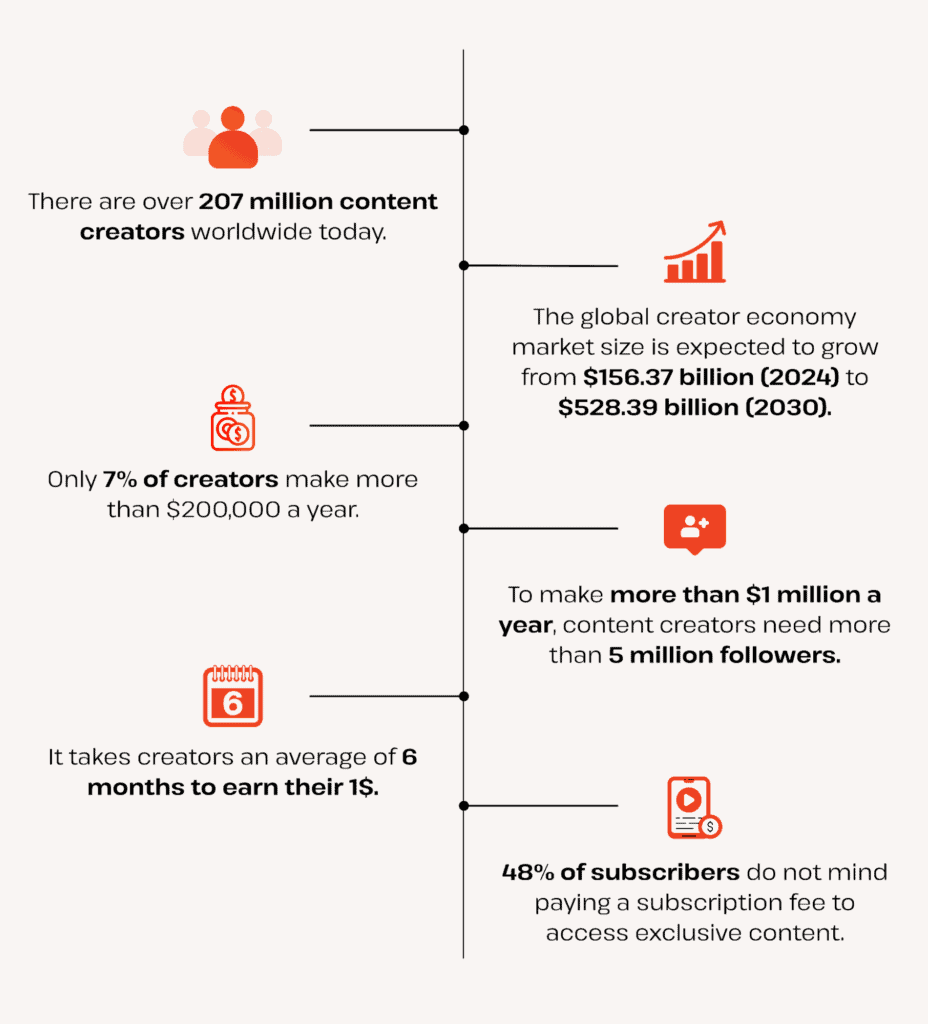
| 1 | There are over 207 million content creators worldwide today. |
| 2 | Only 7% of creators make more than $200,000 a year. |
| 3 | It takes creators an average of 6 months to earn their 1$. |
| 4 | The global creator economy market size is expected to grow from $156.37 billion (2024) to $528.39 billion (2030). |
| 5 | To make more than $1 million a year, content creators need more than 5 million followers. |
| 6 | 48% of subscribers do not mind paying a subscription fee to access exclusive content. |
Creator Economy Market Overview
Let’s begin by looking at the big picture of the creator economy. How much is it worth? How many creators are there? How many make a living from it?
The creator economy is valued at $156.37 billion as of 2024 (Coherent Market Insights)
The creator economy is growing at a CAGR of 22.5% and is expected to hit $528.39 billion by 2030.
The top 10 companies dominating the creator economy landscape are: (Research Nester)
- Meta
- YouTube
- Bytedanc
- Alphabet
- Spotify
- Netflix
- Snapchat
- X.com
- Etsy
There are over 207 million content creators in the world today (Linktree)
Here’s a breakdown of the 207 million by follower count:
- 23 million have less than 1,000 followers.
- 139 million have between 1,000 and 10K followers.
- 41 million have between 10K and 100K followers.
- 2 million have between 100K and 1M followers.
- 2 million have more than 1M followers.
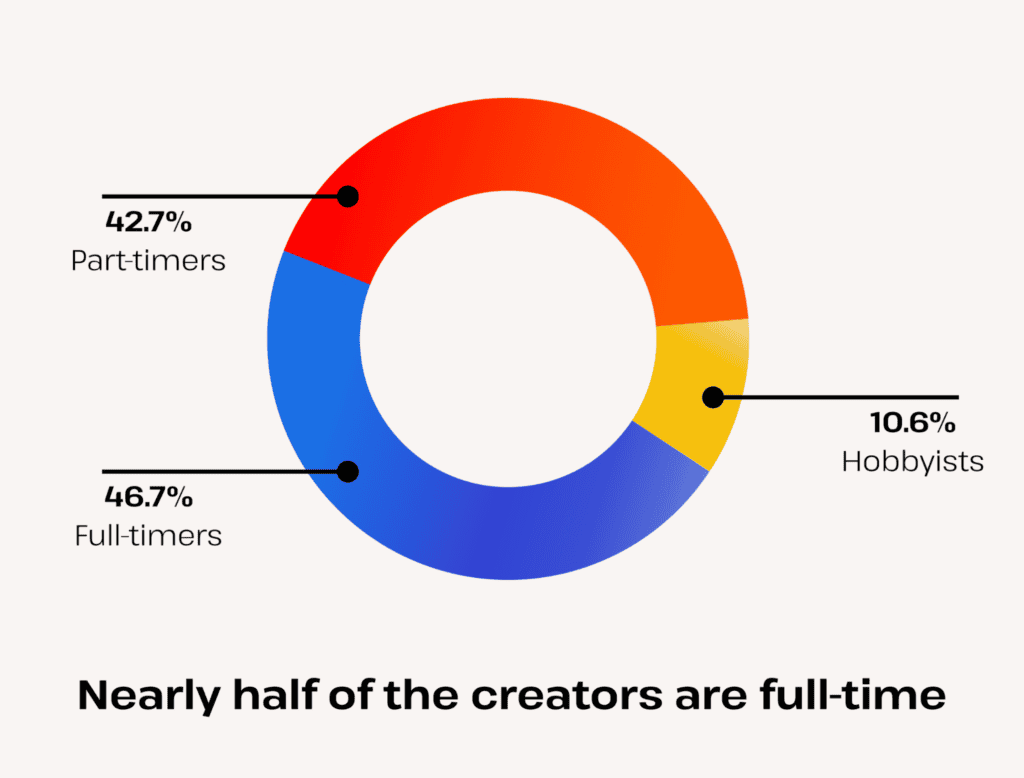
46.7% of creators are full-timers (Convertkit)
1 in 10 creators are in it just for fun and label themselves as “hobbyist.”. And 43% of people run their creator business on the side of another full or part-time job.
59% of beginner content creators are still waiting for monetization (Linktree)
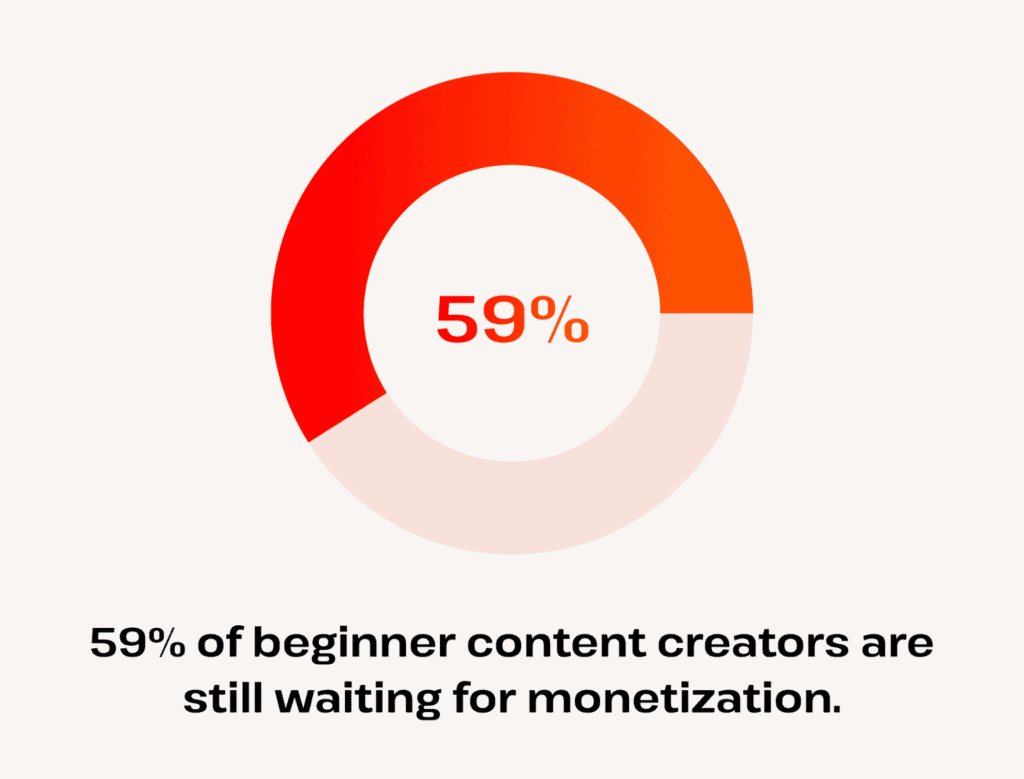
Only 6% of beginner creators — creators with one year of experience or less — earn over $10K per year. 35% of beginners have monetized but aren’t earning enough to quit their day jobs.
How Creators Make Their Money
Full-time creators are 4X more likely than part-timers to earn $50K or more per year (Linktree)
Linktree says that full-time creators are four times more likely to make $50,000 or more a year than part-timers. About 12% of full-timers earn this much, compared to just 3% of part-timers. Also, 46% of full-timers and 68% of part-timers make $1,000 or less a year.
How much time do creators spend making new content? Here’s the breakdown from Linktree’s recent survey:
- Spend 40+ hours per week: 5%
- Spend 20-40 hours per week: 9%
- Spend 10-20 hours per week: 16%
- Spend 5-10 hours per week: 27%
- Spend 1-5 hours per week: 36%
- Spend an hour or less per week: 7%
Only 13% of content creators say making money is their top priority (Influencer Marketing Hub)
According to Influencer Marketing Hub, only 13% of content creators consider making money as their main goal. They asked over 2,000 creators what matters most to them. Here’s what they found:
- 34.9% care most about connecting with their audience.
- 35.3% prioritize creating top-notch content.
- 16.6% focus on growing their follower count.
- And just 13.1% see making money as their top priority.
69% of content creators say brand deals are their most lucrative revenue source (Influencer Marketing Hub)
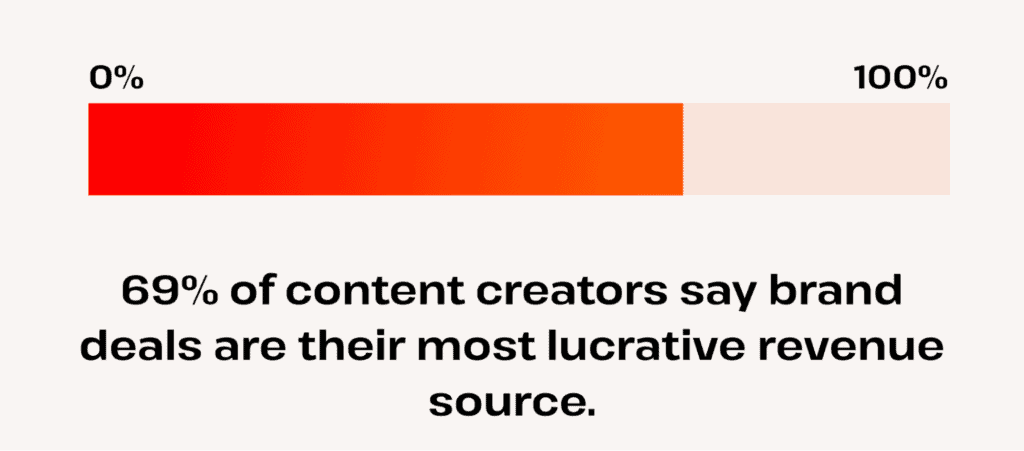
69% of content creators said brand deals bring in the most money. This is much higher than the 7% who rely on ad share revenue the most. So, brand deals are the biggest money maker for creators. They also make money from selling their own products and sharing links to products.
Breakdown of creators’ revenue sources:
- 29% of content creators generate revenue through affiliate links.
- 67% of content creators sell products or merchandise to get more revenue.
- 28% of content creators make income through partnerships and promotions.
- 35% of content creators make a living through ad revenue.
62% of niche creators think specializing is helpful for engagement and reach (Linktree)
Specializing in a specific area helps niche creators a lot. This focus also brings more chances to work with brands. 37% of niche creators have done a brand collaboration, compared to 26% of general creators. Niche creators also tend to earn more. 7% make over $100,000 a year, which is more than the 5% of general creators who earn that much.
Niche content creation’s impact on monetization:
| Channels that earn creator revenues | Niche creators | Non-niche creators |
| Premium newsletters | 3% | 2% |
| E-courses | 10% | 3% |
| Paid downloadable resources | 10% | 5% |
| Affiliate marketing (exl. Amazon) | 15% | 10% |
| Ads | 13% | 9% |
| Influencer marketing | 14% | 9% |
| Own physical products | 23% | 18% |
To make more than $1 million a year, content creators need more than 5 million followers (WPBeginner)
Here’s a simple summary of what influencers typically make based on their number of followers:
| Follower count | Earnings per post |
| Less than 100K followers | Up to $1,000 |
| 100K followers | $1,000 – $3,000 |
| 200K followers | $1,000 – $3,000 |
| 300K followers | $1,000 – $3,000 |
| 1 million followers | $5,000+ |
Platform Specific Data
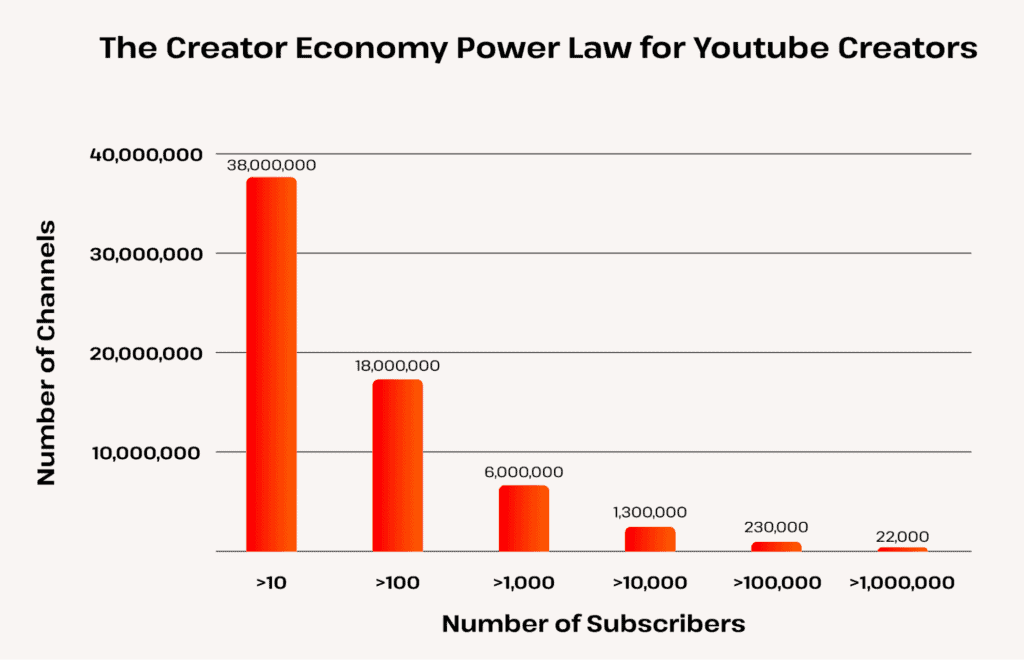
There are 1,727 times more YouTube channels with just 10 subscribers than there are channels with 1,000,000 subscribers. (Socialblade)
26% of content creators make most of their money from TikTok and YouTube (Epidemic Sound)
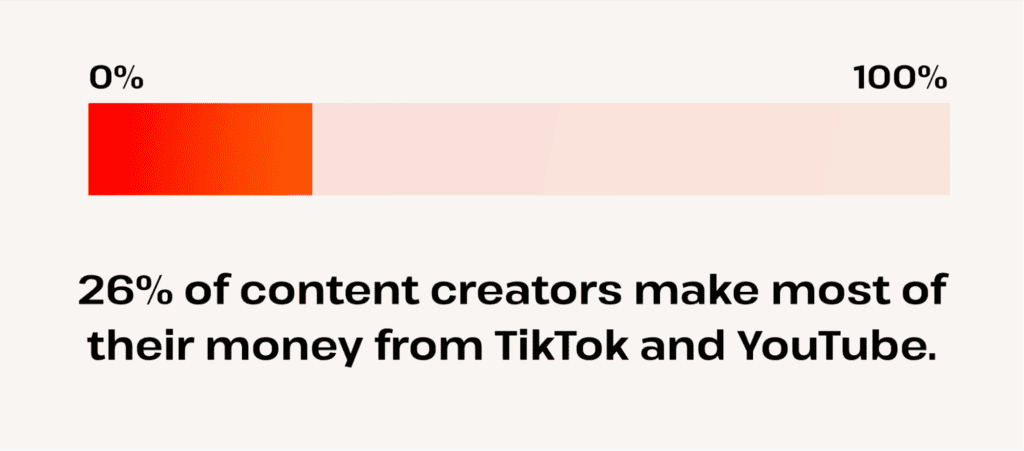
According to Epidemic Sound’s own research of 1,500 monetizing creators, TikTok is the top platform for generating income. In fact, 30% of respondents said that!
YouTube wasn’t far behind at 25.8%, with Facebook at 16.5%, X/Twitter at 13.1%, and Instagram down at 7.1%. So, despite Facebook and Instagram bringing in the most money, users are making more money on TikTok and YouTube.
There are 2.44 million Twitch livestream viewers at any time (TwitchTracker)
In 2023, there was an average of 2.44 million concurrent viewers watching streams on over 95,000 live channels. That breaks down to over 25,000 viewers per channel on average.
Young adults (24 and below) lean toward platforms like Instagram, TikTok, YouTube, and Twitch (Influencer Marketing Hub)
Older creators (35 and above) prefer Facebook, Pinterest, and blogging.
Ages between 25 and 34 prefer diversifying their presence on multiple platforms.
YouTube
YouTube has more than 2.70 billion monthly active users as of 2024 (Global Media Insight)
The number of YouTube users in the United States is around 239 million as of 2024.
Almost 70% of the users in the US access YouTube through their smartphones
Top 5 YouTubers by Subscribers in 2024
| Channel | Country | Subscriber Count |
| T-Series | India | 263 million subscribers |
| MrBeast | United States | 250 million subscribers |
| CocoMelon | United States | 174 million subscribers |
| SET India | India | 171 million subscribers |
| Kids Diana Show | Ukraine/United States | 121 million subscribers |
TikTok
TikTok has over 1 billion monthly active users (Backlinko)
According to the parent company Bytedance announcement in September 2021, TikTok hit 1 billion monthly active users. In fact, these user figures make the app one of the fastest-growing ever in terms of the percentage of the market it’s captured since 2016.
TikTok has a potential ad reach of 1.218 billion users aged 18 and above (Backlinko)
Out of the 5.3 billion internet users globally, 23% are active on TikTok, while among the 4.95 billion active social media users, 24.65% engage with TikTok.
45% of social media users in the US use TikTok at least once a month (Backlinko)
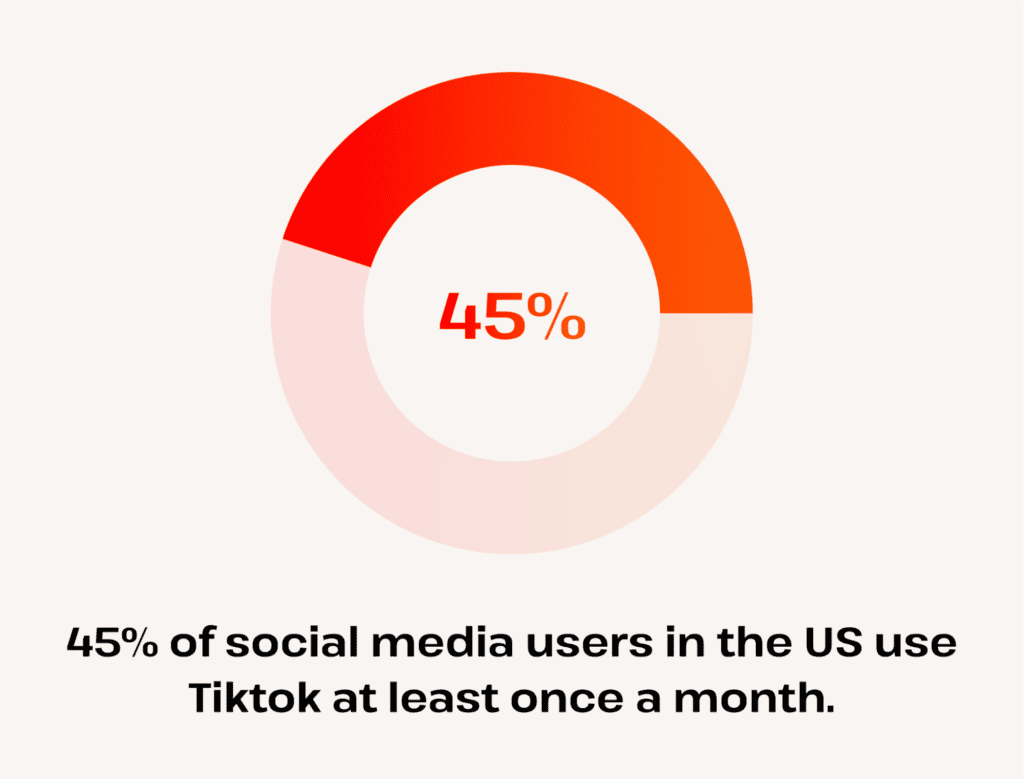
American adults spend over 4.43 billion total minutes per day on TikTok, behind Facebook with 5.2 billion minutes as of 2023. TikTok is forecasted to pass Facebook usage by 2025, eMarketer data shows.
There are over 5 million businesses that actively use TikTok in the U.S. (Wallroom Media)
There are 2 billion monthly active users on Instagram (Statista)
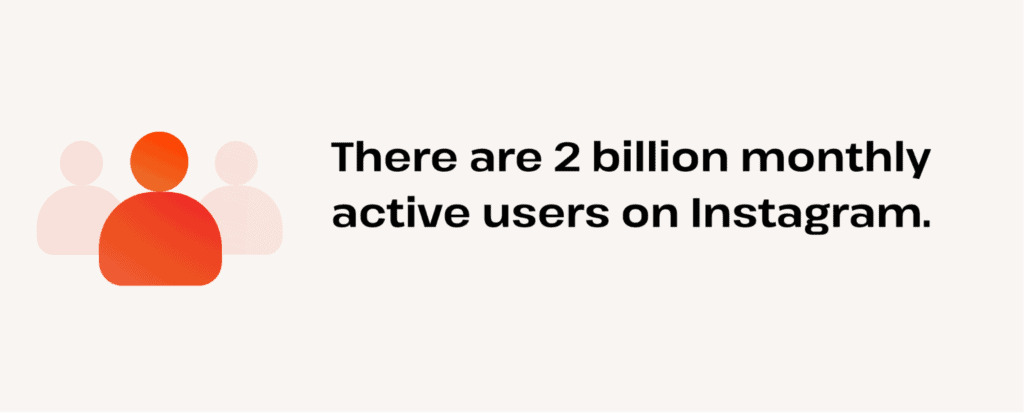
The 2 billion MAUs made Instagram the 4th largest social network worldwide, with 37.74% of the world’s 5.3 billion internet users accessing the app monthly.
US adults (18+) spend 33 minutes per day on the platform (Emarketer)
Here’s the complete data on average time spent per day by adult users in the US:
| Platform | Average Time Spent Per Day |
| TikTok | 53.8 minutes |
| YouTube | 48.7 minutes |
| X (Twitter) | 34.1 minutes |
| 33.1 minutes | |
| Snapchat | 30 minutes |
| 30.9 minutes | |
| 24.1 minutes |
Around 7 in 10 marketers use Instagram for influencer marketing (HypeAuditor)
Instagram is the hands-down favorite for influencer marketers, and it’s easy to see why. Nearly half (48%) of global Instagram users are Millennials between 25-34 — a key demographic for influencer marketing.
Micro-influencers (5K-20K followers) make up 44% of all Instagram creators (HypeAuditor)
The second most popular group is nano-influencers (27.8%). Then mid-tier influencers (26.8%) with around 20,000-100,000 followers account for 22.73%. Macro-influencers and Mega-influencers & Celebrities represent the smallest groups: 4.9% and 0.3% respectively.
48% of global Instagram users are 25 to 35 years old. (Storyblok)
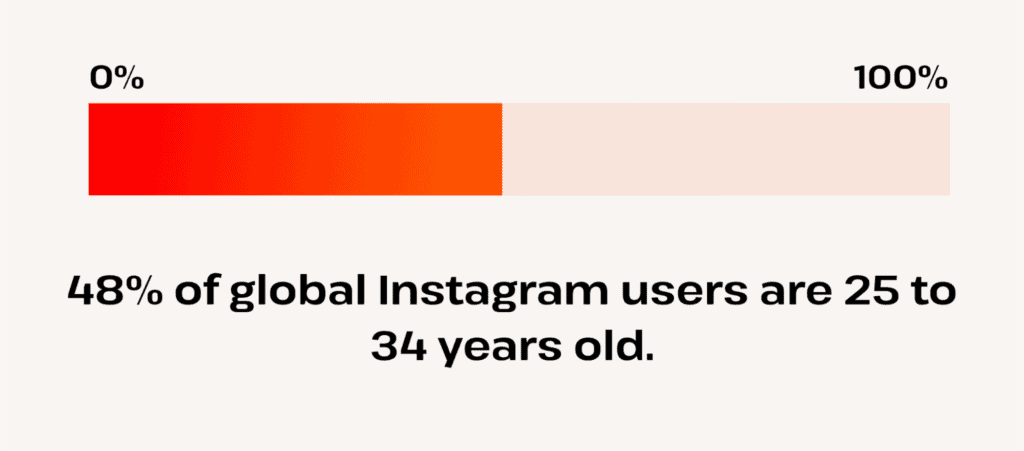
48% of global Instagram users are aged between 25 and 34 years (4% higher than last
year). Most likely, a part of younger users switched from Instagram to TikTok.
Creator Demographics & Content Diversity
64% of monetized content creators are women (Convertkit)
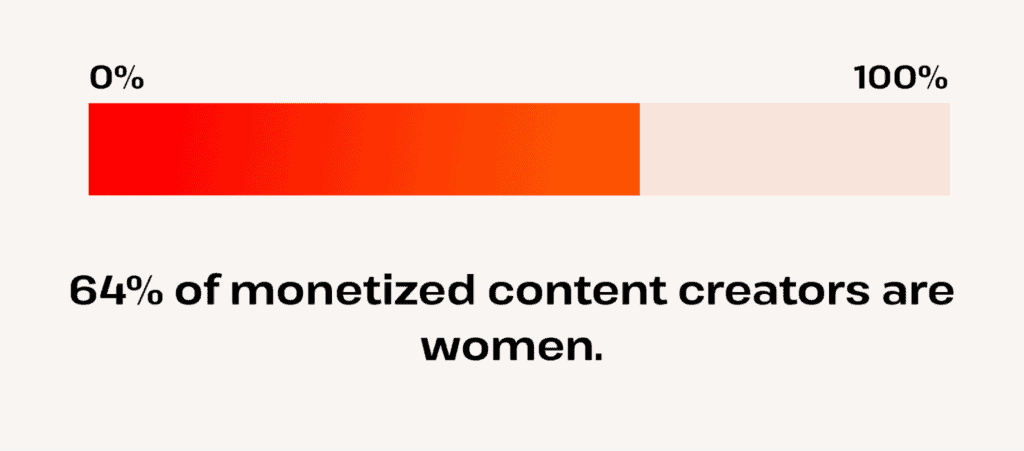
Female creators outnumber male creators… by a lot. 64% of survey respondents were women, versus 35% who were men. 1% of creators identify as non-binary, and that percentage is consistent between both full-time and part-time creators.
Educational creators, bloggers, coaches, writers, and artists are the most common types of creators (Convertkit)
Educators were the most likely to have earned revenue in 2021, closely followed by coaches. This year, though, we should all go support a local band since musicians were the creator type least likely to have made money in 2021.
36% of creators talk about entrepreneurship (Convertkit)
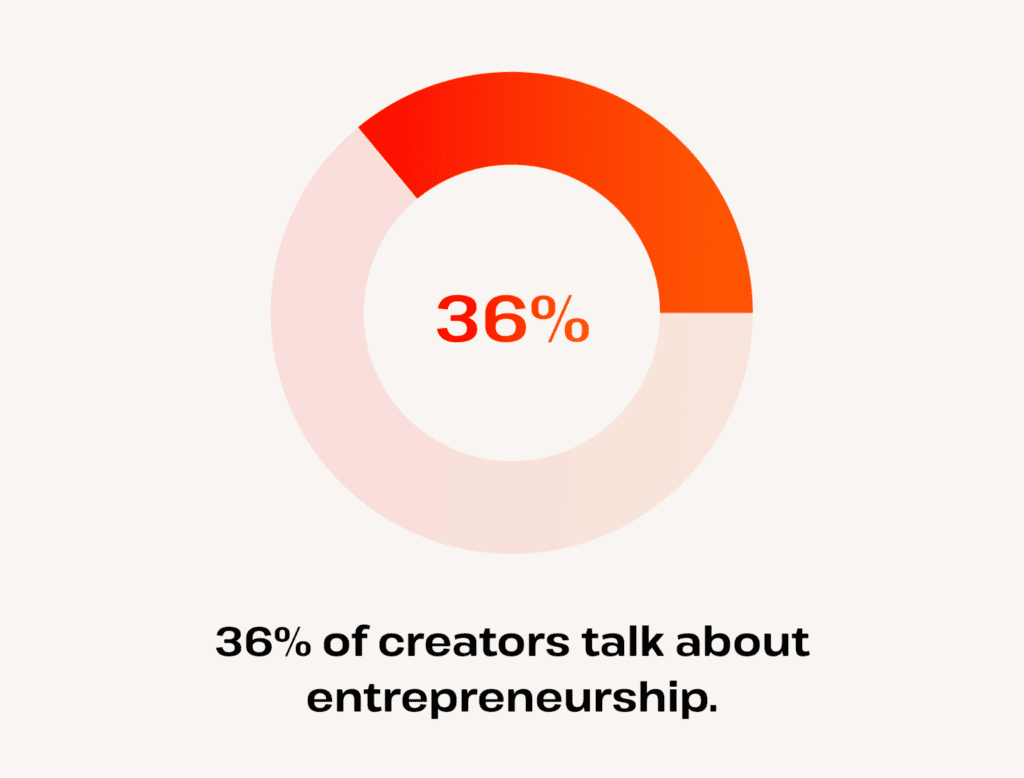
Which is then followed by personal development, marketing, small businesses, online business respectively.
On average, male creators earn 1.88X more than female creators (Influencer Marketing Hub)
In a survey of over 2,000 creators, Influencer Marketing Hub found that male creators earn an average salary of $69,922.95 — almost double the $37,065.42 average salary for females.
Only 30% of OnlyFans content creators are men (Gitnux)
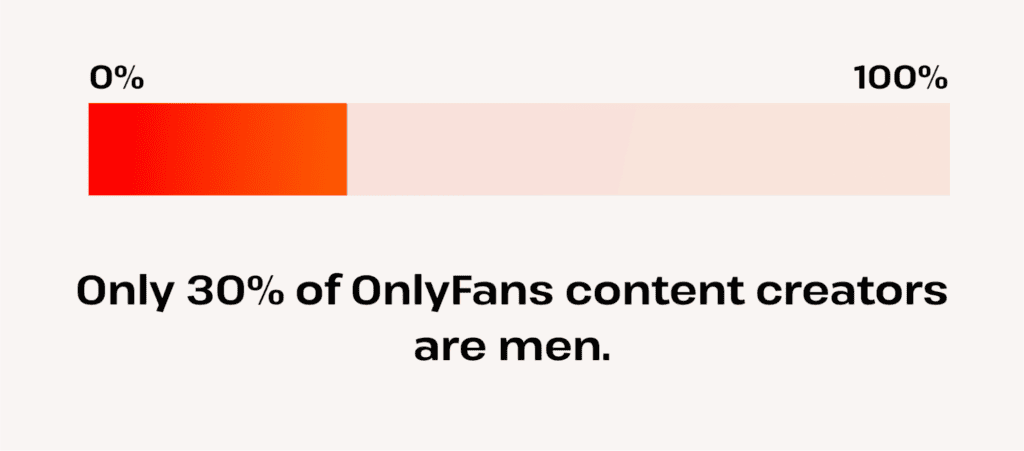
Women make up 70% of all content creators, and they also earn 78% more than their male counterparts on average. Additionally, 85% of the top 10% earners on OnlyFans are female, while only 25-30% of these high earners identify as male.
The average age of creators is 30-49 years old, representing 48% of the creator population (Zipia)
Additionally, 28% are between 18 and 29 years old, 20% are between 50 and 64 years old, and only 4% are 65 or older.
Creator Impact & User Engagement
8.6% of creators dropped out of college to become content creators (Neoreach)
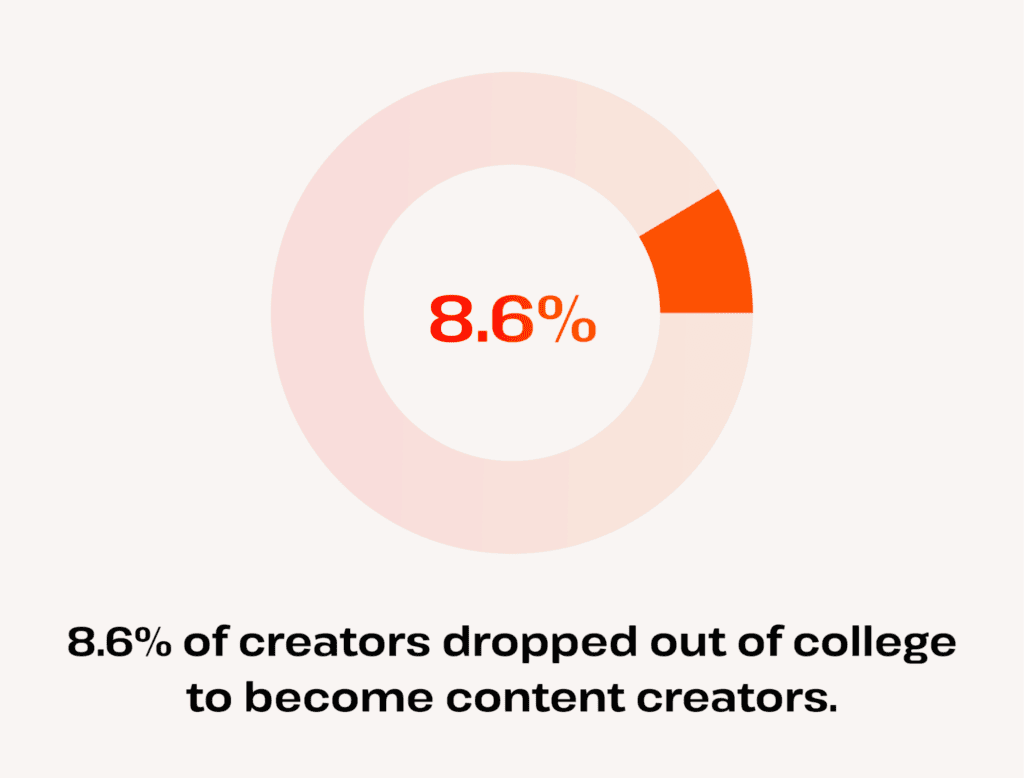
85% attended college before becoming a content creator. 91% of those did not drop out to pursue a career as a content creator.
In Neoreach’s survey, they asked the respondents that did drop out, how many years they attended college before dropping out. Here’s the breakdown:
- 84.3% didn’t drop out
- 8.5% 1-2 years
- 4.1% <1 year
- 3.1% 3-4 years
58.5% of creators measure personal success through engagement rates (Neoreach)
32.5% measure through income, and 9% measure through their follower counts.
90% of marketing professionals say that influencer marketing is effective (Influencer Marketing Hub)
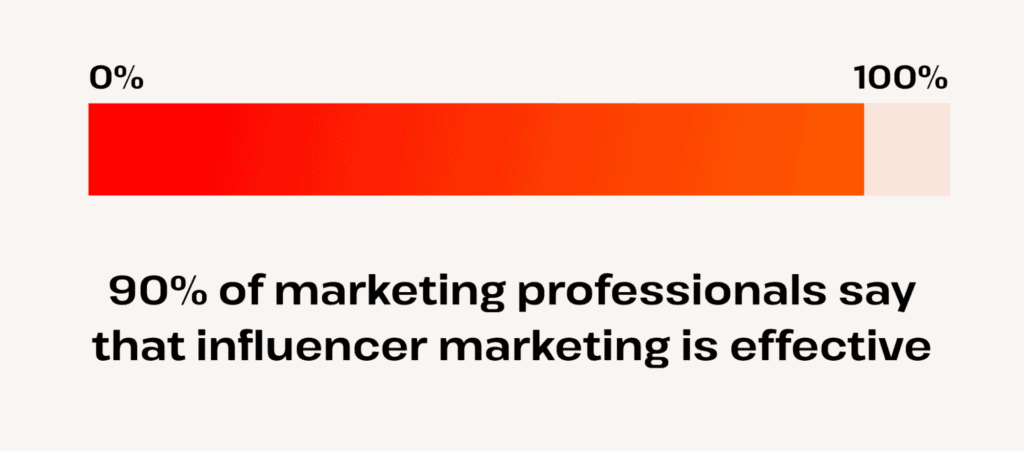
When asked which metrics matter most when working with influencers, 39% of marketers said engagement and clicks. 23% said content type and category while 21% mentioned views, reach, and impressions.
Creator Challenges
Getting their content found is creators’ top challenge (The Tilt)
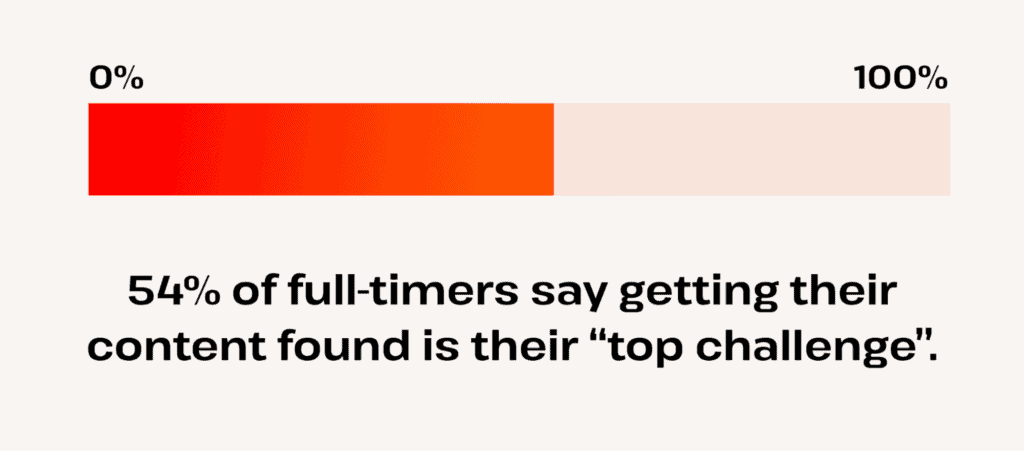
When asked about their top challenges as content creators, 54% of full-timers and 60% of part-timers say “making sure my content gets found”. Other common challenges are monetization, marketing, and sticking to a regular publishing schedule.
63% of full-time creators have experienced burnout at least once in the last 12 months (ConvertKit)
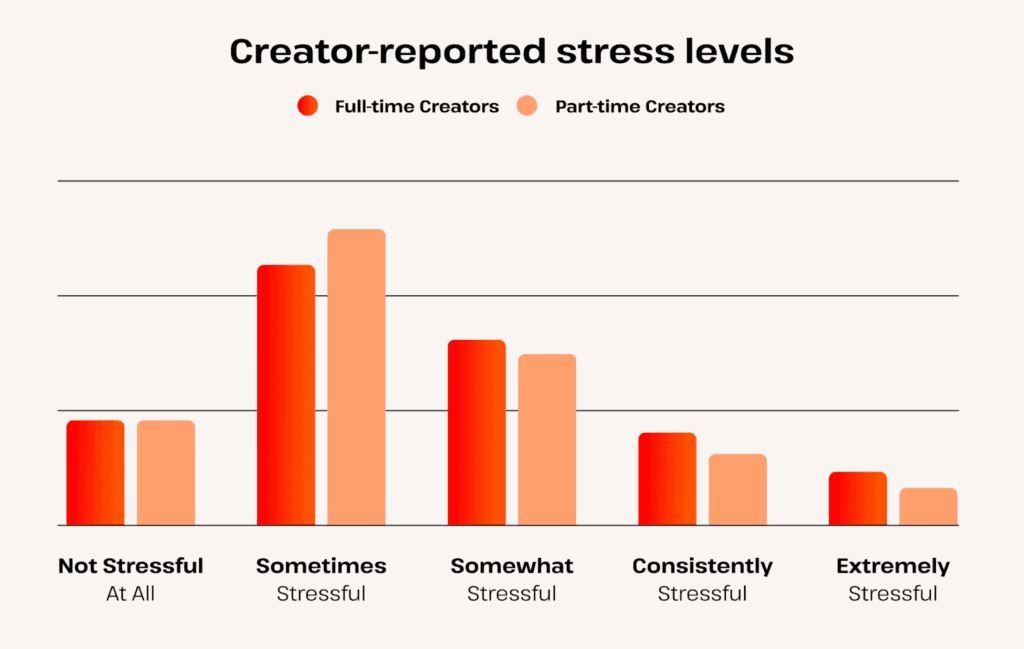
Within the full-time community, some creator types felt burnout more than others. Those most likely to have experienced burnout in 2021 were streamers (76.02%), influencers (74.11%), and photographers (68.42%).
13% of full-time creators say they’re extremely/consistently stressed (Linktree)
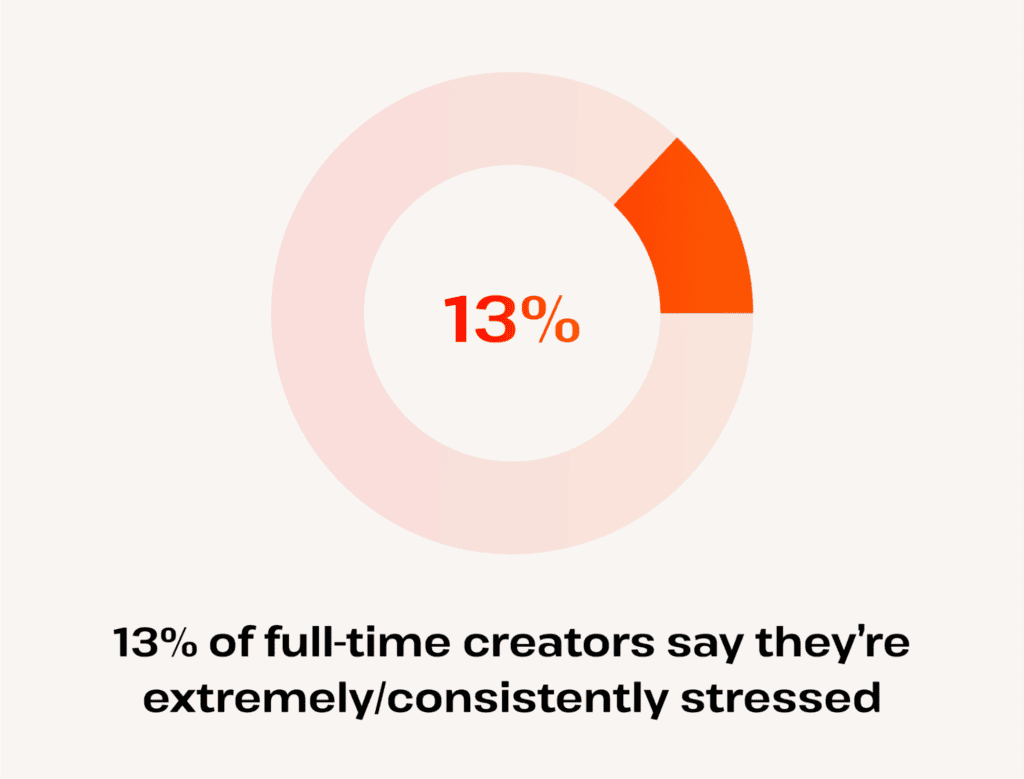
Creators say they feel stressed regardless of income, but full-time creators tend to feel more fatigue than part-timers.
Creator Preferences
85% of full-time content creators enjoy what they do (The Tilt)
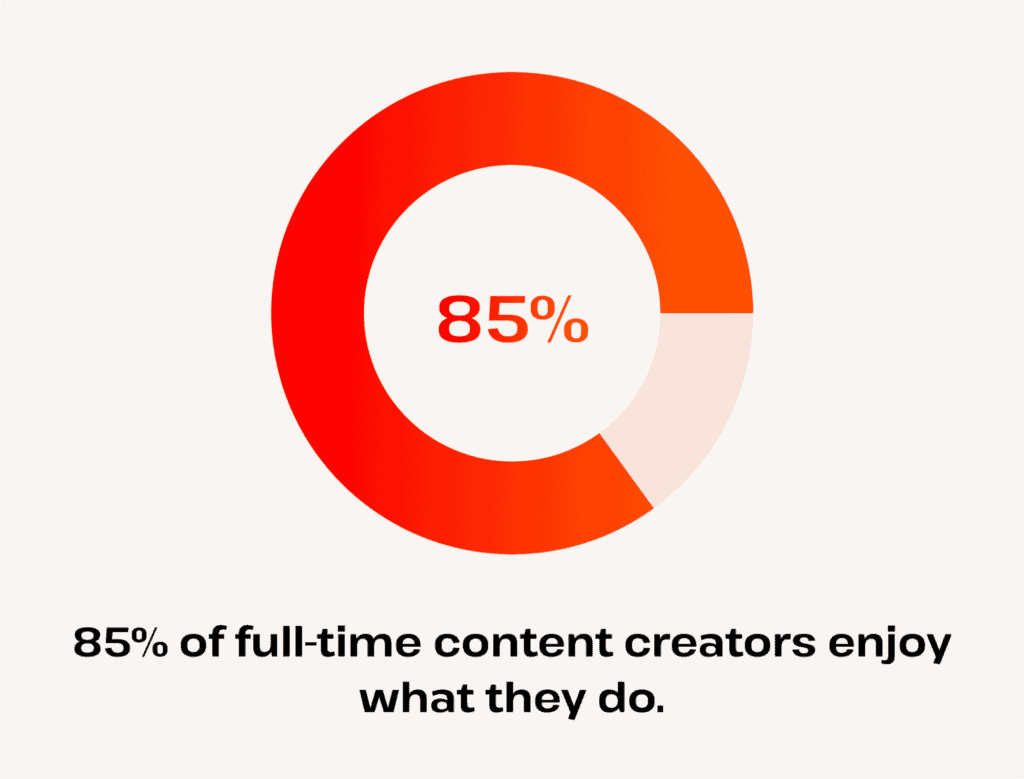
Over 80% of full-timers say enjoyment, flexible work hours, and independence are top benefits of the content creator’s life, while just 43% point to “earning more than at a traditional job.”
1/3 of content creators prefer creating a single type of content (Convertkit)
Full-time creators were also more likely than others to create a wide variety of content.
While part-time generate an average of 2.4 types of content and part-timers average 3.4, full-time creators consistently put out an average of 4.4 content types.
37% of full-time content creators prefer working solo (Convertkit)
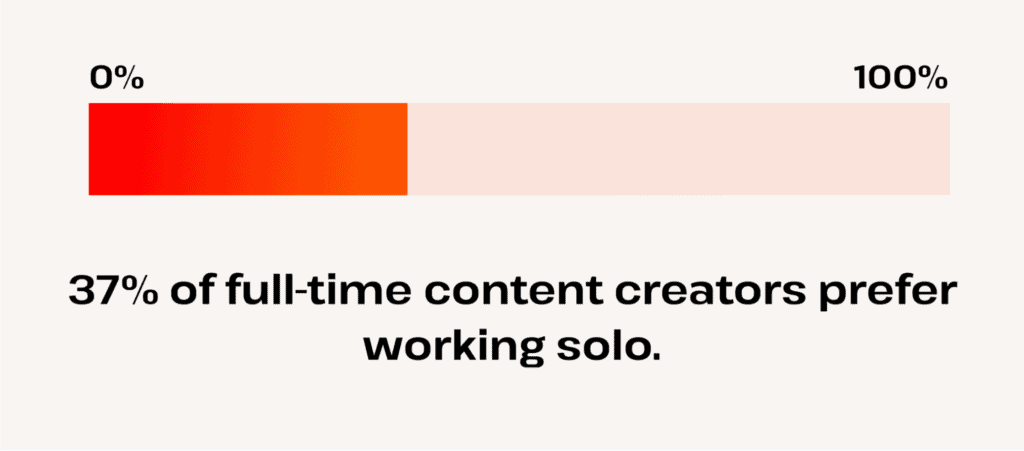
A significant portion of full-time creators run their homegrown businesses completely solo. 37% of full-time creators have no employees or contractors on the team whatsoever. If full-timers do have help, it’s most likely from a contractor.
46.7% of content creators are full-timers (Convertkit)
35% of full-time content creators prefer creating content around entrepreneurship (Convertkit)
Full-time creators are more likely to lean toward business and career-focused content, like entrepreneurship and marketing. At the same time, part-time favor topics sometimes deemed unable to make money, like art.
Top priorities for creators:
- Connecting with audiences: 34.9%
- Creating the best content: 35.3%
- Growing their following: 16.6%
- Making money: 13.1%
Conclusion
The creator economy is booming. With its worth set to skyrocket from $156.37 billion in 2024 to $528.39 billion by 2030, the future is going to be… very interesting.
Today, over 207 million people worldwide identify as content creators, yet only a slim 7% earn over $200,000 annually. Success in this space is notably tied to follower counts. To earn more than $1 million a year, creators typically need over 5 million followers.
As the creator economy continues to grow, its participants are reshaping the landscape of work, media, and business as a whole.