

We spend more time on screens than sleeping.
On average, people spend 7 hours daily on screens, with this number increasing as smartphones, computers, and tablets become essential to everyday life. Teens lead with over 8 hours a day, and Gen Z averages 7 hours.
The goal isn’t to cut screen time but to use it effectively. Success in the digital age means making smart choices about when to stay connected and when to unplug, ensuring technology boosts productivity and well-being without taking control.
Top 6 Average Screen Time Statistics (Editor’s Picks)
We’ve handpicked 30+ of the latest average screen time statistics, facts, and trends. Here are 6 that we believe will blow you away.
| 1 | People spend an average of 6 hours and 40 minutes per day on screens |
| 2 | Gen Z averages 7 hours and 18 minutes of daily screen time |
| 3 | Android users spend 10 trillion minutes per month watching YouTube videos |
| 4 | Average screen time in the US hits 7 hours and 3 minutes per day |
| 5 | 41% of American teens spend over 8 hours on screens daily |
| 6 | South Africans top global screen time, averaging 9 hours a day |
Average Screen Time Statistics
People spend an average of 6 hours and 40 minutes per day on screens (Backlinko)
The average person spends over six hours daily in front of screens—whether it’s a phone, computer, or TV. With digital devices becoming central to work, entertainment, and communication, this trend highlights the growing need for managing screen habits to balance productivity and well-being.
Gen Z averages 7 hours and 18 minutes of daily screen time (Demandsage)
On average, Gen Z spends over 7 hours daily on screens, primarily for entertainment, communication, and educational purposes. Social media and streaming dominate their usage patterns.
Millennials average 6 hours and 42 minutes of screen use daily (Brighter Strides)
Millennials spend an average of 6 hours and 42 minutes on screens daily, using them for work, social media, and entertainment. This shows their reliance on digital tools and the need for digital wellness to prevent screen fatigue and stay productive.
Android users spend 10 trillion minutes per month watching YouTube videos (Data Reportal)
Android users now spend an astounding 10 trillion minutes per month on YouTube worldwide. This shows just how much YouTube dominates mobile video consumption and entertainment habits across the globe. The platform’s versatility plays a big role in this. Whether it’s short clips for a quick break or detailed tutorials for learning something new, YouTube meets a wide range of user needs.
Average screen time in the US hits 7 hours and 3 minutes per day (Demandsage)
The average American spends over 7 hours daily on screens, according to recent studies. This includes time on smartphones, computers, and other devices, with social media, streaming, and work-related activities being the biggest contributors.
41% of American teens spend over 8 hours on screens daily (Backlinko)
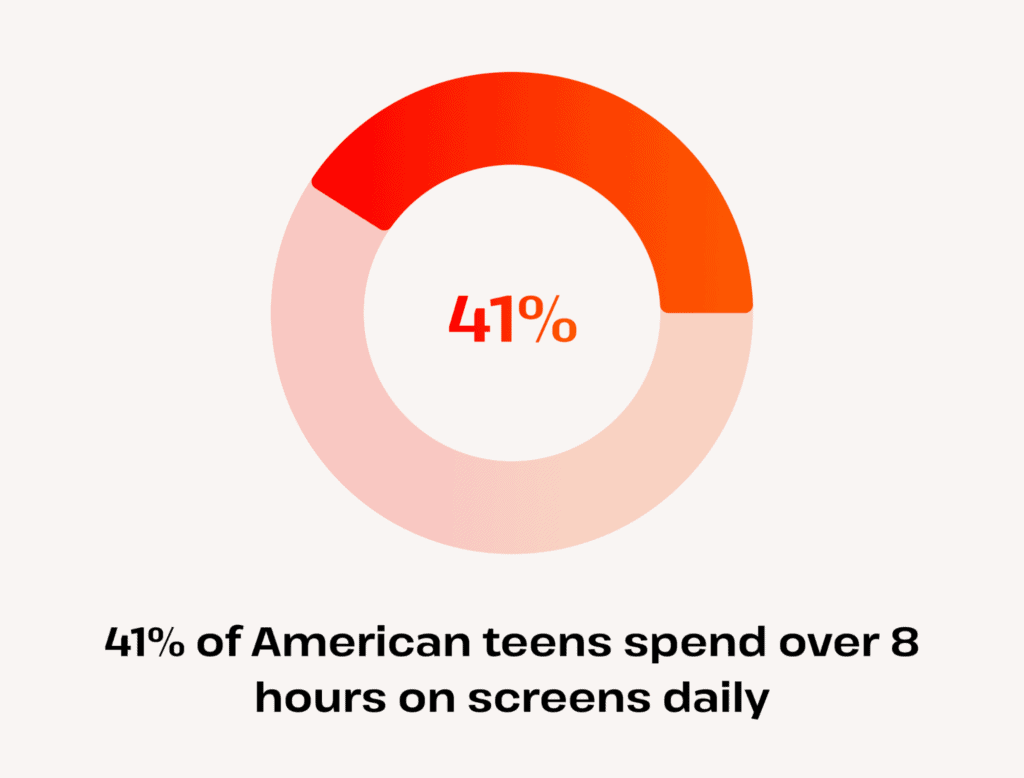
A recent study found that 41% of teenagers aged 13-18 in the U.S. spend more than 8 hours per day on screen. Brazil ranks just behind South Africa with an average daily screen time of 9 hours and 13 minutes. Much of this time is spent on social media, gaming, and video streaming, reflecting high digital engagement across demographics. This includes time on social media, streaming, gaming, and school-related activities.
94.3% of Americans stream TV online (ZM)
Nearly all Americans—94.3%—stream TV content on the internet, highlighting the shift away from traditional cable and satellite services. Streaming platforms have become the primary way people consume television content, offering flexibility and on-demand viewing.
People spend 42% of their day on screens (Comparitech)
On average, people spend 42% of their waking hours in front of screens—nearly 7 hours a day. This can strain eyes, promote sedentary habits, and disrupt sleep, cutting into rest quality. A simple screen detox, like setting aside an hour before bed to unplug can help break up this routine and improve overall well-being.
74% of parents say their child aged 2 or younger watches TV (Slick Text)
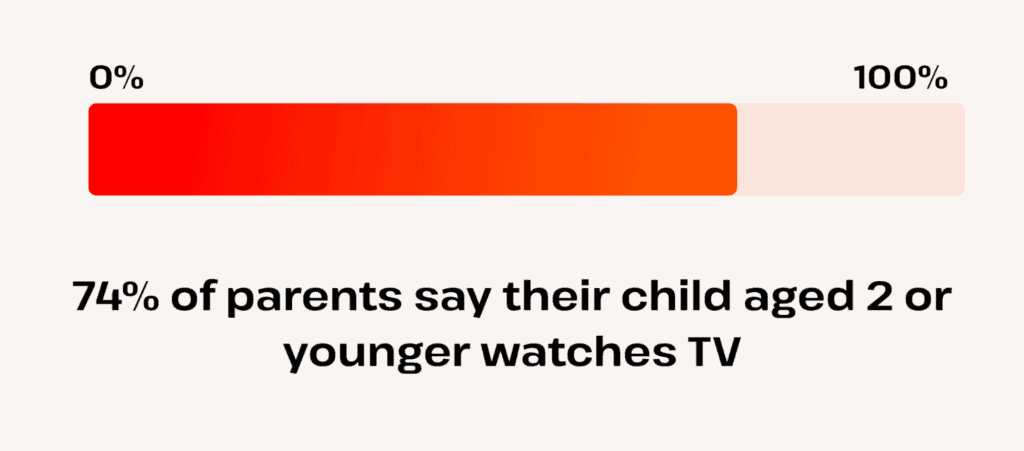
74% of parents report that their child aged 2 or younger watches TV. This highlights how early screen exposure begins, raising questions about its effects on development, attention, and social skills at such a critical stage of growth.
Americans check their mobile devices about 159 times daily (Psychology Today)
With people checking their phones 159 times per day on average, it’s clear that mobile devices have become an essential part of modern life. This number suggests a significant portion of waking hours involves interacting with a screen, shaping habits and social behavior.
Children ages 5 to 8 spend over 3 hours a day on screens (All About Vision)
The average daily screen time for children between 5 and 8 years old exceeds three hours, covering activities like gaming, watching videos, and using educational apps. This marks a significant portion of their daily routine.
Here’s a quick look at screen time usage across different age demographics:
| Age group | Male | Female |
| 16-24 | 7 hours 32 minutes | 7 hours 7 minutes |
| 25-34 | 7 hours 3 minutes | 7 hours 13 minutes |
| 35-44 | 6 hours 25 minutes | 6 hours 40 minutes |
| 45-54 | 6 hours 9 minutes | 6 hours 5 minutes |
| 55-64 | 5 hours 17 minutes | 5 hours 14 minutes |
Average Screen Time by Country

South Africa ranks first in average screen time with 9 hours and 24 minutes daily (Backlinko)
South Africa leads the world in daily screen time, with an average of 9 hours and 24 minutes. This puts the country well ahead of the global average, reflecting high engagement with digital platforms for social media, streaming, and work.
Brazil ranks second globally with 9 hours and 13 minutes of screen time (Exploding Topics)
Brazil ranks just behind South Africa with an average daily screen time of 9 hours and 13 minutes. Much of this time is spent on social media, gaming, and video streaming, reflecting high digital engagement across demographics.
The Philippines places third with 8 hours and 52 minutes of average screen time (Backlinko)
The Philippines ranks third globally in screen time, averaging 8 hours and 52 minutes per day. Social media and streaming services play a major role in this high usage. This highlights the need for initiatives that promote a healthy screen-life balance for long-term well-being.
Colombia ranks fourth globally, with an average of 8 hours and 43 minutes of daily screen use (Exploding Topics)
Colombians spend close to 9 hours daily on screens, putting them among the highest in the world for screen time. They rank just behind the Philippines, Brazil, and South Africa. This shows how deeply digital media is woven into daily life in Colombia.
Argentina averages 8 hours and 41 minutes of screen time daily, ranking 5th globally (Backlinko)
Argentina’s daily screen time places it as one of the top countries where people spend the most hours on digital devices. Spending nearly nine hours a day on screens impacts everything from social habits to work productivity and mental health.
Take a closer look at 10 countries that report the lowest average screen time:
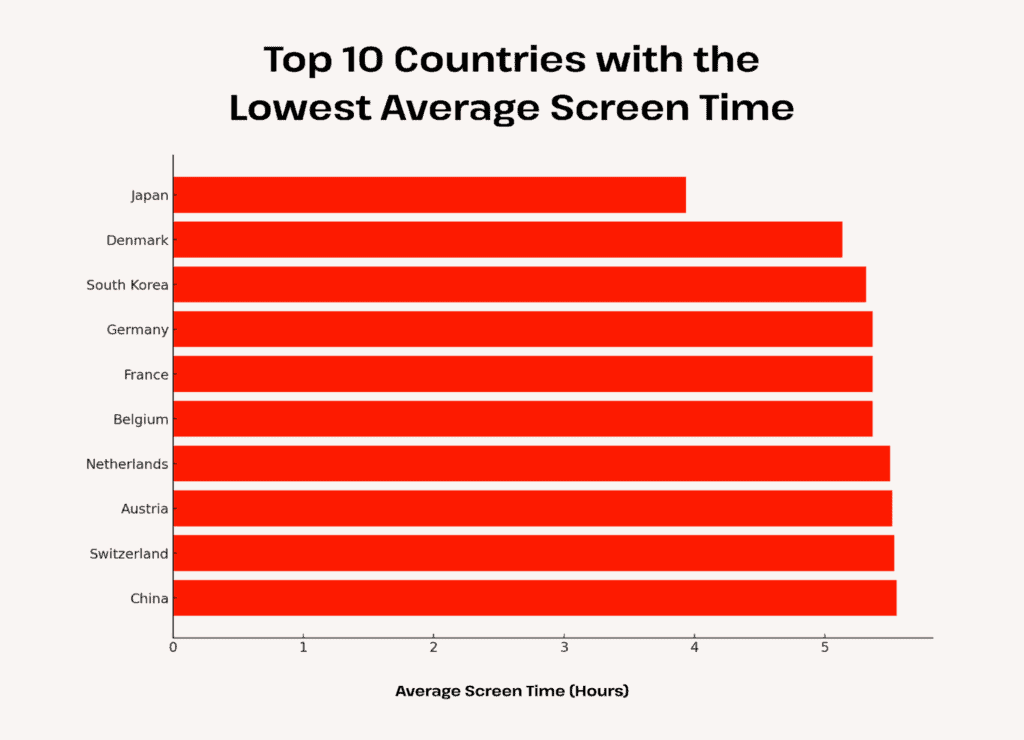
| Country | Average Screen Time | Difference with Global Average |
| Japan | 3 hours 56 minutes | -2 hours 44 minutes |
| Denmark | 5 hours 8 minutes | -1 hour 32 minutes |
| South Korea | 5 hours 19 minutes | -1 hour 21 minutes |
| Germany | 5 hours 22 minutes | -1 hour 18 minutes |
| France | 5 hours 22 minutes | -1 hour 18 minutes |
| Belgium | 5 hours 22 minutes | -1 hour 18 minutes |
| Netherlands | 5 hours 30 minutes | -1 hour 10 minutes |
| Austria | 5 hours 31 minutes | -1 hour 9 minutes |
| Switzerland | 5 hours 32 minutes | -1 hour 8 minutes |
| China | 5 hours 33 minutes | -1 hour 7 minutes |
Social Media Screen time Statistics
Saudi Arabians spend 43.36% of their daily screen time on social media (Comparitech)
Saudi Arabia leads globally in the proportion of daily screen time dedicated to social media, surpassing other countries. This reflects a high engagement rate with platforms such as Instagram, Twitter, and Snapchat.
People spend an average of 2 hours and 24 minutes on social media every day (Exploding Topics)
People spend 2 hours and 24 minutes a day on social media. That’s almost one-tenth of their day. It shows how much focus goes into digital engagement compared to time spent on things like exercise or reading.
Americans spend an average of 2 hours and 24 minutes on social media each day (Medium)
Social media has clearly become a main source of information, entertainment, and connection for many people. This level of daily usage shows a shift in how people spend their time, often preferring online interaction over other activities.
51% of U.S. teens spend at least four hours daily on social media (Axios)
51% of U.S. teens spend at least four hours daily on social media, with an average of 4.8 hours. This level of use has major implications for their well-being. It can affect sleep, mental health. Understanding and addressing these impacts is critical to supporting their overall development and balance.
42.45% of mexicans’ screen time is spent on social media (Comparitech)
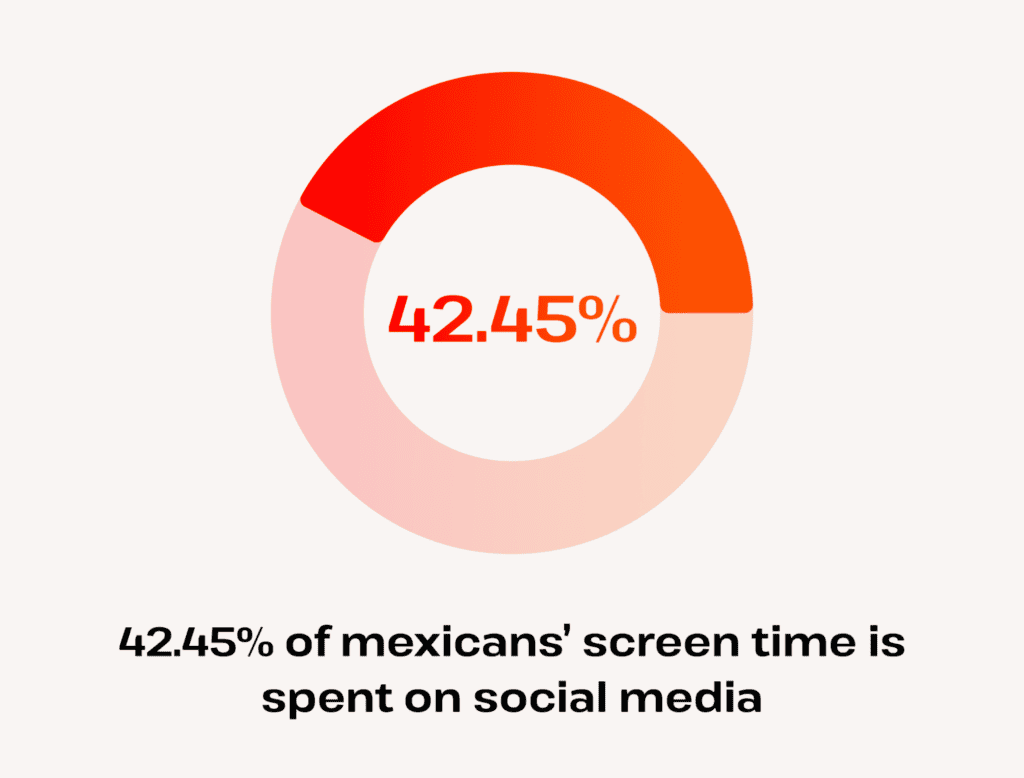
Nearly half of the average Mexican’s daily screen time is dedicated to social media platforms. This shows how central social networks are to digital habits in Mexico, outpacing time spent on other activities like streaming or gaming.
Here’s a summary of the average daily time spent on popular social media apps:
| App | Daily time spent (minutes) |
| Tiktok | 67 |
| Youtube | 55 |
| 39 | |
| 31 | |
| 9 | |
| Threads | 3 |
| Snapchat | 7 |
Global Screen Time Statistics by Device Type
53% of global screen time is spent on smartphones (Demandsage)
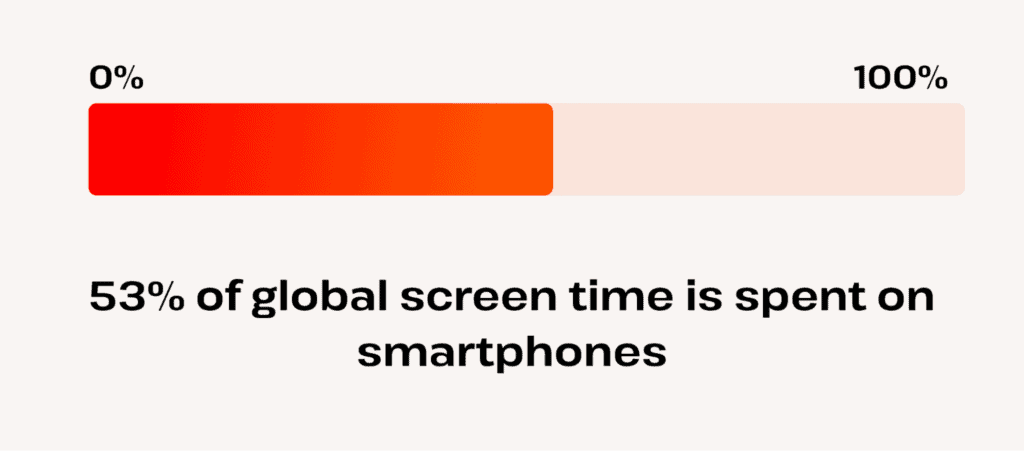
Smartphones now dominate the way people consume digital media, accounting for over half of all screen time worldwide. With their portability and convenience, smartphones have surpassed laptops, tablets, and other devices as the primary tool for accessing information, entertainment, and communication.
People watch TV for an average of 3 hours and 24 minutes each day (Marketful)
On average, individuals dedicate over three hours daily to watching TV, whether live broadcasts, streaming, or recorded content. This remains a significant portion of daily media consumption time. The steady engagement with TV highlights its continued role in entertainment, even as streaming platforms and other digital media rise in popularity.
People spend 4 hours and 37 minutes daily on mobile devices (Exploding Topics)
On average, people worldwide spend four hours and 37 minutes a day using mobile devices. This includes time spent on social media, gaming, shopping, and other activities across apps and browsers.
Americans aged 18+ spend 37 minutes daily on tablets (Backlinko)
Adults in the U.S. spend just 37 minutes a day using tablets, significantly less compared to other devices like smartphones or TVs. Tablets are mainly used for specific tasks like reading, browsing, or occasional streaming.
Screen Time by Income
Kids from lower-income households spend an average of 3.5 hours per day on screen media (Giving Compass)
Children in lower-income families average 3.5 hours of screen media use each day, noticeably higher than their peers from middle- and high-income families. This includes time spent on gaming, streaming, and social media.
Economic constraints often limit access to alternative activities, making screen media a more affordable and convenient option for entertainment and engagement in these households.
Middle-income children spend 2 hours and 25 minutes daily on screens (The 74)
Children from middle-income families average 2 hours and 25 minutes of screen time per day, 40% less than their lower-income counterparts. This reduced usage often reflects access to a wider range of activities and parental monitoring.
Affluent children spend 1 hour and 50 minutes daily on screens (Giving Compass)
Children from affluent families spend the least time on screens, averaging 1 hour and 50 minutes per day. This is significantly less than children from middle- and lower-income households. Higher household income often provides access to alternative recreational activities like sports, music lessons, and outdoor experiences, which reduce reliance on screen-based entertainment.
Impact of Screen Time
71% of teens spending 5+ hours daily on devices are at higher risk of suicide factors (Slick Text)
Research indicates that heavy daily device use among teens correlates with an increased likelihood of experiencing depressive symptoms, loneliness, or other mental health challenges. This includes risks tied to cyberbullying, disrupted sleep patterns, and a lack of in-person social connections.
47% of parents believe their child has a smartphone addiction (USA Today)
Nearly half of parents are concerned about their child’s smartphone use. They notice issues like too much screen time, mood swings, and trouble disconnecting. These concerns reflect the growing impact smartphones may have on children’s mental and emotional health.
36% of US teenagers find it hard to stop using technology once they start (statista)
A survey found that 85% of teenagers find it difficult to reduce their screen time. Many reported feeling drawn to apps and games, often losing track of time spent online.
67% of teachers noticed students distracted by mobile devices (Slick Text)
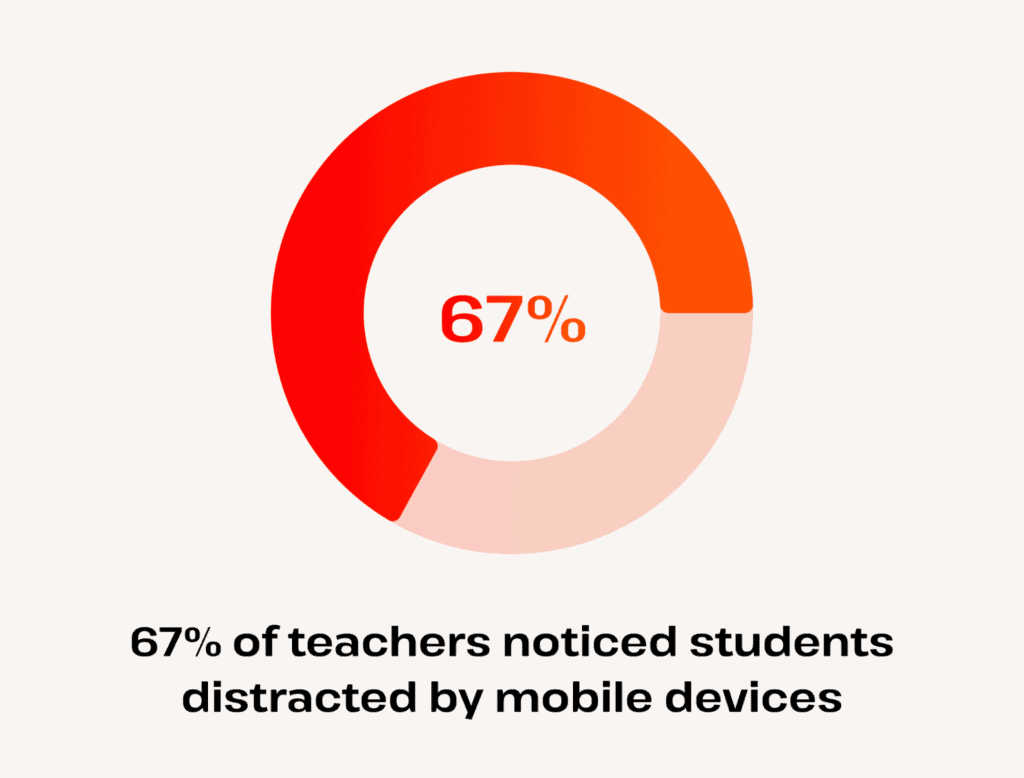
A recent survey found that 67% of teachers see mobile devices as a negative distraction in class. Many say phones disrupt focus and lower student engagement. To tackle this, some schools have started using policies like phone-free zones or scheduled tech breaks to create better learning environments.
Conclusion
Digital screens now dominate our daily lives in unprecedented ways.
The most striking findings reveal that Americans check their phones 159 times daily, Android users spend a staggering 10 trillion minutes monthly on YouTube alone, and South Africans lead global screen time at 9 hours and 24 minutes per day.
As AI, virtual reality, and mixed reality technologies evolve, our screen time will likely transform rather than decrease. The key challenge ahead isn’t about reducing screen time—it’s about making it more purposeful and healthy. Success will depend on finding balance between digital efficiency and human well-being.
FAQ
What is the average person’s screen time?
The average person spends 6 hours and 40 minutes daily on screens. This adds up to roughly 2,500 hours per year, or about 42% of waking hours.
How much screen time is healthy for eyes?
Eye doctors recommend following the 20-20-20 rule: take a 20-second break every 20 minutes and look at something 20 feet away. Total daily screen time should ideally stay under 4 hours, excluding work requirements, to maintain eye health.
What country has the highest screen time?
South Africa leads global screen time with 9 hours and 24 minutes daily, followed by Brazil at 9 hours and 13 minutes.
What is Gen Z’s average screen time?
Gen Z averages 7 hours and 18 minutes of daily screen time, higher than any other age group. Over half of this time is spent on social media and entertainment platforms.
How much time do people spend on social media?
The average person spends 2 hours and 24 minutes daily on social media platforms. This accounts for about one-third of total screen time.