
A creator can post the same quality of work for months and then watch their reach fall by half in a week. Nothing changed in the content. The platform changed how it ranks it. When views drop, income and confidence usually drop with them. Low morale sets in fast, and that is the moment your best creators start answering messages from competitors.
If you run a brand, an agency, a media team, or a creator-led company, this is a retention problem you cannot ignore. Algorithms will keep shifting, and the creators who depend on them will keep feeling it. What you control is how exposed they are and how supported they feel when it happens.
This guide covers why algorithm changes drive creators away, how to spot the early warning signs, how to spread creators across platforms, how to build support that cushions the dips, and how to keep people growing for the long run.
Why Algorithm Shifts Make Creators Leave
Creators build their income and reputation on a system they do not control. When the system changes, the effect is immediate and personal.
The first problem is income. Many creators are paid in ways that connect to views, engagement, or conversions. A sudden drop in reach can shrink earnings before anyone has time to adjust a contract or plan.
The second is confidence. Creators often assume they did something wrong. Without a clear explanation, they start doubting their own work, and doubt makes people restless.
The third is silence. Teams that go quiet during a dip lose trust quickly. A creator who hears nothing from their manager for two weeks while their numbers fall will assume nobody has a plan.
The fourth is opportunity. Competitors and other platforms often court creators who are struggling, offering exclusivity deals, guaranteed payments, or a fresh start. A dip is when those offers look best.
Spot the Warning Signs Early
Most creators do not announce that they are thinking of leaving. They show it in smaller ways first, and managers who pay attention can catch it in time.
Watch for unexplained drops in engagement that nobody has discussed. Notice slower turnaround, shorter replies, and less energy in feedback sessions. Pay attention when a creator starts asking about exclusivity terms, other platforms, or outside brand deals. Sudden changes in posting schedule can also mean they are testing options elsewhere.

The simplest defense is a regular check-in that asks three questions: how do you feel about your reach, how is your workload, and where do you want to go next. People tend to share concerns when they are asked directly and regularly, and they tend to keep quiet when they are not.
Spreading Creators Across Platforms So One Algorithm Change Doesn’t Sink Them
The most reliable protection against an algorithm change is not depending on one algorithm. A creator whose entire audience lives on a single platform is carrying a risk they cannot manage alone.
A practical structure is one primary platform and two or three supporting ones. The primary platform is where the creator’s strengths fit best. The supporting platforms catch the overflow, test new formats, and give the creator somewhere to go when the main channel slows down.
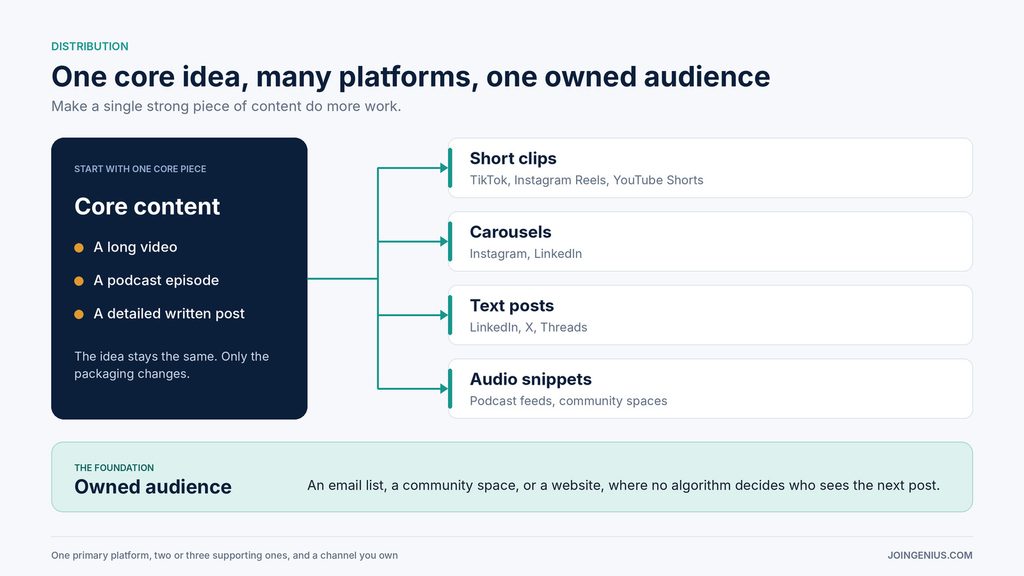
The key is to make one strong idea do more work. Instead of creating new content from scratch for every channel, start with a core piece, such as a long video, a podcast episode, or a detailed post. Then adapt it to the formats each platform favors: short clips, carousels, text posts, or audio snippets. The idea stays the same while the packaging changes. A well-built content stack makes this repurposing faster and keeps the quality consistent from one channel to the next.
Distribution is where many teams lose time, and tired creators are likely to leave. A multi-platform posting tool such as Upload-Post, which publishes to networks like TikTok, Instagram, YouTube, and LinkedIn from one place and includes scheduling and analytics, can take much of the repetitive work out of getting content live. That lets creators spend their energy on making things instead of reformatting and re-uploading them.
Own what you can. Platforms can change the rules or the reach at any time, but an email list, a community space, or a website belongs to you. Encourage creators to move part of their audience onto channels where no algorithm decides who sees the next post. Even a modest owned audience gives a creator a floor to stand on when reach falls.
Finally, be careful not to spread people too thin. Adding platforms without adding support just trades one problem for another. Agree on which channels matter for each creator, set realistic posting rhythms, and review the mix every quarter.
Build Support Systems That Cushion the Dips
Diversifying platforms lowers the risk. Support systems lower the impact of the risk that remains.
Start with pay. If a creator’s income depends entirely on performance, every algorithm change is a financial shock. A stable base, with performance bonuses on top, gives them room to experiment and recover without panic. A clear employee incentive program can help you design that mix so rewards feel fair and predictable.
Next, communicate quickly. When a major change hits, tell creators what you know within a day or two, even if the answer is that you are still investigating. Explain what the team is doing and when they will hear more. Speed and honesty matter more than having every answer.
Share the data. Look at analytics together with creators instead of sending them reports. When both sides read the numbers in the same room, it is easier to separate a platform-wide shift from a problem with the content.
Give them room to test. After a change, creators need time to try new formats, lengths, and posting times. Make it clear that a failed experiment will not count against them.
Review contracts with this in mind. Terms written for a stable platform can become unfair overnight when reach drops. Build in a clause that triggers a conversation when performance moves outside an agreed range, so nobody has to renegotiate from a position of stress. Creators notice when a team plans for hard weeks in advance, and it tells them the relationship is built to last.
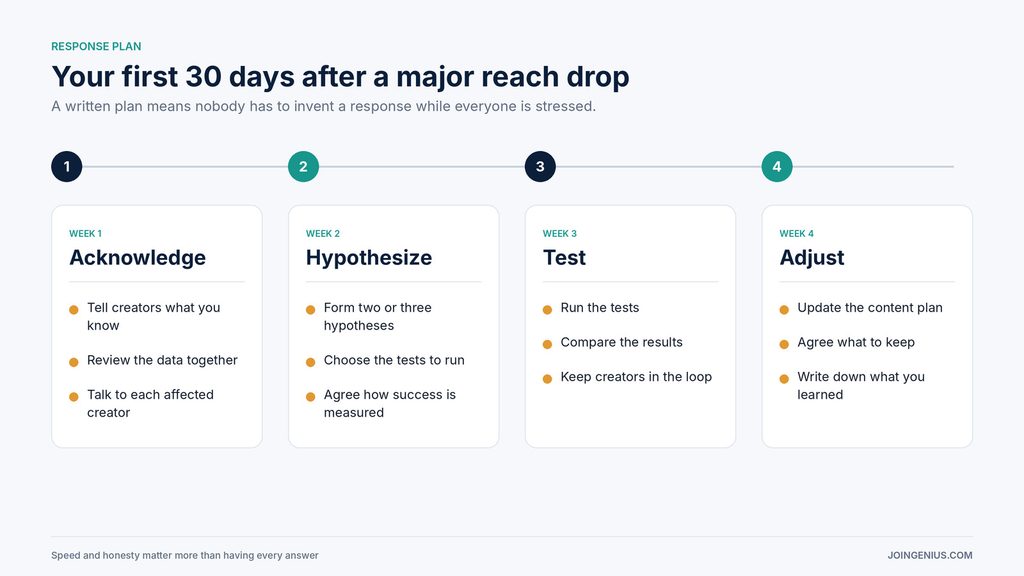
A simple 30-day plan helps. In the first week, acknowledge the change, review the data, and talk to each affected creator. In the second week, form a few hypotheses and choose tests. In the third week, run the tests and compare results. In the fourth week, adjust the content plan and agree on what to keep. Having the plan written down means the team does not have to invent a response while everyone is stressed.
Keep Creators Growing, Not Just Paid
Money keeps creators for a while. Growth keeps them for longer. A creator who feels they are learning and moving toward something is much less likely to leave when a bad month arrives.
Offer skills development, such as editing, storytelling, analytics, or audience research. Protect creative freedom so that creators are not forced to chase every trend. Create a path forward, whether that means a bigger role, a share in what they build, or a chance to lead a team.
Recognition matters too, and it should not depend entirely on view counts. Celebrate craft, consistency, and the quality of the work, especially during the weeks when the numbers do not tell the whole story.
Finally, make room for the creator as a person. Burnout is a quiet cause of churn, and algorithm pressure makes it worse because the feed never stops asking for more. Schedule real breaks, build a content buffer so a slow week does not become a crisis, and ask about workload honestly. A creator who feels looked after is far more likely to still be with you when the next change arrives.
Measure Retention and Adjust
What gets measured gets managed. Track how long creators stay, how many leave each year, and how satisfied they are with support, pay, and direction. A short survey every quarter is enough to start.
After any major platform change, hold a short review. Ask what signs you noticed, how quickly the team responded, and what you would do differently. Over time, those reviews build a playbook that makes the next shift easier to handle.
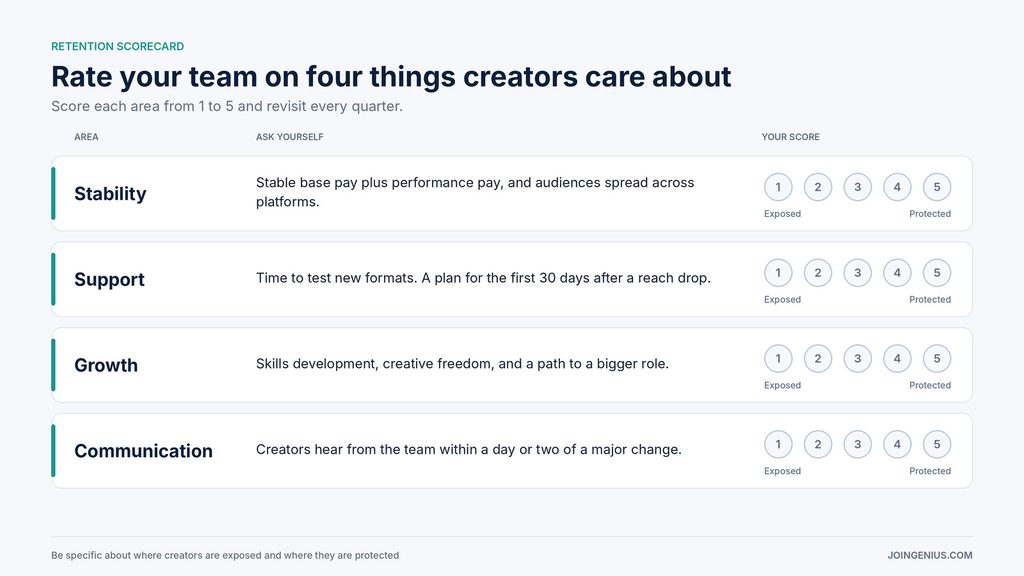
A scorecard helps keep the work honest. Rate your team on stability, support, growth, and communication. Be specific about where creators are exposed and where they are protected, and revisit the scores each quarter.
Build a Team That Can Weather the Next Shift
Algorithm changes are a permanent feature of working with platforms. They cannot be prevented, but they can be survived. Teams that spread creators across several channels, communicate quickly, share data openly, and invest in growth keep their best people through the rough patches.
A practical first step is to audit where your top creators’ audiences live today. If most of a creator’s reach sits on one platform, start there. Build a plan to broaden it, set up the support around it, and talk to the creator before the next change arrives. And if a creator does leave, a ready hiring pipeline shortens the gap and keeps the rest of the team from carrying the load.