
There are millions of businesses, but not all of them make it.
You have to look for gaps in the market to have a chance of standing out. Knowing where opportunities lie or when to switch gears can help you make smarter decisions for your business.
In this article, we’ll share the latest statistics on how many companies there are and the latest trends to help you assess whether you’re on the right path or if it’s time to pivot.
Top 38+ Business Statistics (Editor’s Picks)
We’ve handpicked 38+ of the latest statistics, facts, and trends about companies worldwide. Here are 6 that we believe will blow you away.
| 1 | There are around 359 million companies worldwide |
| 2 | There are 33.2 million businesses in the US |
| 3 | Small businesses make up 90% of all businesses globally |
| 4 | Approximately 100 million new businesses start each year worldwide |
| 5 | 90% of startups fail |
| 6 | 65.3% of small businesses are profitable |
How Many Companies Are There?
There are around 359 million companies worldwide (Statista)

The global business scene hit a new peak in 2023, with about 359 million companies operating up from 328 million in 2020. That’s a big jump in just a few years! It shows that even with the challenges, more and more people are diving into entrepreneurship, which keeps the business world buzzing with growth. It’s a sign of just how active and vibrant the global market has become.
Approximately 100 million new businesses start each year worldwide (Moyak)

Around 472 million entrepreneurs are working to launch 305 million companies globally, with about one-third of these ventures—100 million new businesses—starting each year. This highlights the constant flow of new entrepreneurial activity and shows how many people around the world are taking the leap to start their own ventures annually.
Small businesses make up 90% of all businesses globally (Profile Tree)
Small and medium-sized businesses account for 90% of all companies around the world. That means the vast majority of businesses you see, from local shops to online startups, fall into this category. These businesses are key players in job creation and economic growth, making them essential to local economies and the global market. Their massive presence shows how vital they are in keeping industries thriving.
Here is a table illustrating these statistics:
| Category | Percentage |
| Percentage of SMEs in global businesses | 90% |
| Percentage of SMEs in U.S businesses | 99.9% |
| Percentage of jobs provided by SMEs globally | 50% |
| Percentage of jobs provided by SMEs in most OECD countries | 60-70% |
| Number of exporting small businesses | 1.3 million |
There are about 20,000 large corporations in the U.S. (Clear Payments)
These companies, with 500 or more employees, play a major role in the economy. Despite being much fewer in number compared to small businesses, they generate a large portion of jobs, drive innovation, and significantly impact industries.
Large corporations employ 47.5% of the private sector workforce in the U.S. (Clear Payments)
Despite being far fewer in number, with only 20,000 large corporations, they employ as many people as the 31.7 million small businesses combined. Understanding the role of large corporations can help readers see how workforce distribution impacts the overall economy.
A large corporation typically employs around 4,000 workers on average (Clear Payments)
Some major companies, like Walmart and Amazon, employ far more than that. Walmart, for instance, has 2.1 million employees. The size of a corporation can greatly impact its influence on the job market, with larger companies having the capacity to employ hundreds of thousands.
64% of businesses start with $10,000 in capital (Luisa Zhou)
Most businesses kick off with around $10,000 to get going. For micro-businesses, it’s even less—some start with just $3,000. Interestingly, about 25% of small businesses dive in with no outside funding at all, relying solely on personal savings or other resources. This just goes to show that starting a business doesn’t always require a ton of money; it’s more about making the most of what you have.
50% of all new businesses start at home (Luisa Zhou)
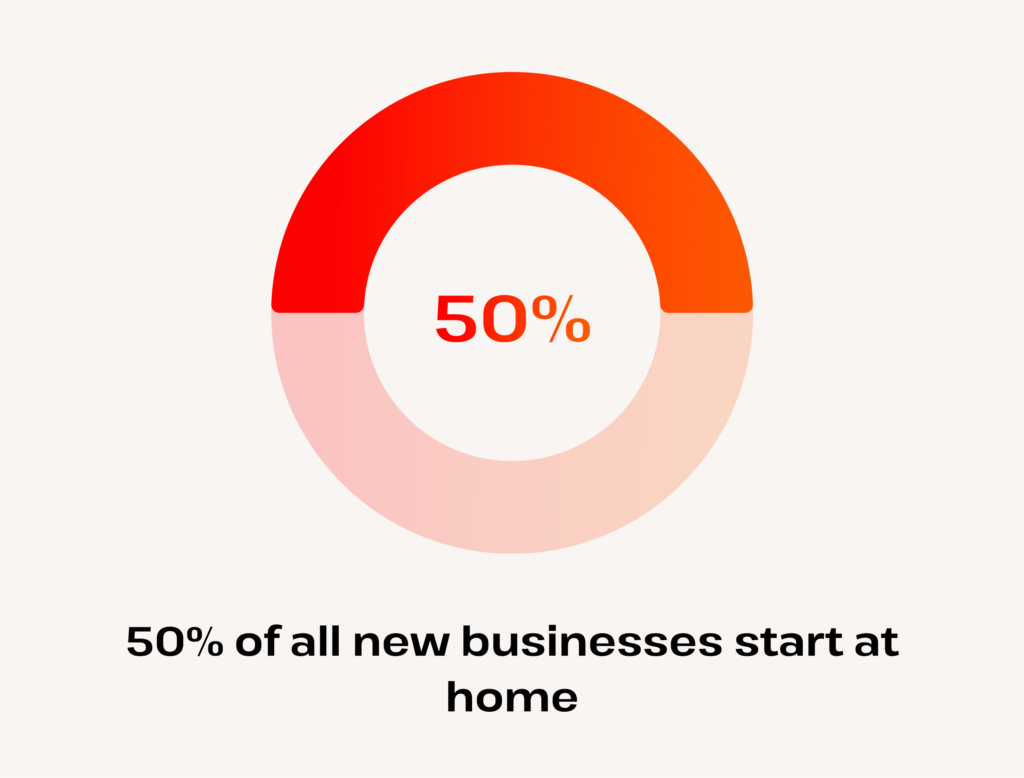
Half of new businesses get their start in the owner’s home, whether they have employees or not. Among businesses with employees, only 24% are home-based. The newer the business, the more likely it is to be run from home. For example, 32% of businesses two years old or younger operate from home, while this drops to 17% for those over 16 years old. This shows how many entrepreneurs start small, often at home, and then expand as they grow.
Businesses that budget effectively are 30% more likely to expand (Investopedia)
Companies that create and stick to a budget have a 30% better chance of expanding their operations. Effective budgeting helps businesses track expenses, manage cash flow, and allocate resources to growth initiatives. This proactive approach not only improves financial health but also opens up opportunities for investments in new markets, products, or services. By planning ahead financially, businesses are more prepared to seize growth opportunities.
Companies utilizing a franchise model have a success rate of roughly 90% within the first 5 years (NBC News)
Franchising proves to be a strong business model, with around 90% of franchises succeeding within the first five years. This high success rate is attributed to the structure, support, and proven business models that franchises offer. By adopting an established brand and system, franchisees can mitigate the risks typically associated with starting a new business from scratch, increasing their chances of long-term viability.
Businesses with 10 to 19 employees bring in $2.16 million a year (USA Today)
The more employees a small business has, the more money it tends to make. For instance, a business with just one to four employees averages around $387,000 a year. But as you add more staff, that number climbs. Companies with up to nine employees see revenues around $1 million annually. And if you have 10 to 19 employees, you’re looking at an average revenue of $2.16 million a year. It’s clear that growing your team can really boost your earnings.
68% of small-to-midsize businesses consider digital tools essential for scaling (Deloitte)
A solid 68% of small and midsize businesses say digital tools are a key part of growing their operations. Whether it’s using project management software, CRM systems, or marketing automation, technology helps them run things more smoothly and stay competitive. It’s becoming clear that, for most businesses, going digital isn’t just helpful—it’s necessary for staying on top of things and continuing to grow.
74% of owners say they couldn’t run their business without organizational tools (Review42)
Almost three out of four business owners admit they rely heavily on tools to keep things organized. Whether it’s managing projects, tracking progress, or handling daily tasks, these tools are a lifeline. For many, it’s not just a matter of convenience – it’s crucial to staying on top of everything and keeping their operations running smoothly.
Company Distribution by Region
There are 33.2 million businesses in the US (USA Today)
Nearly all of them are small businesses, with 31.7 million fitting that category. In comparison, there are only about 20,000 large corporations with more than 500 employees. Plus, there are 1 million startups in the country, showing that entrepreneurship is alive and well.
4.7 million businesses start in the US each year
Based on the last five years of business data, around 4.7 million new businesses are launched in the US annually. 2023 saw a record-breaking year with nearly 5.5 million businesses started, beating the previous high in 2021 of over 5.3 million.
There are 200 million companies in Asia (Statista)
The continent is already home to 50% of the world’s fastest-growing businesses. By 2025, Asia is set to represent half of the world’s GDP, with economic giants like China, India, Japan, and Indonesia leading the charge. These four countries will be among the largest economies globally.
Europe is home to around 31 million businesses (Hit Horizons)
Europe may have around 31 million businesses, but fewer new startups are launched compared to North and South America. This difference in entrepreneurial activity shows that, while Europe is economically strong with many established businesses, it’s not as focused on early-stage ventures as some other regions.
Business Sector Statistics
The healthcare industry boasts a first-year survival rate of 60% for small businesses (NAWBO)
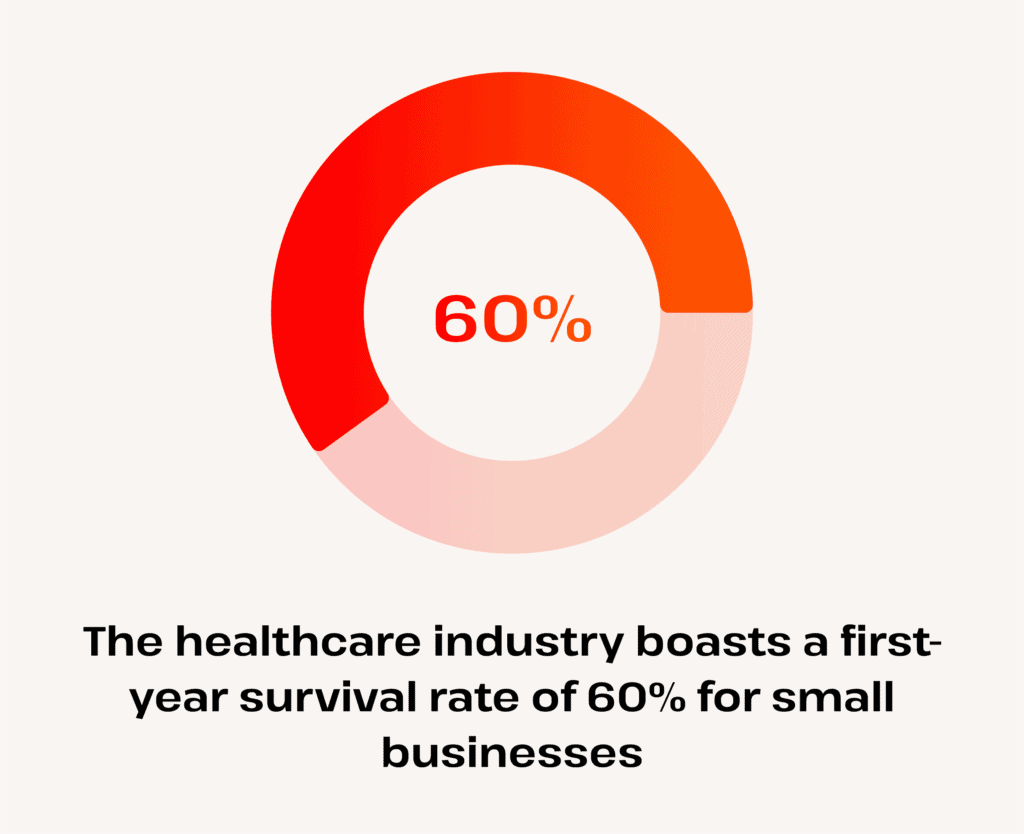
Healthcare stands out with 60% of small businesses in the industry making it through their first year. This high success rate suggests that the healthcare sector offers a more stable environment for new businesses compared to other industries. If you’re considering starting a business in healthcare, this statistic could be encouraging, as it indicates a relatively strong chance of early survival.
The construction industry has the highest failure rate (Freshbooks)
Construction businesses have a tough time staying afloat, with 25% of them failing within the first year. This could be due to unpredictable material costs, the need for skilled labor, and complex projects. The industry’s sensitivity to economic shifts, like changes in real estate demand, adds even more pressure, making it a challenging field for new businesses to thrive in.
Leisure and hospitality industry leads in job growth (BLS)
Over the past year, the leisure and hospitality sector added an average of 52,000 jobs each month, the highest among all industries. This growth highlights the sector’s strong recovery after the pandemic’s impact. Overall, the job market added 5.8 million jobs since last year, surpassing pre-pandemic levels by 240,000.
Professional and business services industry leads in job openings (BLS)
The professional and business services industry now has the most job openings, overtaking education and health services. This shift means there’s a big demand for roles in management, administration, and consulting. If you’re on the job hunt, this industry could be a goldmine. On the flip side, businesses in this field might struggle to find and keep the right talent. The job market is clearly shifting, so it’s a good time to explore these growing opportunities.
9,456 agricultural business applications were filed in September 2023 (NAWBO)
Agriculture is seeing a surge in interest. In September 2023, 9,456 applications were filed to start agricultural businesses. This marks a significant rise, with an 86.6% increase from August 2023. The growing interest in this sector could be a sign of increasing opportunities and innovations in agriculture, attracting new entrepreneurs to the field. If you’re considering an agriculture business, now might be a great time to get started given the rising momentum.
Small Business Statistics
99.9% of U.S. businesses are small businesses (Forbes)
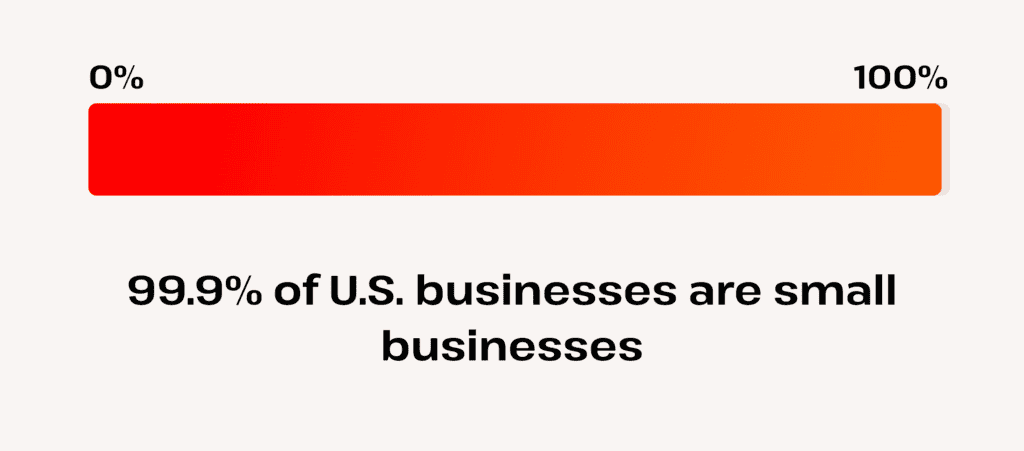
Small businesses are the backbone of the U.S. economy, making up 99.9% of all businesses. With 31.7 million small businesses across the country, they play a huge role in creating jobs and keeping the economy stable. Even though big corporations often steal the spotlight, it’s these small enterprises that truly drive America’s economic engine.
There are around 400 million small businesses worldwide (Luisa Zhou)
There are currently estimated to be over 400 million small and medium-sized enterprises around the world. These businesses are often considered the backbone of global economies, creating the majority of new jobs. Their impact is enormous, not just in terms of employment but also in driving innovation and economic growth on a global scale.
19% of small business owners put in over 60 hours a week (Fundera)
Over 70% of small business owners find themselves working more than 40 hours weekly, with 19% even clocking in over 60 hours—way above the national average of 38.6 hours per week. They’re often not paying themselves extra for those hours, which explains why their salaries can be surprisingly low. It’s a reminder of just how demanding and relentless running your own business can be.
65.3% of small businesses are profitable (Luisa Zhou)
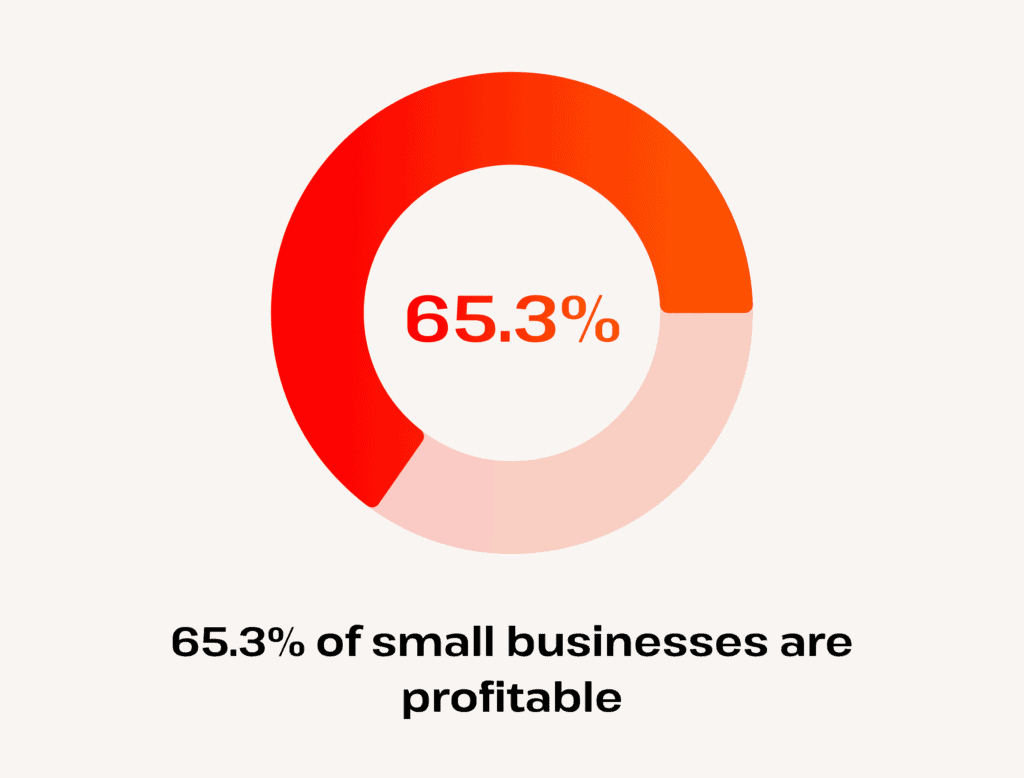
Right now, about 65% of small businesses are turning a profit, which is a big jump from just 40% in 2018. While that’s great news, it’s also worth noting that 35% of small businesses are still struggling to reach profitability. So, while more businesses are finding their footing, there are still plenty of challenges out there for a good number of small business owners.
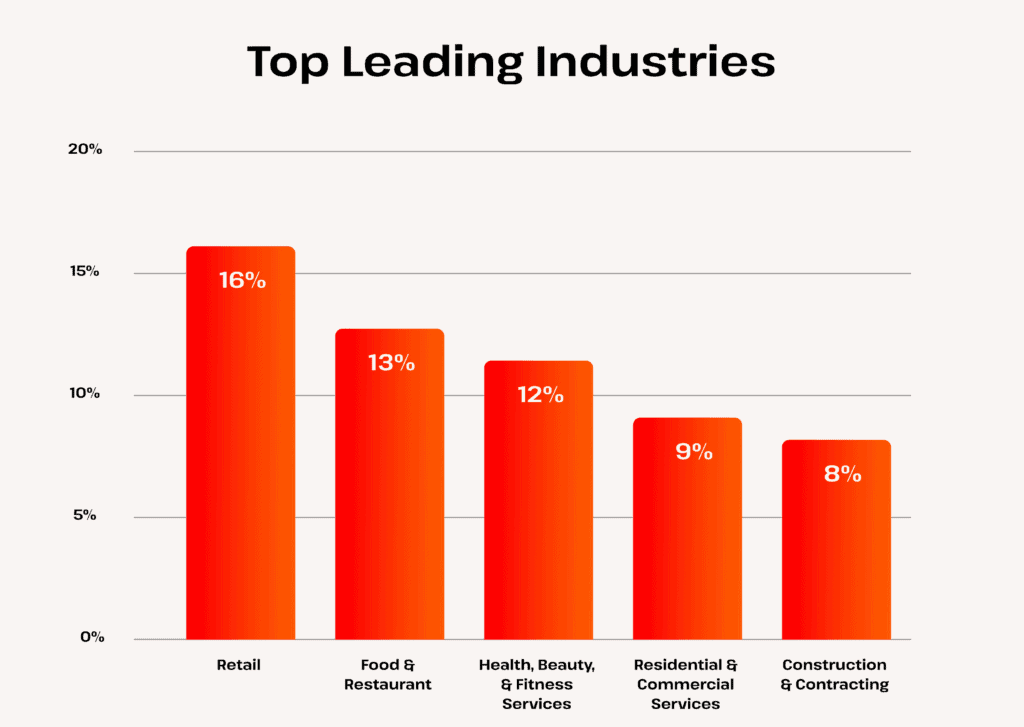
Let’s also take a look at the leading industries for small businesses:
10% of small businesses in the U.S. are veteran-owned (Military.com)
Veterans aren’t just serving in the military; many are stepping into the world of entrepreneurship. In fact, about 10% of small businesses across the U.S. are owned by veterans. They’re using their leadership skills from the military to run businesses and make a big impact on the economy. This shows how veterans are transitioning into civilian life and thriving as business owners.
46% of U.S. employees work for small businesses (Forbes)
Nearly half of all U.S. workers, 46%, are employed by small businesses. Despite most small businesses not having any staff, they still provide jobs to 61.6 million people. This shows how crucial small businesses are for creating jobs and keeping the economy stable. Their growth is essential for the continued health of the U.S. workforce and economy.
Small businesses have added 12.9 million jobs over the last 25 years (Forbes)
Small businesses have played a major role in job creation, adding nearly 13 million net new jobs in the U.S. over the past 25 years. This accounts for about two-thirds of all new jobs during that time. Despite many small businesses being run by solo founders, they continue to be a vital source of employment and economic growth, contributing significantly to the nation’s job market.
Almost 50% of small businesses consider increasing profit as their top goal (Luisa Zhou)
Nearly half of small business owners say their main focus is boosting profits. It makes sense since growth and sustainability often depend on improving the bottom line. Whether they’re aiming to cut costs, raise prices, or expand their customer base, increasing profit is a priority that drives many business decisions.
30% of small businesses are built with the intention of being sold (HBR)
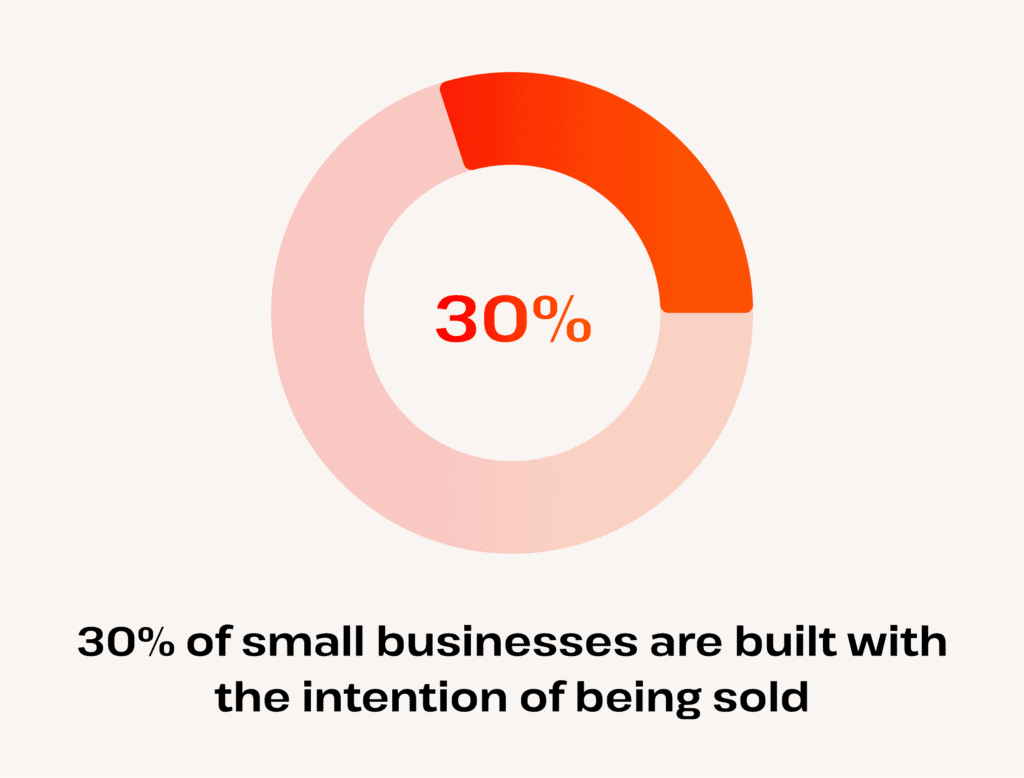
Roughly 30% of small business owners start their companies with the goal of selling them in the future. Instead of building a business to run long-term, many entrepreneurs aim to grow and eventually sell to a larger company or private buyer. This exit strategy allows owners to cash in on their hard work and investment once the business reaches a certain level of success.
Start-up Statistics
90% of startups fail (Exploding Topics)

A whopping 90% of startups don’t make it. While the first year only sees a 10% failure rate, years two through five can be brutal for new businesses, with 70% failing during that period. These numbers highlight just how tough the entrepreneurial journey can be, with most businesses struggling to survive beyond the early stages.
A 60-year-old is 3x more likely to build a successful startup than a 30-year-old (Entrepreneur)
It turns out older entrepreneurs have a much higher chance of success compared to younger founders. A 60-year-old is three times more likely to create a successful startup than a 30-year-old. This might be because they bring more experience, industry knowledge, and a better network, all of which help in building a business.
It takes just 6 days to start a business in the U.S. (Dynadot)
Getting a business up and running in the U.S. is a fast process. On average, it only takes six days to register your business. The steps involved are straightforward, and online resources make it easier to file the necessary paperwork. This quick timeline means entrepreneurs can focus on growing their venture instead of being stuck in lengthy bureaucratic processes.
Let’s take a look at how long it takes for other countries around the world:
- New Zealand – 1 day
- Singapore – 3 days
- Saudi Arabia – 5 days
- UK & Ireland – 13 days
- India – 30 days
- China – 38 days
Only 60% of startups have a strategy to adapt to technological changes (Quixy)
It’s surprising that 40% of startups don’t have a game plan for handling tech changes. With how fast technology shifts, having a strategy to adapt is key for staying competitive. Without it, businesses might miss out on growth opportunities or fall behind. Being ready to tackle tech developments is what helps companies stay in the game and keep pushing forward.
Service-based industries account for nearly 60% of new startups (OECD)
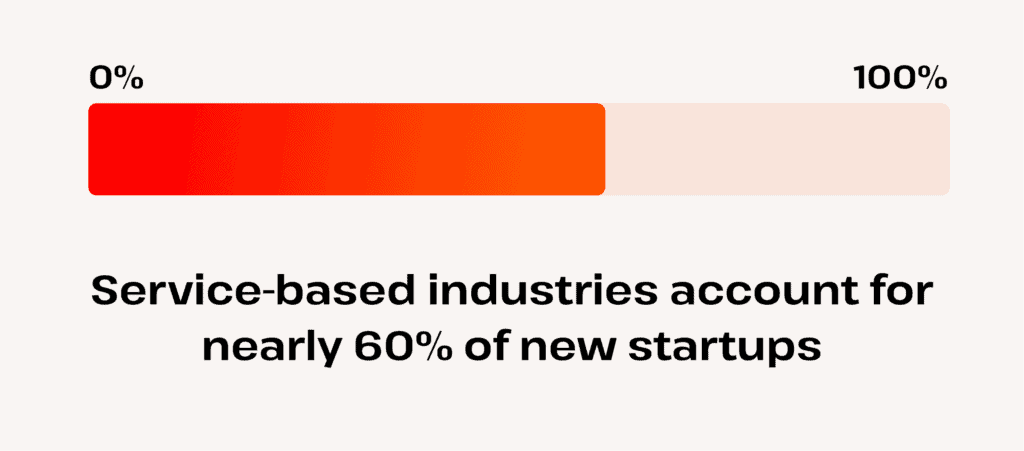
It turns out that most new businesses popping up are in service-based industries, covering things like healthcare, consulting, and personal services. Nearly 60% of startups are heading in this direction, probably because they’re easier to get off the ground with lower startup costs and fewer barriers. Entrepreneurs seem to be jumping into service sectors because they can grow quickly and meet rising customer demands. This trend shows how service-based businesses are taking the lead in today’s entrepreneurial landscape.
Challenges Faced by New Businesses
Labor remains the number one cost for businesses at 70% of spending (Forbes)
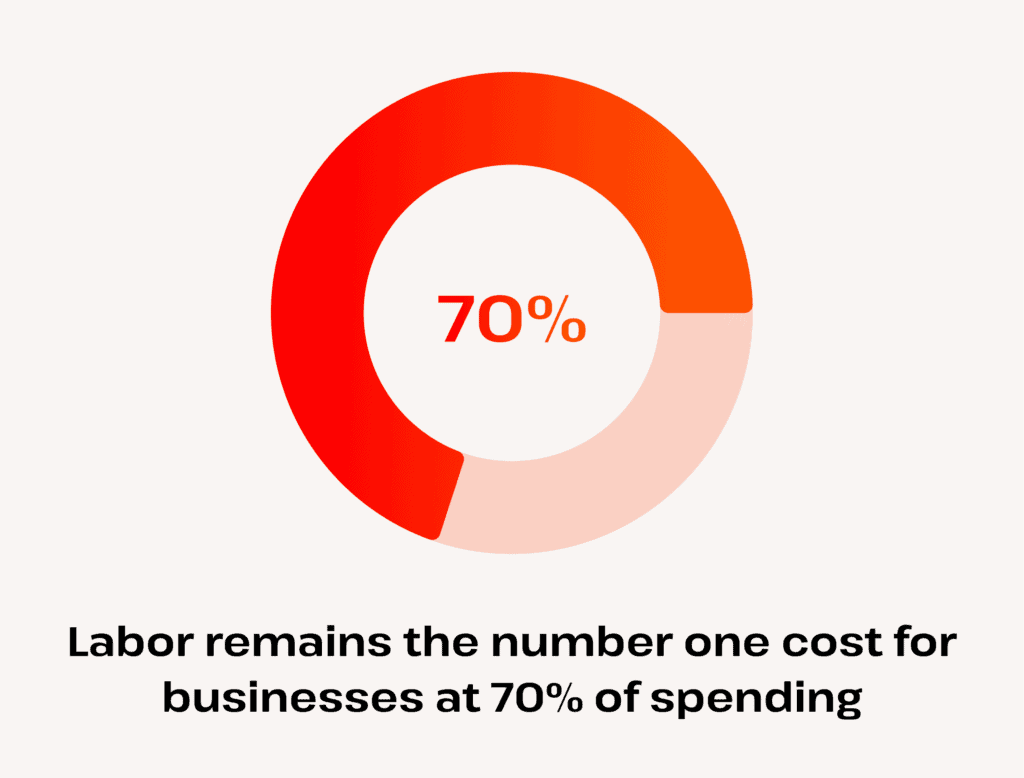
For most businesses, labor is the biggest expense, accounting for 70% of their total spending. Because of this, companies often look to cut labor costs first when trying to save money. This can mean layoffs, outsourcing to cheaper labor markets, or using software to reduce the need for as many employees as possible.
60% of small businesses have $50,000 or less in debt (Semrush)
Most small businesses carry less than $50,000 in debt. This means they are typically managing to keep their borrowing low, which helps reduce financial strain and risk. For many small business owners, keeping debt manageable is important to staying on track and ensuring the business can grow without taking on too much financial pressure.
20% of small businesses don’t make it through the first year (Fundera)
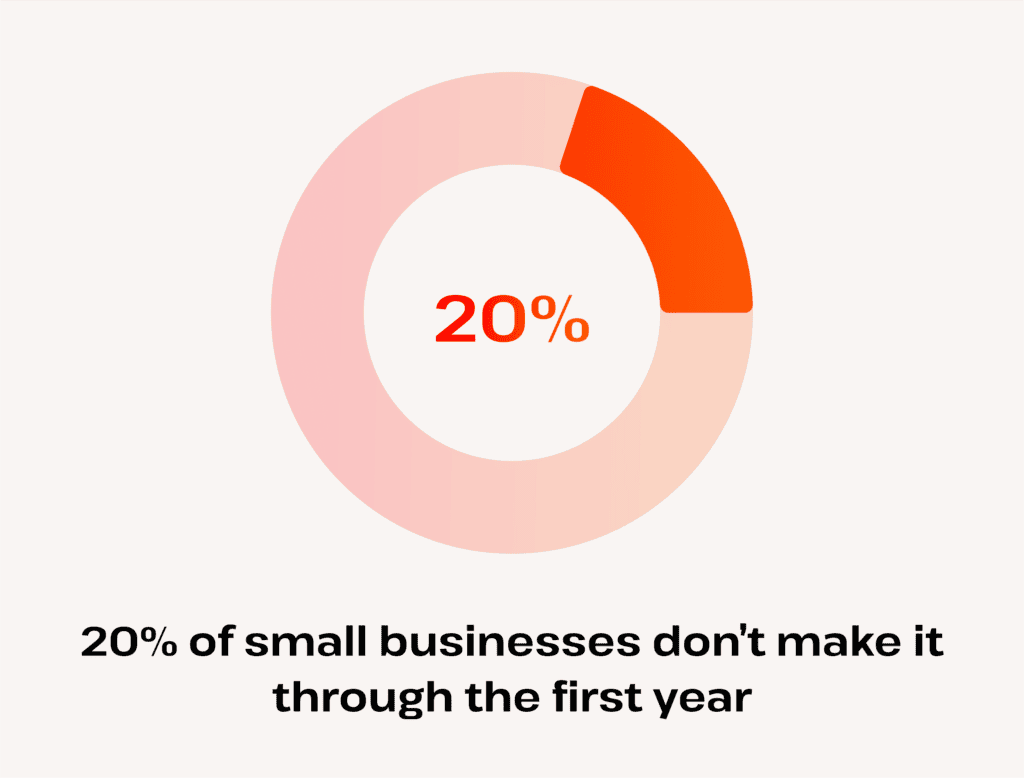
Starting a small business is tough. About 1 in 5 don’t make it through their first year. While 70% of those that do will survive their second year, the road gets bumpier over time. By the 10-year mark, only 30% of small businesses are still running. It’s a reminder that building a business is a long game, and sticking it out requires resilience, adaptability, and a lot of hard work.
82% of small businesses fail because of cash flow problems (Semrush)
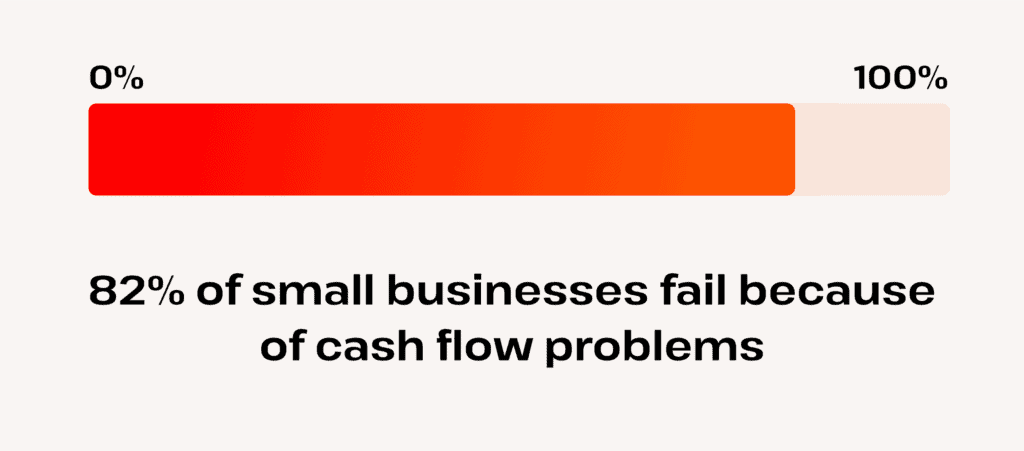
Most small businesses don’t make it because they struggle with cash flow, 82% of them, to be exact. It’s not just about making money; it’s about making sure there’s enough on hand to cover expenses. When cash flow isn’t managed well, businesses can run into issues like unpaid bills and missed opportunities, which can lead to closing down. Keeping a close eye on cash flow is key to staying afloat in the small business world.
Lack of market need is the second most common reason small businesses fail (CB Insights)
After running out of money, not having enough demand for a product or service is the next big reason why small businesses don’t survive. It doesn’t matter how much funding a business has if people aren’t interested in what it’s offering. That’s why understanding your target audience is critical before you launch. You’ll want to make sure there’s enough interest and ongoing demand to keep your business running in the long term.
Conclusion
You need to be ready to put your full energy into your business if you want it to succeed.
With 90% of startups failing and 100 million new businesses starting each year, the competition is tough. Only 65.3% of small businesses make a profit, which shows how hard it is.
To make the most of your energy, you need to spot gaps in the market, focus on what works, and double down on it. Businesses that can do this will rise above the competition.
FAQ
How many businesses are there worldwide?
There are approximately 359 million businesses globally as of 2024, with new companies being formed every year.
How many new businesses start each year?
Around 100 million new businesses are launched annually, highlighting the steady growth of entrepreneurship.
What percentage of businesses are small businesses?
Small businesses make up 90% of all businesses worldwide, playing a key role in local and global economies.
How many businesses in the U.S. are startups?
Roughly 4.7 million startups are launched each year in the U.S., with a record 5.5 million in 2023.
What industries see the most new businesses?
Service-based industries like healthcare and consulting account for nearly 60% of new startups globally.