

The BPO industry has changed a lot over the years. It started with basic call center tasks, but AI and remote work, especially due to COVID-19, have transformed everything.
These changes have made things more efficient and opened up access to talent from around the world, but they also make people worry about losing jobs.
This article will help you understand these changes, explore key trends and insights from different countries and industries, and show how BPO can boost your business strategy.
Top BPO Market Size Statistics (Editor’s Picks)
We’ve handpicked 27+ of the latest statistics, facts, and trends about the BPO Market. Here are 6 that we believe will blow you away.
| 1 | The global business process outsourcing market is expected to reach $525 billion by 2030 |
| 2 | The global BPO market currently stands at $307 billion |
| 3 | Around 1.3 million people work in the BPO sector in the Philippines |
| 4 | 37% of small businesses outsource at least one business process |
| 5 | North America accounts for 36% of the global BPO market revenue |
| 6 | By 2025, over 70% of customer service firms will start using generative AI |
Global Business Process Outsourcing (BPO) Market Size
The global BPO market currently stands at $307 billion (Grandview Research)
Projected to grow at a CAGR of 9.4% over the next seven years, business process outsourcing involves delegating various business operations to external service providers, offering advantages like cost savings, enhanced flexibility, and improved quality of services.

BPO helps businesses save money and improve services, especially in healthcare, finance, and IT.
Let’s see how these benefits are spread across these important areas:
| Sector | 2024 (USD Billion) | 2025 (USD Billion) | 2026 (USD Billion) | 2027 (USD Billion) | 2028 (USD Billion) | 2029 (USD Billion) | 2030 (USD Billion) |
| Finance & Accounting | 46.05 | 46.89 | 51.16 | 51.83 | 56.55 | 61.69 | 67.31 |
| Human Resource | 36.84 | 40.20 | 47.51 | 47.84 | 52.20 | 56.95 | 62.13 |
| Sales & Marketing | 46.05 | 50.24 | 58.47 | 63.79 | 69.60 | 80.68 | 88.02 |
| KPO | 30.70 | 36.85 | 36.54 | 43.86 | 52.20 | 56.95 | 56.95 |
| Proc. & Supply Chain | 36.84 | 40.20 | 43.85 | 43.86 | 52.20 | 52.20 | 62.13 |
| Training & Development | 24.56 | 30.15 | 29.24 | 35.88 | 34.80 | 42.71 | 41.42 |
| Customer Services | 30.70 | 33.50 | 40.20 | 43.86 | 52.20 | 52.20 | 62.13 |
| Logistics | 24.56 | 30.15 | 29.24 | 35.88 | 30.45 | 37.96 | 41.42 |
| Others | 30.70 | 26.80 | 29.24 | 31.90 | 34.80 | 33.22 | 36.24 |
BPO Market Size Growth Projection
The business process outsourcing (BPO) market is forecast to reach a value of $525 billion by 2030 (Grandview Research)
Outsourcing through BPO provides significant advantages such as cost savings, more flexibility, and improved service quality, driving demand in sectors like healthcare, finance, and IT. This growth enables businesses to redirect focus towards their core operations which helps them create more value for their customers.
BPO Market Size By Industries
Customer services holds the leading position in the BPO market (Grandview Research)

The growth in this segment came from an expanding need for service centers providing both offline and online technical support globally.
Accounting and IT services are the most popular outsourced processes for small businesses (Clutch)

These functions are the most commonly outsourced due to their complexity, freeing up resources for core business operations. Digital marketing follows closely, with 34% of small businesses outsourcing this area.
Over 45% of the market revenue comes from the IT & telecommunications sector (Skyquest)
This area is expected to grow a lot, helped by an increase in IT companies and more digitalization.
Human resource services are the fastest-growing BPO segment (Strait Research)

By 2030, this segment is projected to reach USD 91,590 million, growing at an 8.9% annual rate due to higher demand for services like payment processing, recruitment, and employee benefits.
Customer service leads the BPO market with significant growth expected (Strait Research)
It is projected to be worth USD 178 billion by 2030, expanding at a 9.5% yearly rate due to the growing demand for technical support in various service centers.
BPO Market Size By Region
The BPO industry in Japan is expected to hit $23.27 billion in revenue (Invedus)
This sector will experience an annual growth of 4.39%, leading to an estimated market size of $28.84 billion by the end of 2029.
Around 1.3 million people work in the BPO sector in the Philippines (Platinum Outsourcing)

This industry significantly boosts the Philippine economy, contributing $30 billion in revenue.
Companies that outsource to the Philippines can cut labor costs by 70% (OutsourceAccelerator)
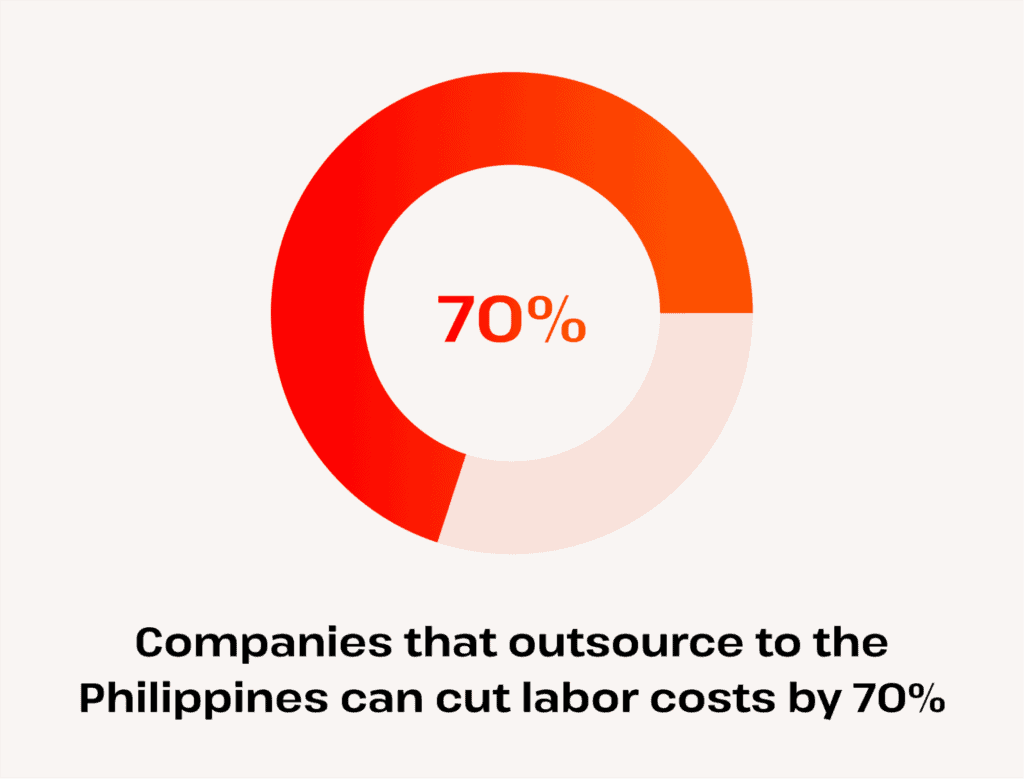
Due to its lower cost of living and wage ranges, outsourcing to the Philippines offers significant savings and allows companies to provide a decent wage for local workers. This advantage is rooted in the country’s status as a developing nation in Southeast Asia, which maintains a lower cost of living than neighboring countries.
Business process outsourcing accounts for 9% of the Philippines’ GDP (Invedus)
The sector is a major economic driver, employing about 1 million locals and generating around $27 billion. The high literacy rate (97%) and low labor costs make the Philippines a favored outsourcing destination.
More than 800 firms use the Philippines for call center services (GoRemotely)

This includes well-known companies like Chevron and Citibank. The outsourcing industry there was projected to reach over $50 billion in 2020, up from half that in 2016, with call centers driving much of this growth.
North America accounts for 36% of the global BPO market revenue (Grandview Research)
This significant market share is anticipated to grow, with North America likely to maintain its leadership due to increasing demands from tech giants in the region. Customized services and the growing reliance on cloud technologies are set to propel this market growth further.
Asia Pacific has a 25% share in the global BPO market and is the fastest-growing region (Grandview Research)

This growth comes from cheaper labor costs, a growing need for skilled workers, and significant digital investments from leading firms like Accenture and Wipro.
India’s BPO market is expected to grow 11% yearly until 2030 (Grandview Research)
This is due to new digital technologies, an increase in e-commerce, and more demand for outsourcing in various industries like banking, healthcare, and retail.
China hosts over 6,600 outsourcing companies (China Business Review)
The country is enhancing its global outsourcing presence by boosting quality and positioning itself as a leading player in the global market.
Business Process Outsourcing Trends
37% of small businesses outsource at least one business process (Clutch)
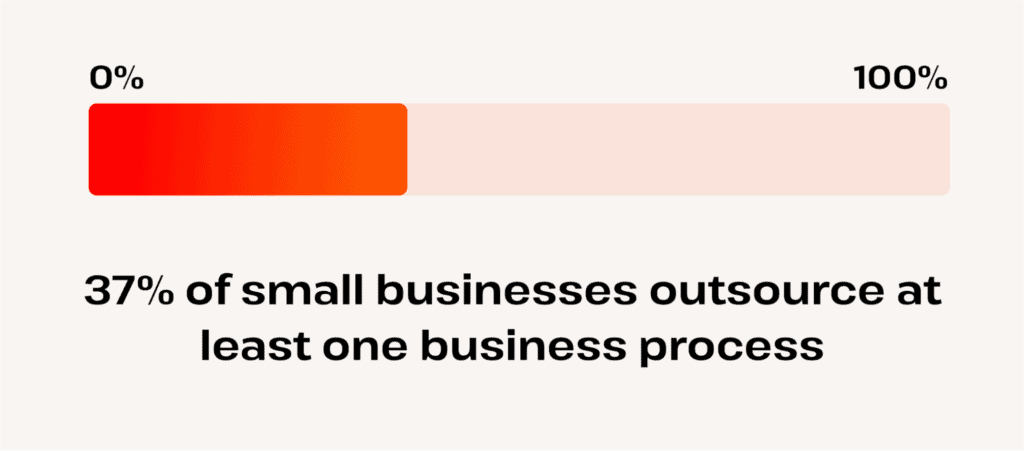
Additionally, a majority, 52%, expect to increase their use of outsourcing soon, indicating a growing preference for external expertise to support business functions.
83% of small businesses plan to keep or increase their BPO budget (Clutch)

Despite challenges and economic uncertainties, including concerns about a potential recession, small business leaders are optimistic about growth and continue to invest in business process outsourcing.
76% of companies outsource IT functions, compared to 52% that outsource business operations (Finmasters)
This data highlights a significant preference for outsourcing technically complex IT tasks over general business activities.
83% of service teams use phone service for customer support (Hiver)
Phone remains the most popular method for customer interactions, supported by advanced telephony systems that handle customer service, sales, and technical support efficiently.
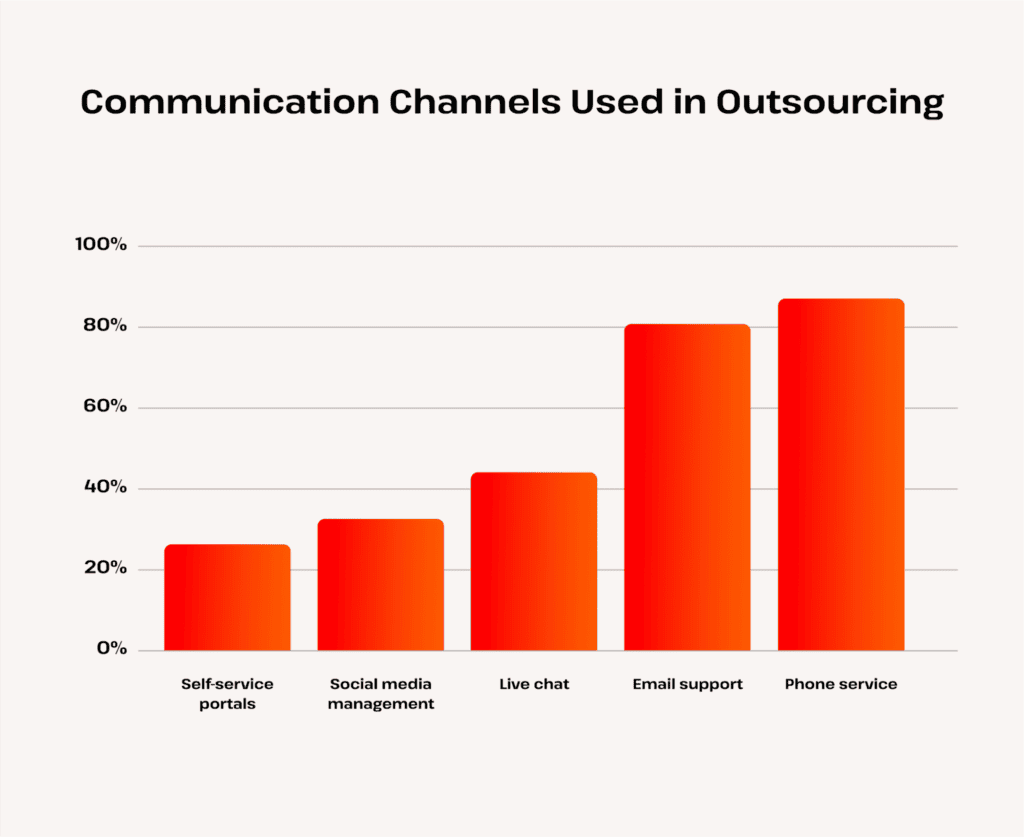
Communication channels used in outsourcing:
- Phone Service: 83%
- Email Support: 77%
- Live Chat: 42%
- Social Media Management: 31%
- Self-Service Portals: 25%
Lead creation and cold calling are the most commonly outsourced operations (Sopro)
This way, they can focus on the main parts of their business while experts find new leads and make those first calls.
Daily communication is preferred by 53% of companies engaging in outsourcing (Enterprise App Today)

This frequent engagement helps ensure that operations run smoothly and issues are addressed promptly. Meanwhile, 38% communicate weekly, and a smaller group, 8%, communicates monthly, showing a range of communication practices based on various outsourcing needs.
25% of companies use email as their main way to communicate for outsourcing (Enterprise App Today)
Email is just as popular as video conferencing, which is also used by 25% of businesses. Other methods include phone calls (20%), instant messaging (17%), and project management boards (12%), showing the different ways companies keep in touch with their outsourcing partners.
80% of companies do not plan to outsource sales or marketing jobs (Teamstage)

Sales and marketing are among the roles that many organizations prefer to keep in-house. Similarly, strategic planning is another key activity that 89% of businesses choose not to outsource, reflecting a preference to maintain control over critical functions and strategies.
By 2025, over 70% of customer service firms will start using generative AI (Nearsol)
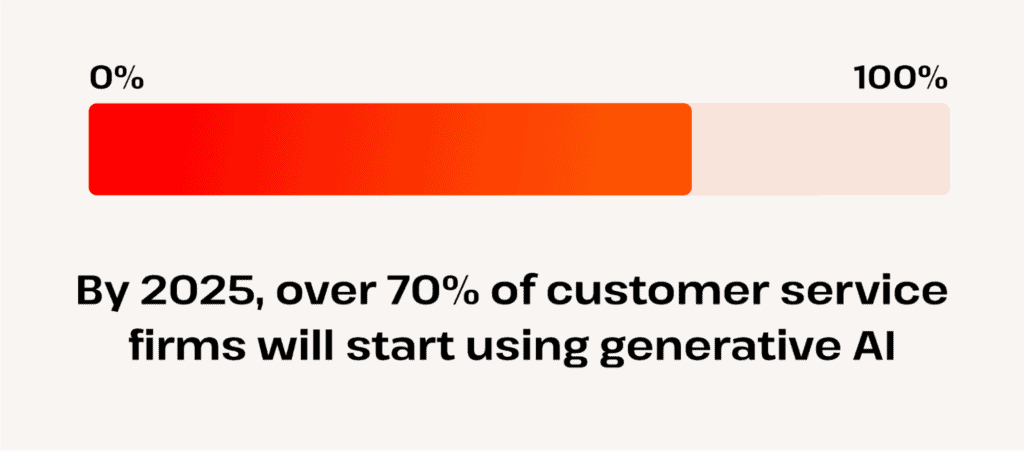
This move is expected to make agents more efficient and improve how customers experience services. Also, a recent survey shows that more than half of home consumers like the idea of using AI to better customer service.
Robotic Process Automation (RPA) in BPO can cut costs by up to 40% (Unity Communications)
This happens as businesses use RPA to automate routine tasks, making operations faster and less expensive.
Conclusion
The business process outsourcing (BPO) market is set to grow significantly, reaching an impressive $525 billion by 2030.
This growth highlights the increasing reliance on outsourcing in key areas like technology, healthcare, and finance. Notably, North America leads with 36% of the market’s revenue, showcasing its major role in this industry.
By 2025, expect a big shift as over 70% of customer service companies will start using advanced AI to make their operations more efficient.
This trend points to a future where businesses can save costs and enhance service quality by embracing new technologies and outsourcing strategies.
FAQ
What are the benefits of outsourcing to the Philippines?
The Philippines offers significant cost reductions due to its lower living costs and wages, making it a preferred destination for labor-intensive BPO services like call centers.
What is Robotic Process Automation (RPA), and how does it benefit BPO?
RPA involves automating routine tasks to streamline operations, which can reduce costs by up to 40%, making business processes quicker and less expensive.
What country has the largest BPO market?
The United States leads the BPO market, thanks to its strong demand for outsourcing services and advanced technology.
What is the size of the BPO industry market?
Right now, the global BPO market is worth $307 billion, and it’s expected to grow to $525 billion by 2030 due to increasing needs across various industries.
What is one of the biggest benefits of BPO?
A major benefit of BPO is cutting costs. It helps companies save money on staff and office expenses, allowing them to focus more on their main business activities.