
The way people buy things online changed more in the last two years than it did in the previous decade.
That sounds dramatic. But here’s the reality: consumers now expect AI powered recommendations, same day delivery, and the ability to buy directly from a TikTok video. If your ecommerce strategy looks the same as it did in 2022, you’re already behind.
The businesses winning right now aren’t just following ecommerce trends. They’re using them to create shopping experiences that feel almost effortless. And that’s exactly what we’re covering today.
This guide breaks down the 12 most important online shopping trends for 2026, with specific tactics you can use this quarter. No fluff. No “maybe consider this.” Just what’s working and how to do it.
Why Ecommerce Growth Is Accelerating (Not Slowing Down)
There’s a common misconception that digital commerce has peaked. The pandemic spike is over, people are back in stores, and online sales are flattening out.
That’s not what the data shows.
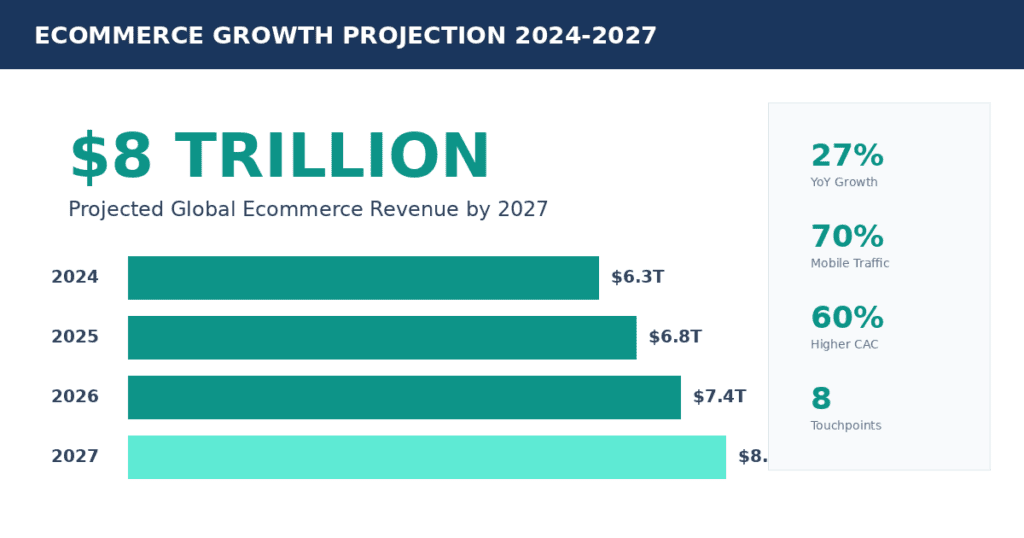
Global ecommerce revenue hit $6.3 trillion in 2024 and is projected to reach $8 trillion by 2027. The growth rate has normalized, yes. But “normalized” still means double digit increases year over year.
What changed is where that growth is coming from. Three years ago, the gains came from first time online shoppers. Today, they come from existing customers buying more frequently, spending more per transaction, and expecting more from every interaction.
This shift matters for your strategy. Customer acquisition costs have increased by 60% since 2020. The businesses seeing real ecommerce growth are the ones investing in retention, personalization, and customer experience rather than just pouring money into ads.
💡 QUICK TIP The average ecommerce customer now needs 8 touchpoints before making a purchase, up from 5 in 2020. Your marketing needs to meet them across more channels without feeling repetitive or desperate.
The Trends That Actually Matter in 2026
Not every trend deserves your attention. Some are overhyped. Others are real but irrelevant to most businesses.
Here are the 12 trends that are moving the needle for companies across industries, with the data to back them up.
1. AI Powered Shopping Experiences
This isn’t about chatbots anymore. AI in ecommerce has evolved into something much more useful.
The standout applications right now are dynamic pricing, personalized product recommendations, and predictive inventory management. Brands using AI driven personalization are seeing 15 to 20% higher conversion rates compared to static experiences.
What makes this work is specificity. Generic “you might also like” suggestions don’t cut it. The winning approach uses browsing behavior, purchase history, time of day, and even weather data to surface products at exactly the right moment.
Amazon’s recommendation engine now drives 35% of their total revenue. You don’t need Amazon’s resources to implement similar tactics. Tools like Dynamic Yield, Nosto, and Clerk.io make AI personalization accessible for mid market brands.
Visual search is another AI application picking up steam. Customers snap a photo of something they like and want to find it online. Lenso.ai powers reverse image search that helps shoppers find products from photos which is useful for brands selling visually-driven products where customers often say ‘I want something like this’ but can’t describe it in words.
For businesses looking to implement these tools effectively, having the right talent acquisition strategy becomes critical. You’ll need team members who understand both the technical and strategic sides.
2. Mobile Commerce Dominance
Mobile commerce isn’t a trend anymore. It’s the default.
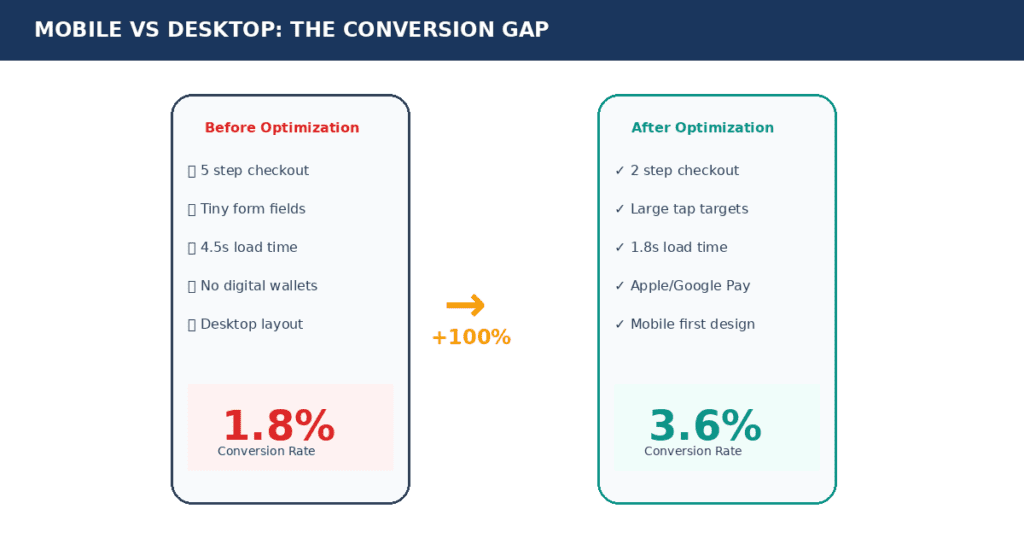
Over 70% of ecommerce traffic now comes from mobile devices. But here’s the problem: mobile conversion rates are still 50% lower than desktop. That gap represents billions in lost revenue.
The culprit is usually checkout friction. Tiny form fields, slow page loads, and clunky payment processes drive mobile shoppers away.
Brands fixing this are seeing dramatic results. Simplifying mobile checkout from 5 steps to 2 can increase conversion rates by 35%. Adding Apple Pay and Google Pay as primary options (not buried alternatives) pushes that even higher.
| Mobile Optimization Factor | Impact on Conversion |
| One click checkout | +25 to 35% |
| Page load under 2 seconds | +15 to 20% |
| Mobile first design | +10 to 15% |
| Digital wallet integration | +20 to 30% |
| Autofill enabled forms | +10 to 12% |
These optimizations require proper implementation. Sitewired specializes in building mobile-first ecommerce experiences where checkout is streamlined from day one. Retrofitting an old site for mobile often creates more problems than starting fresh.
3. Social Commerce Integration
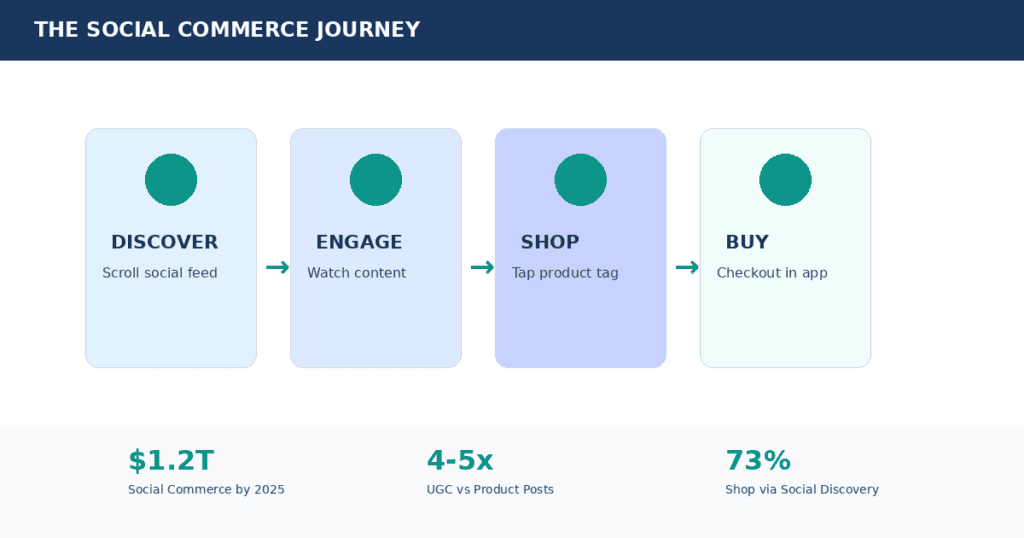
The line between social media and online sales has essentially disappeared.
Instagram, TikTok, and Pinterest now function as full shopping platforms. Users discover products, read reviews, and complete purchases without ever leaving the app. Social commerce is projected to hit $1.2 trillion globally by 2025.
What’s working best is native content that doesn’t feel like advertising. User generated content, influencer partnerships, and shoppable livestreams outperform traditional product posts by 4 to 5x.
The key insight: social commerce succeeds when products are embedded in entertainment or education. Tutorial style content showing products in action converts significantly better than static product images.
Editing product visuals before they go live makes a noticeable difference in how that content performs. Luminar Neo’s AI-powered batch editing tools let teams process product photos to a consistent visual standard without requiring a professional retoucher for every campaign.
⚠️ COMMON MISTAKE Treating social commerce as just another sales channel. The shopping behavior on social platforms is fundamentally different. Users want discovery and entertainment first. Hard selling kills engagement and tanks your algorithm placement.
4. Subscription Commerce Models
Recurring revenue isn’t just for software companies anymore.
Subscription commerce has grown 100% annually for five consecutive years. Everything from razors to pet food to clothing now comes in subscription format. The appeal is clear: predictable revenue, higher lifetime value, and lower customer acquisition costs.
But the model is evolving. Rigid “get this box every month” subscriptions are losing ground to flexible options. The brands winning now offer pause, skip, and swap functionality. They let customers control frequency and product selection.
The brands winning now offer pause, skip, and swap functionality. Utterbond gives Shopify merchants exactly this, with subscriber-controlled frequency changes, product swaps, and pause options built into the customer portal, so customers stay on their terms rather than canceling when life gets inconvenient.
Dollar Shave Club pioneered this space. Now brands like Prose (custom hair care) and Stitch Fix (personalized styling) show how subscription commerce can work across categories.
5. Buy Now Pay Later Expansion
Buy now pay later (BNPL) options increased average order values by 45% when implemented correctly.
Services like Klarna, Affirm, and Afterpay have moved from niche financing options to expected features. Over 60% of Gen Z and Millennial shoppers have used BNPL in the past year.
The psychology is straightforward. Splitting a $200 purchase into four $50 payments feels more manageable, even when the total is identical. This reduces cart abandonment on higher priced items significantly.
One caution: BNPL fees can eat into margins. Transaction costs typically run 3 to 6% depending on the provider. Run the numbers before implementing.
6. Omnichannel Retail Becomes Non Negotiable
Customers don’t think in channels. They think about getting what they want, when and how they want it.
Omnichannel retail means your online and offline experiences work together seamlessly. Buy online, pick up in store. Start a purchase on mobile, finish on desktop. Return an online order at a physical location.
Brands with strong omnichannel strategies retain 89% of their customers, compared to 33% for brands with weak omnichannel presence. The difference is staggering.
Implementation requires connecting your systems. Inventory visibility across channels is the foundation. Real time stock information prevents the frustration of “available online, not in store” experiences that damage trust.
For companies scaling their omnichannel operations, outsourcing certain functions can help manage complexity without overextending internal teams.
7. Sustainable Shopping Demands
Environmental consciousness went from nice to have to purchase driver.
73% of consumers say they would change their purchasing habits to reduce environmental impact. More importantly, they’re willing to pay 10 to 15% more for sustainable products.
This creates opportunity and scrutiny. Greenwashing doesn’t work anymore. Consumers research claims. They want specifics: carbon neutral shipping, recyclable packaging, ethical sourcing documentation.
Brands leading here are transparent about what they’ve achieved and what they’re still working on. Patagonia’s “Don’t Buy This Jacket” campaign worked because it was genuine, not performative.
✅ KEY TAKEAWAY Sustainability claims must be specific and verifiable. “Eco friendly” means nothing. “100% post consumer recycled packaging” means something. The difference determines whether customers trust you.
8. Voice Commerce and Conversational Shopping
Voice commerce hasn’t hit the mainstream adoption many predicted. But it’s growing steadily in specific use cases.
Reordering consumable products works well with voice. Grocery items, household supplies, and personal care products account for most voice purchases. Complex or high consideration purchases don’t translate as effectively.
The opportunity is in voice initiated research. Many shopping journeys start with voice search even when they end on a screen. Optimizing for voice search queries (longer, more conversational phrases) improves discoverability.
9. Direct to Consumer Evolution
The direct to consumer model has matured past the venture backed hype phase.
DTC brands face a reality check: customer acquisition costs on Facebook and Instagram have tripled since 2019. The math that worked in 2018 doesn’t work now.
Winners are diversifying. Wholesale partnerships, retail presence, and marketplace listings supplement direct channels. Warby Parker, Allbirds, and Casper all expanded beyond pure DTC.
The lesson: direct-to-consumer shouldn’t mean only direct to consumer. Control your brand experience where possible. Meet customers where they already shop when necessary.
10. Checkout Optimization as Competitive Advantage
Every additional step in checkout costs you 10% of potential customers.
Checkout optimization has become a genuine differentiator. The best experiences now complete in under 60 seconds. They remember returning customers. They offer multiple payment options without overwhelming choice.
Guest checkout remains essential. Forcing account creation increases abandonment by 35%. Offer account creation after purchase when the customer already has momentum.
Progress indicators, clear error messages, and trust badges at payment still move the needle. These basics get overlooked surprisingly often.
Organizations looking to improve their checkout experiences often benefit from talent sourcing tools that help find UX specialists and conversion rate optimization experts.
11. Hyper Personalization at Scale
Generic marketing messages generate generic results.
Modern retail technology enables personalization that was impossible five years ago. Email subject lines, product recommendations, landing page content, and even pricing can adapt to individual users in real time.
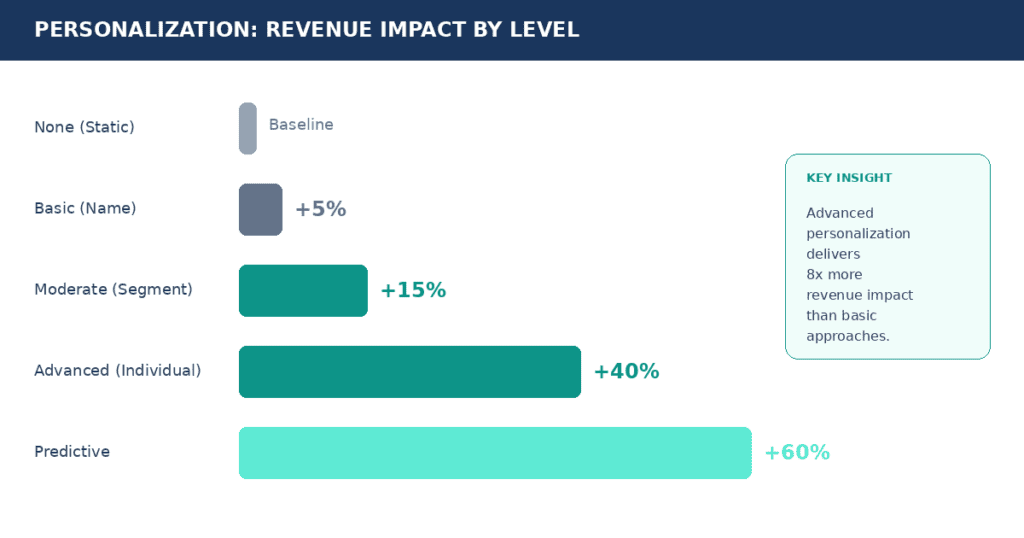
The sophistication gap between leaders and laggards is widening. Brands using advanced personalization see 40% more revenue from those activities than average performers.
This requires data infrastructure. Customer data platforms (CDPs) unify information from multiple sources. Without clean, connected data, personalization attempts fall flat or worse, feel creepy.
| Personalization Level | Revenue Impact |
| None (static experience) | Baseline |
| Basic (name in email) | +5% |
| Moderate (segment based) | +15% |
| Advanced (individual) | +40% |
| Predictive (anticipatory) | +60% |
12. Emerging Payment Methods
Payment flexibility drives conversion in ways that seem disproportionate to the actual change.
Cryptocurrency acceptance is growing but remains niche. The more impactful developments are regional payment methods gaining global relevance. Alipay, WeChat Pay, and local BNPL options matter increasingly for international sales.
QR code payments, particularly strong in Asia, are gaining traction globally. They streamline mobile checkout and enable seamless online to offline experiences.
The key is offering what your specific customers want. Payment method preferences vary dramatically by market, age group, and purchase type. Analytics showing abandoned carts by payment stage reveal which options you’re missing.
Putting These Trends Into Action
Reading about ecommerce trends won’t grow your business. Implementing them will.
Start with an honest assessment. Which of these trends are you ignoring? Which are you doing poorly? Prioritize the gaps that align with your customer base and business model.
Small tests beat big launches. Pick one trend, run a pilot, measure results. The talent acquisition and retention strategies that work best follow similar iterative approaches.
Build capabilities incrementally. You don’t need to implement AI personalization, social commerce, and omnichannel simultaneously. Sequential focus produces better results than scattered effort.
For teams stretched thin, consider how global talent acquisition or hiring virtual assistants from the Philippines can provide the specialized skills needed without overwhelming your core team.
The businesses thriving in 2026 aren’t necessarily the biggest or best funded. They’re the ones moving quickly, testing constantly, and adapting to what customers actually want, not what they wanted two years ago.