Publisher revenue has split into two games. Advertising pays the open-web bills, and subscriptions pay the brand-safe bills, which is why revenue ops teams juggle both. Adblock recovery belongs on one side of that split, and paywall-only strategies belong on the other. It is also why marketing ops hires leave inside 18 months.
This guide pulls the two strategies apart. We cover what each recovers and which audience it hits. We walk through the side-by-side math and the losses when a publisher picks just one. Then we lay out a sequenced way to run both without taking on two separate vendors. The focus is tactical, not theoretical.
What Each Strategy Actually Recovers
Both strategies exist because publishers leak revenue in two different places. One leak is the ad view that never happens, and the other is the reader who will not accept any ads at all.
Adblock Recovery In Plain Terms
Adblock recovery is the practice of detecting when a visitor’s browser is suppressing ad calls and offering a replacement path. The replacement might be a lighter ad format or a message asking the reader to allowlist the site. It can also be a soft prompt to subscribe in return for removing ads. The slot stops being blank.
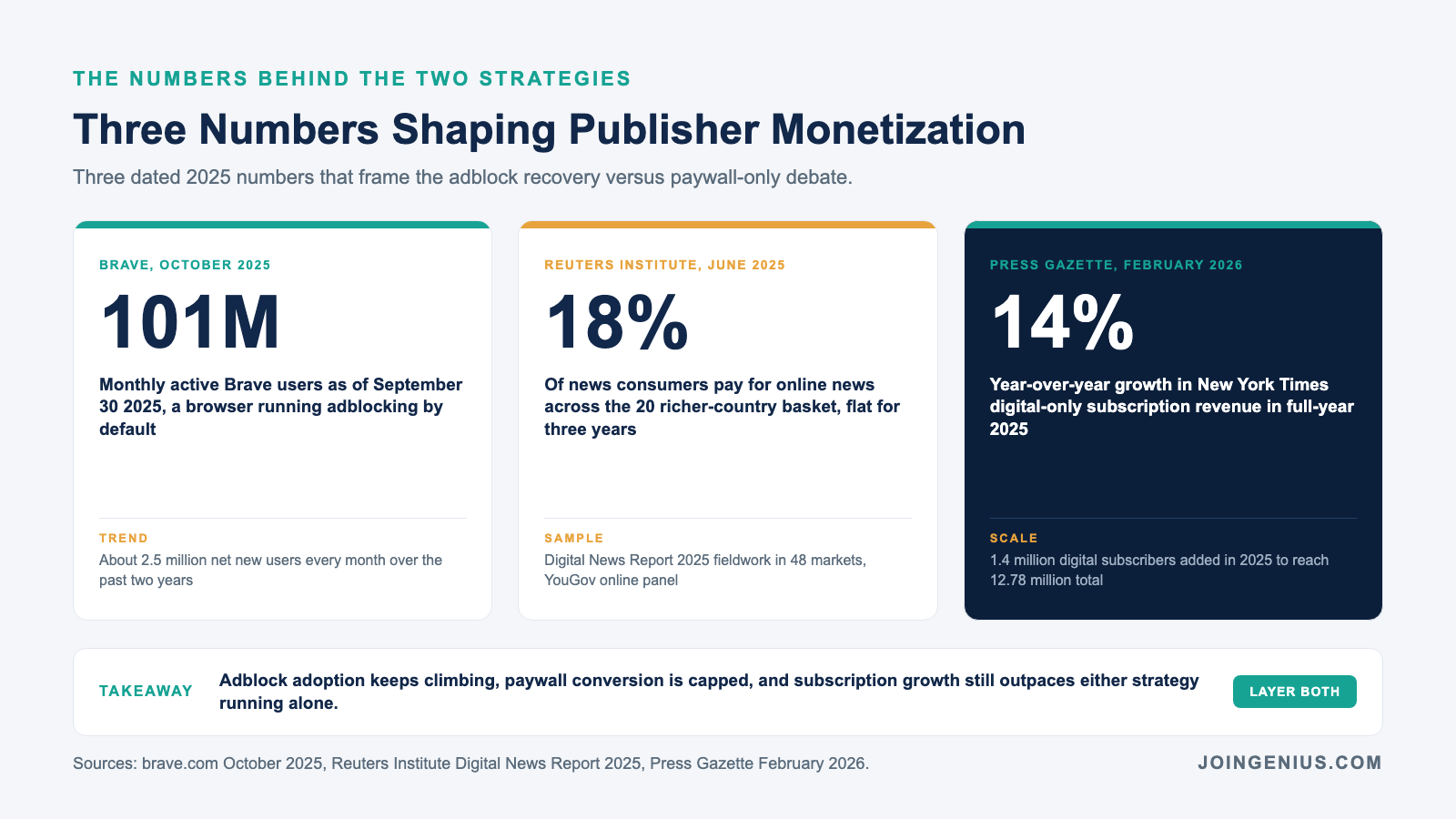
The number of visitors in that bucket has grown, not shrunk. Brave alone crossed 101 million monthly active users as of September 30 2025, a browser with adblocking turned on by default and more than two million net new users every month through 2024 and 2025.
Paywall-Only Strategies In Plain Terms
A paywall-only strategy swaps the ad slot for a subscription slot. Articles stay behind a hard wall or a metered gate that opens for a set number of views. Some publishers run a registration wall that collects email before the content unlocks instead. Revenue comes from a smaller paying audience, not from advertisers paying per impression.
Hard paywalls lock the article immediately. Metered paywalls grant a few free reads before the gate drops, and they work best for sites with high repeat visit rates. Registration walls are the lightest version, trading content for an email address without asking for a credit card yet. Each one trades reach for revenue per reader.
The Audience Each Strategy Actually Hits
The two strategies are not alternative ways to monetize the same reader. They talk to two different user types, and the overlap is smaller than most publishers assume.
The Adblock Audience Is Already Engaged
The person with an adblocker has already clicked through to the article and started reading. They dislike ads, not the publication, and they will often allowlist a site once the request is clean and up front. Adblock recovery converts attention that is already on the page.
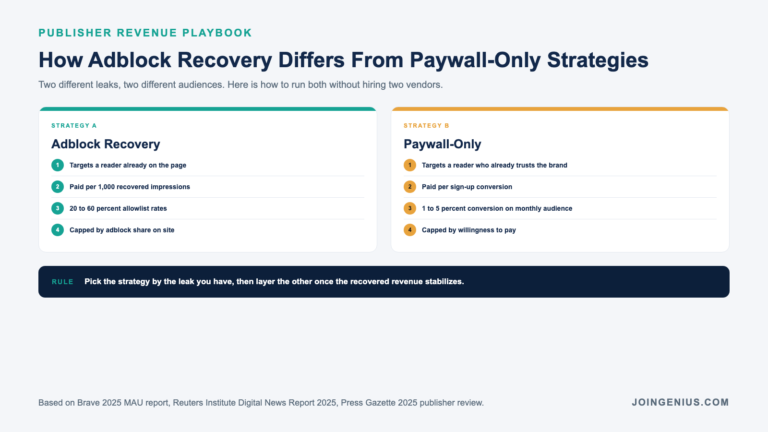
That engagement is why allowlisting rates in a clean recovery flow can run anywhere from 20 to 60 percent depending on the message. The user is not angry at the publisher, they just hate what the open programmatic ecosystem has done to the reading experience, and a respectful ask often clears that hurdle.
The Paywall Audience Is Already Convinced
A paywall-only strategy depends on the opposite behavior. The reader must arrive with enough intent to pay, either because they already trust the brand or because the article hit them at the right moment. Paywall conversion leans on brand strength or exclusive reporting in ways that adblock recovery does not.
The paywall ceiling is also lower than most pitch decks suggest. Across the 20 richer-country basket in the 2025 Reuters Institute Digital News Report, only 18 percent of news consumers pay for online news, a number that has held flat for three years.
Revenue Mechanics Compared
Pricing and inventory behave very differently under each model. Conversion math follows the same pattern, and it is the clearest way to see the gap.
An adblock recovery flow is paid per 1,000 recovered impressions. Average publisher CPMs run from $2 to $7, so even a modest recovery rate adds up across a monthly audience.
A paywall flow is paid per sign-up instead. That model pays more per user but fires less often, because conversion caps at low single digits on most news sites. The two models produce very different monthly curves on the same traffic.
ARPU math wins at the top of the engagement curve, CPM math wins at the bottom. A deeply engaged reader on a 2 dollar monthly plan outperforms the same reader converting ad impressions, until that subscription churns. An ad-recovered reader pays less per visit but keeps paying without renewing a contract. The two curves do not overlap.
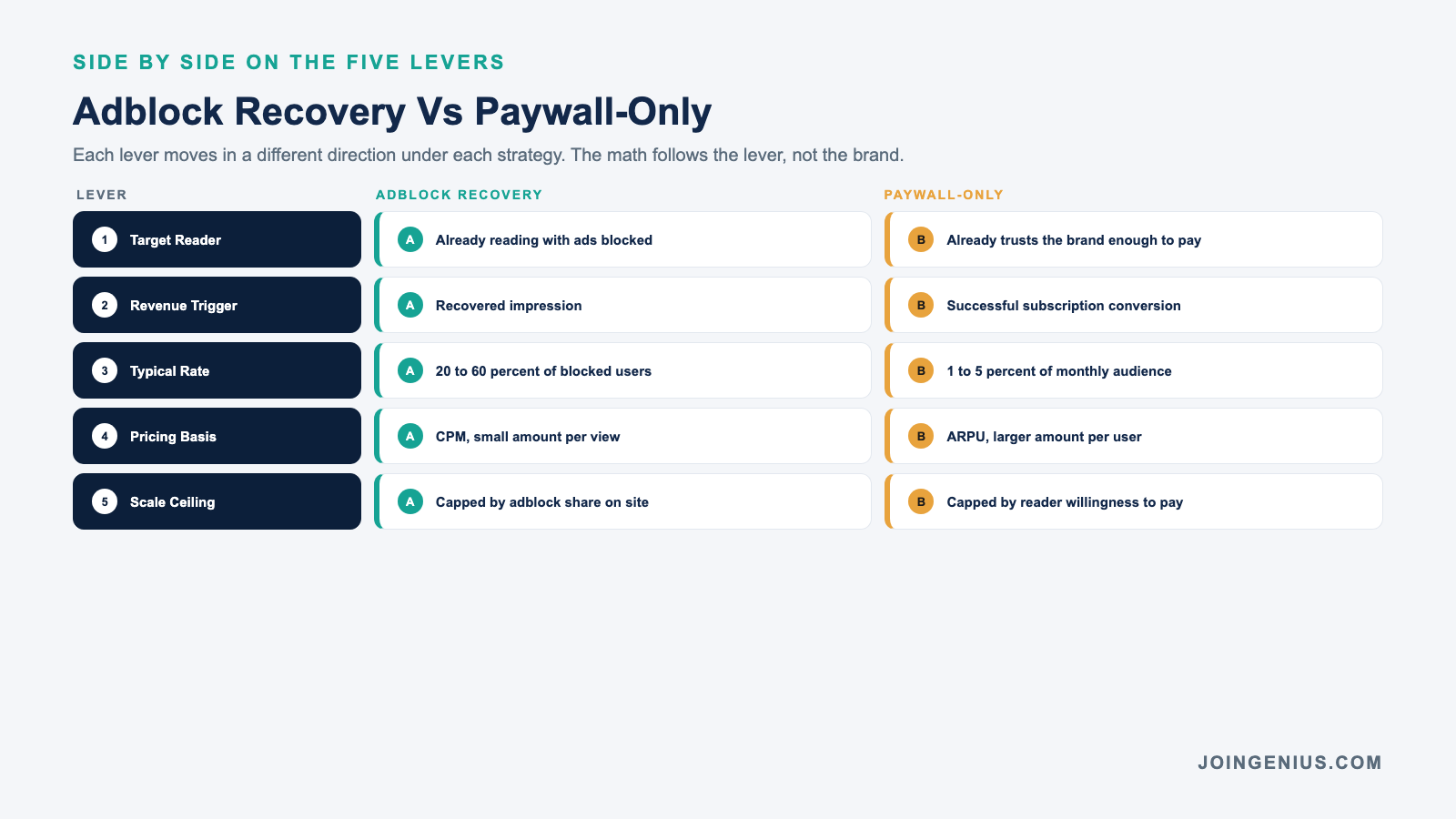
| Lever | Adblock Recovery | Paywall-Only |
|---|---|---|
| Target reader | Already reading with ads blocked | Already trusts the brand enough to pay |
| Revenue trigger | Recovered impression | Successful subscription conversion |
| Typical rate | 20 to 60 percent of blocked users | 1 to 5 percent of monthly audience |
| Pricing basis | CPM, small per view | ARPU, larger per user |
| Scale ceiling | Capped by adblock share | Capped by willingness to pay |
The two mechanics do not cancel each other out. One scales on volume and the other scales on commitment, which is why layered setups almost always beat single-strategy ones. The same measurement habits that keep recruiting ROI readable apply to tracking both revenue leaks on one dashboard.
Where Publishers Lose Money When They Pick Just One
Running only one strategy saves nothing. It just moves the leak from one audience to the other, and the math usually gets worse.
Running Adblock Recovery Without A Paywall
Adblock recovery alone caps revenue at CPM rates. A news site with a loyal daily audience can run a clean recovery flow and still miss out on nine-figure annual revenue from direct subscribers. The New York Times added 1.4 million digital subscribers in 2025 and grew digital-only subscription revenue by 14 percent, a lift no CPM flow produces.
Running A Paywall Without Adblock Recovery
The reverse costs just as much. Paywall-only publishers hand every blocked ad impression to the adblocker vendor, a group that has been growing year over year. The 18 percent paying-user ceiling from the Reuters data means more than four out of every five visitors walk away before converting, and most of them are blocking ads on the way out.
What A Dual-Strategy Publisher Looks Like
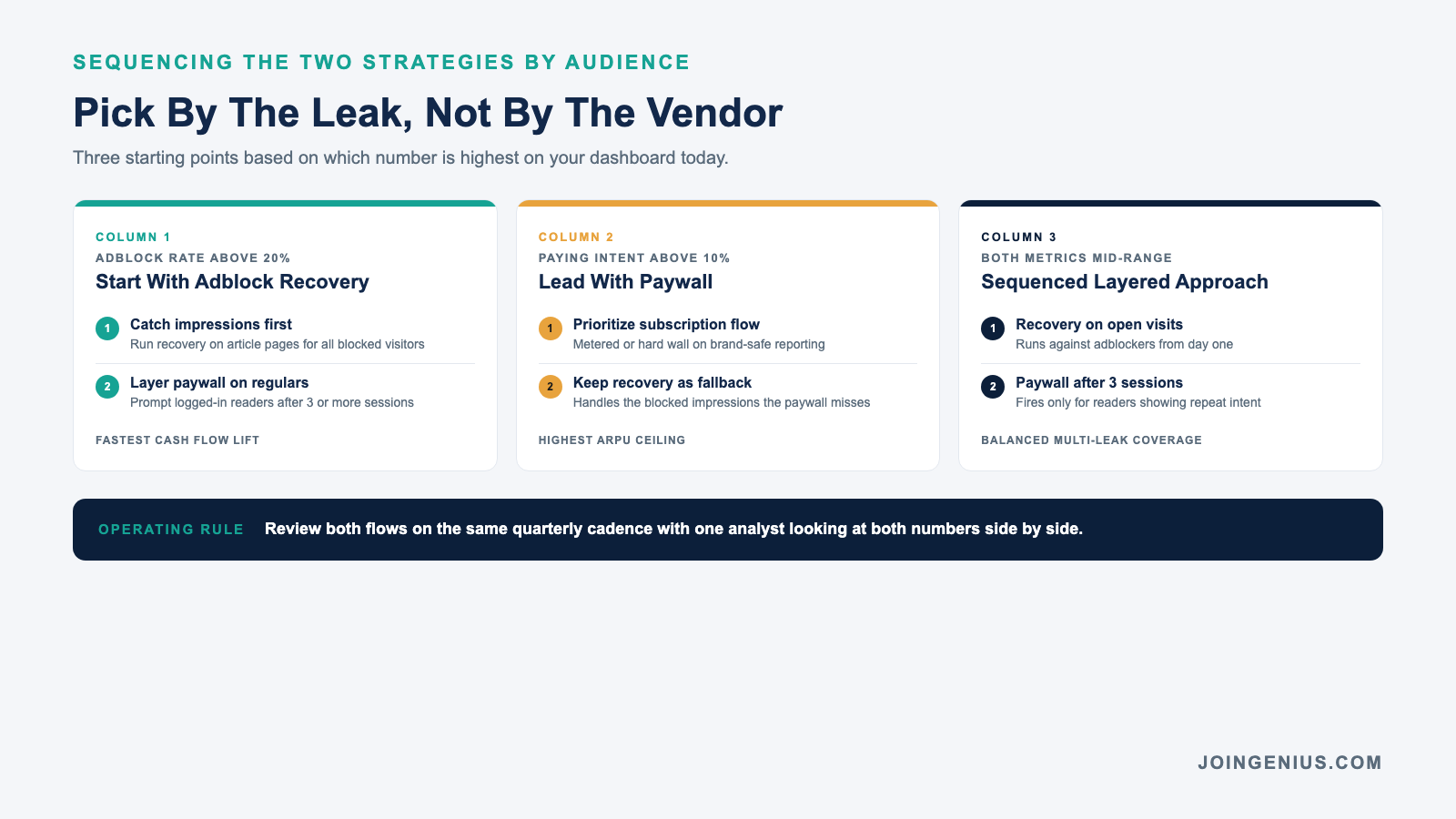
A publisher running both treats recovery as the baseline and subscriptions as the yield layer. The recovery flow intercepts blocked impressions on article pages, and the subscription prompt targets logged-in regulars after 3 or more sessions. Neither flow steps on the other, because the audiences rarely overlap on the same visit.
Both leaks matter at once. An integrated VRM platform handles adblock recovery and paywalls under one tag, which is how some publishers avoid running two vendors to patch two leaks that share a single audience.
Building A Layered Recovery Strategy
Layering the two strategies is not the same as running two vendors in parallel. The sequencing and the measurement framework are what make the setup profitable, not the brand on the badge.
Step One: Measure The Two Leaks Separately
Measure adblock share and conversion rate on the same dashboard, not in two different quarterly reports. Separate the users who block ads but visit frequently from the users who allow ads but will never pay. Treating them as one bucket is the surest way to miss both. The same clarity that makes support metrics useful applies here.
Break down adblock rate by article type and traffic source. A homepage visitor from a tech blog typically blocks ads more than a mobile visitor from Facebook, and knowing that gap changes which article templates earn a recovery prompt first. Paywall conversion deserves the same breakdown, with intent-rich landing pages treated separately from scrolling traffic.
Step Two: Sequence The Fixes By Audience
Run adblock recovery first against visitors who blocked ads but viewed 2 or more articles in 30 days. Save the paywall prompt for the smaller segment with repeat engagement across topics the site paywalls. Reversing that order usually pushes the lighter-touch user to a hard signup wall they will bounce from.
Step Three: Pick One Platform, Not Two Vendors
Two vendors mean two tags and two consent flows, plus two support contacts to call when either breaks. That friction eats revenue faster than any strategy tweak, which is the same reason teams outsource SEO and content operations rather than stitch together six freelancers. One platform covering adblock recovery plus paywalls keeps measurement coherent across both revenue paths.
Step Four: Review Both Flows Quarterly
Adblock techniques change, and so do paywall conversion rates. Review both flows on the same quarterly cadence with one analyst looking at both numbers. Separating the reviews lets each team optimize locally and lose globally. The single reviewer spots the moment one leak is growing and the other is not.
The Bottom Line For Publisher Revenue Teams
Pick the strategy by the leak you have. Publishers with high engagement and low adblock rates get more return from a thoughtful paywall. Those with high traffic and adblock rates above 20 percent should start with recovery and layer a paywall on top once the recovered revenue stabilizes. Picking both at once usually underperforms a sequenced rollout.
If the setup exists but the team running it does not, we can help on the team side. Genius connects publishers with top 1 percent Philippines and LATAM talent for ad ops and revenue ops roles at roughly 80 percent less than a local hire. No monthly platform fees, and every hire comes with a 6-month talent guarantee.