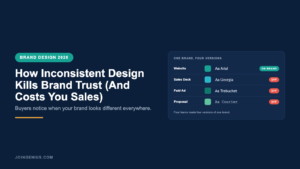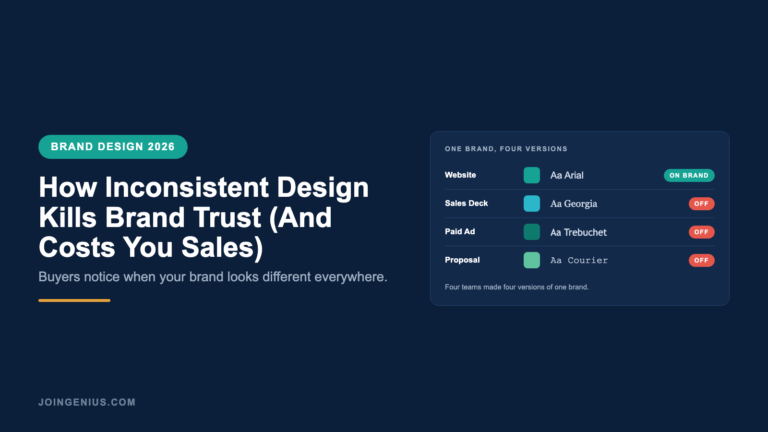
Your website uses one shade of blue and the sales deck uses another. The newest LinkedIn ad came from a free template someone in sales found. Each asset looked fine on its own. Together, though, inconsistent design tells a buyer that nobody is checking the details, and that doubt shows up later as a stalled deal.
Below, we cover how mismatched visuals erode trust and where the problem usually starts. Then we get practical, with a way to measure the cost and a fix that doesn’t need a rebrand. We finish with who should own it, which matters if you are already rethinking your content operations.
How Inconsistent Design Erodes Brand Trust
Buyers rarely say a logo mismatch made them leave. They describe a sense that something was off, and that sense changes what they do next.
What Buyers Notice When A Brand Looks Different Everywhere
Most people never compare your Instagram post with your pricing page side by side. They meet each one at a different moment and carry a rough memory of how the brand looked last time. When the next touchpoint doesn’t match that memory, the company reads as smaller and less established than it is.
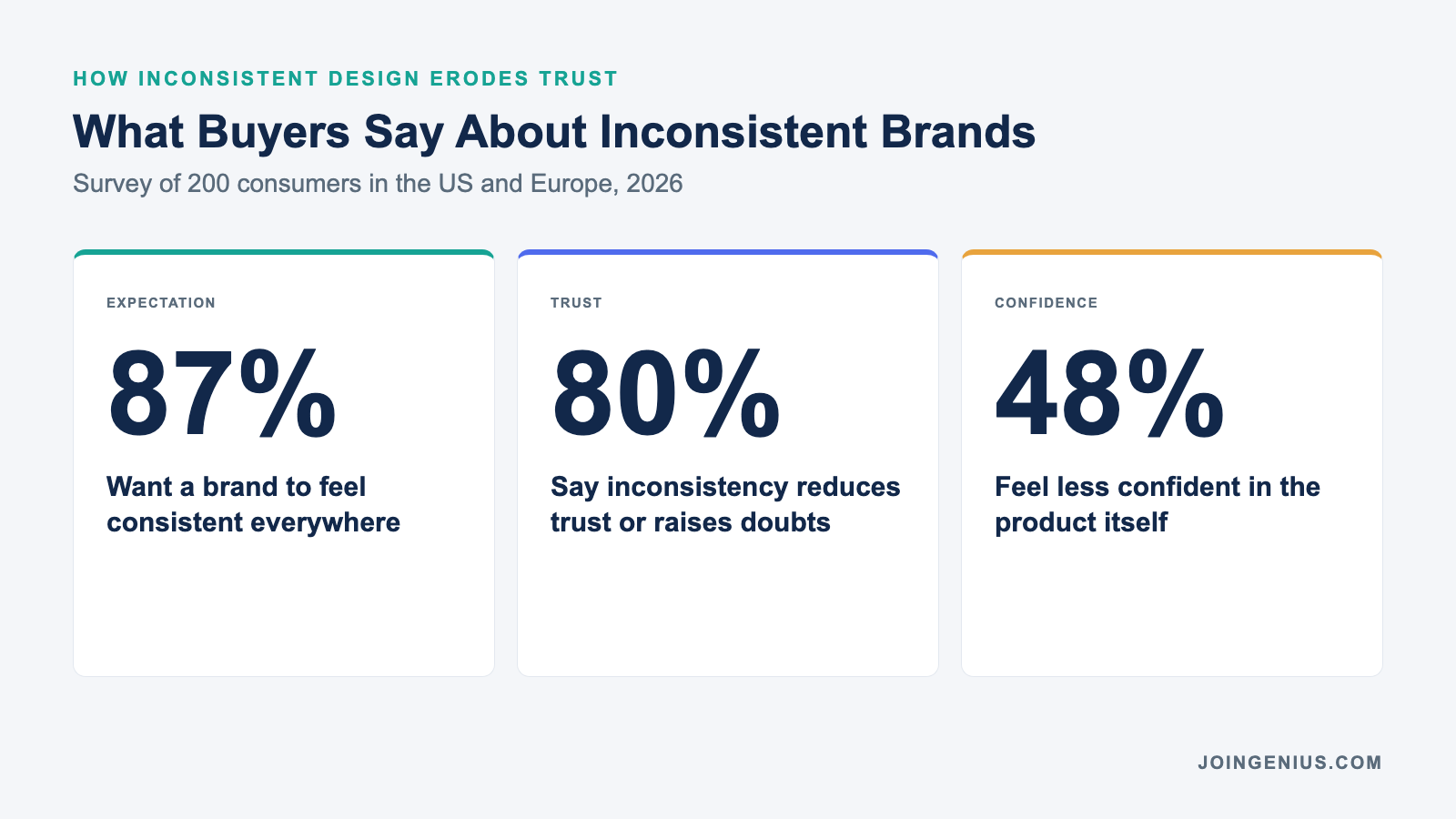
A 2026 Storyblok survey of 200 consumers in the US and Europe found that 87 percent say it is important for a brand to feel consistent wherever they see it. Storyblok sells content management software, and the sample is small, so treat the exact figures as directional.
Why Doubt Turns Into A Lost Sale
The same survey put numbers on the next step. Eighty percent said inconsistency reduces trust or raises doubts. Nearly half (48 percent) said it makes them less confident in the product or service itself, not only in the marketing.
Doubt then changes behavior. When something seemed inconsistent partway through a purchase, 61 percent said they look for reassurance before continuing. Only 14.5 percent said they would buy without hesitation. Every extra check is a moment where a competitor’s page can get the click instead of yours.
Where Inconsistent Design Usually Starts
Inconsistency is rarely a taste problem. It comes from how assets get made, and most of the causes are operational.
Too Many People Making Assets From Scratch
Sales builds its own one-pagers. HR designs the hiring posts, and a founder makes an event graphic late at night. Each person starts from a blank canvas and a rough idea of the brand, so small differences in color and type creep into every file.
Banning non-designers from making assets rarely works. Giving them starting points that already follow the rules does.
Guidelines Nobody Can Find Or Use
Many companies do have a brand guide. It is often a 40-page PDF from the last rebrand, saved in a folder half the team cannot open. It describes the brand’s personality in detail but never says which logo file goes on a dark background.
Guidelines only help when they answer the question someone has while building a slide at 4pm. When they can’t, people guess, and every guess is slightly different.
Content Demand Growing Faster Than The Team
Volume makes all of this worse. HubSpot’s 2026 State of Marketing report, based on a survey of more than 1,500 marketers, found that 83.5 percent are expected to produce more content. More than a third (35.7 percent) are expected to produce much more. HubSpot sells marketing software, so it has an interest in this trend.
When the design team stays the same size, the extra requests go somewhere. Usually they go to whoever has a free hour and a template tool, which is how one company ends up with five versions of its own brand.
How To Measure What Inconsistent Design Costs You
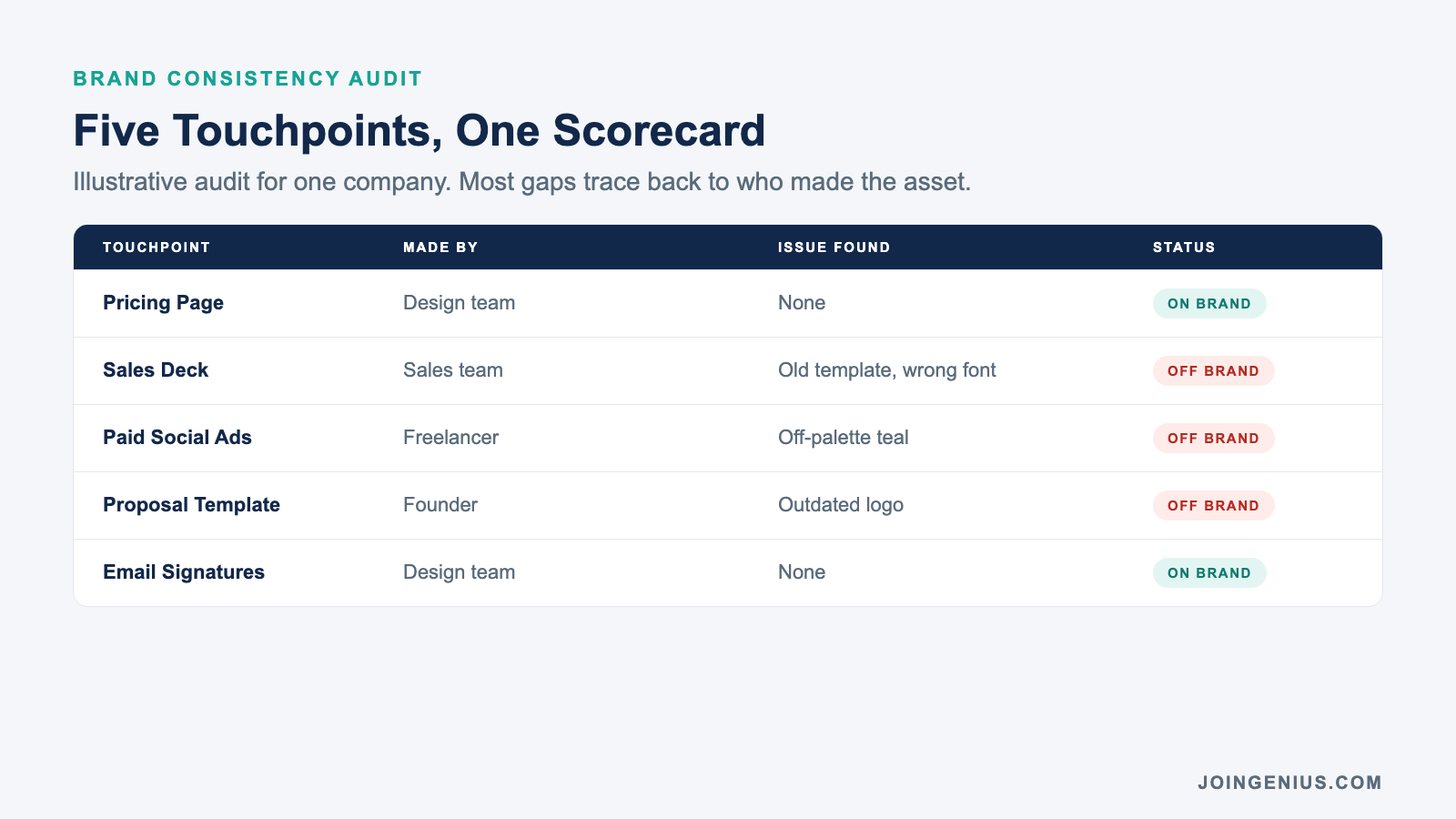
You can’t fix what nobody has looked at in one place. The first job is an audit of where your brand appears and how far each version strays from the rules.
The Touchpoints To Check First
Start with the assets buyers see closest to a purchase decision. Pull the latest version of each into one shared board and compare them against your guidelines.
| Touchpoint | What To Check | Why It Affects Sales |
|---|---|---|
| Pricing page | Logo version and button colors | It is the last page before a buyer commits |
| Sales deck | Template version and chart style | Buyers forward it to people who never saw your site |
| Paid social ads | Colors and typefaces | Often the very first impression of the brand |
| Proposals and invoices | Logo and layout | A mismatch can look like a phishing risk to finance teams |
| Email signatures and newsletters | Logo file and colors | Existing customers see them every week |
Mark each asset as on brand or off brand, and note who made it. The second column usually points to the cause faster than the first.
Signals In Your Funnel Data
An audit shows where the gaps are, and your analytics can hint at what they cost. Look for drop-off between a paid ad and its landing page, especially where the two look different. Compare reply rates on proposals sent from the current template against old versions still in circulation.
None of these numbers proves a design gap lost a deal on its own. Patterns across several touchpoints are still worth acting on. If most of the gaps are on your site, a full rebuild is often the wrong response, as we explain in our post on why a website redesign won’t drive sales by itself.
How To Fix Inconsistent Design Without A Rebrand
Most brands don’t need a new logo to look consistent. They need fewer ways for the current one to be used wrong.
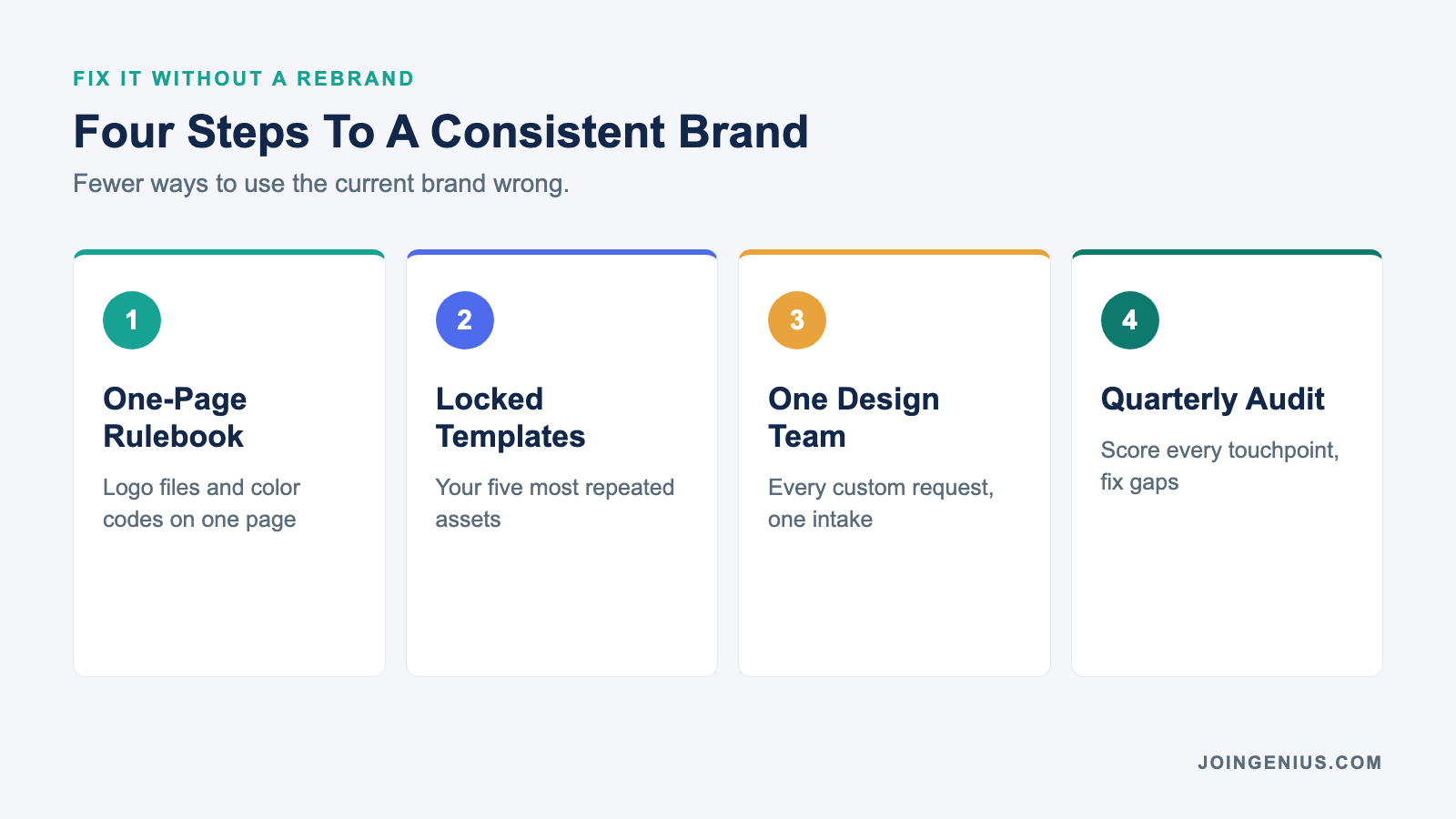
Build A One-Page Brand Rulebook
A rulebook is the short version of your guidelines that people actually open. It answers practical questions instead of describing brand personality.
- List the two approved logo files and say which background each one belongs on.
- Give exact color codes for screen and print, with one primary and one accent.
- Name one heading font and one body font, and ban every other typeface.
- Show one correct example and one wrong example for each rule on the page.
Lock Templates For Repeat Assets
Most off-brand work comes from assets the company makes over and over. Templates with locked elements let anyone produce those without touching the parts that define the brand.
- Start with the five assets your team rebuilds most often each month.
- Lock the logo position and color palette so only text and images change.
- Store every template in one shared folder and delete old versions from drives.
- Review templates each quarter and retire any that no longer match the rulebook.
Route Custom Work Through One Design Team
Templates cover the repeat work. New campaigns still need a designer, and consistency depends on that designer already knowing your rules.
- Send every custom request through one intake form with the brand rulebook attached.
- Keep the same designers on your account so they remember past decisions.
- Require a final check against the rulebook before any asset goes live.
- Track which requests needed revisions for brand reasons and fix those rules first.
Teams without that capacity in-house often use a design subscription service such as Design Pickle, which learns a company’s guidelines and assets up front and keeps a matched team on the brand. Every request then starts from the same rules instead of a new designer’s best guess.
Who Should Own Brand Consistency
Consistency breaks down when everyone is responsible for it. It holds when one named person has the authority to say no.
Give One Person Approval Rights
In a small company this is often the head of marketing or a senior designer. They don’t need to make every asset. They approve anything new that goes in front of buyers, and they keep the rulebook current.
Teams without a marketing lead sometimes bring in a fractional CMO to set the standards, then hand daily approvals to a coordinator. If you go that route, write down which decisions you are delegating and which still need sign-off.
In-House Designer Or Outside Support
The right setup depends on volume. A company producing a steady flow of assets every week can usually justify a full-time designer. Companies with uneven demand often do better with outside support plus strong templates.
A full-time hire is a real cost. The US Bureau of Labor Statistics puts the median wage for graphic designers at $62,960 in May 2025. It projects employment in the field to decline 2 percent from 2025 to 2035, though about 16,000 openings are still expected each year.
Whichever route you choose, the marketing ops person who manages requests matters as much as the designer. They keep work moving through the right channel, so nothing goes out unchecked.
Conclusion
Treat inconsistent design as a sales problem, not a style problem. Pick one owner this month and have them write the one-page rulebook. Then lock templates for your five most repeated assets before you spend anything on a rebrand. Brand trust grows when buyers see the same company every time, and that comes from process more than a new logo.
Here at Genius, we help companies fill the roles that keep a brand consistent. We place top one percent designers and marketing coordinators from the Philippines and LATAM at roughly 80 percent less than local comp. There are no monthly fees, and every placement comes with a six month replacement guarantee. Talk to Genius about your next creative hire.