Many small businesses start every year, but only a few survive.
Most face challenges that lead to failure, but by learning how to avoid common problems, you can be one of the few that succeed. With the right knowledge, you can grow and sustain your business for years.
In this article, we’ll share 100 surprising small business statistics to help you understand the challenges and how to overcome them.
Top Small Business Statistics (Editor’s Picks)
We’ve handpicked 100+ of the latest small business statistics, facts, and trends. Here are 6 that we believe will blow you away.
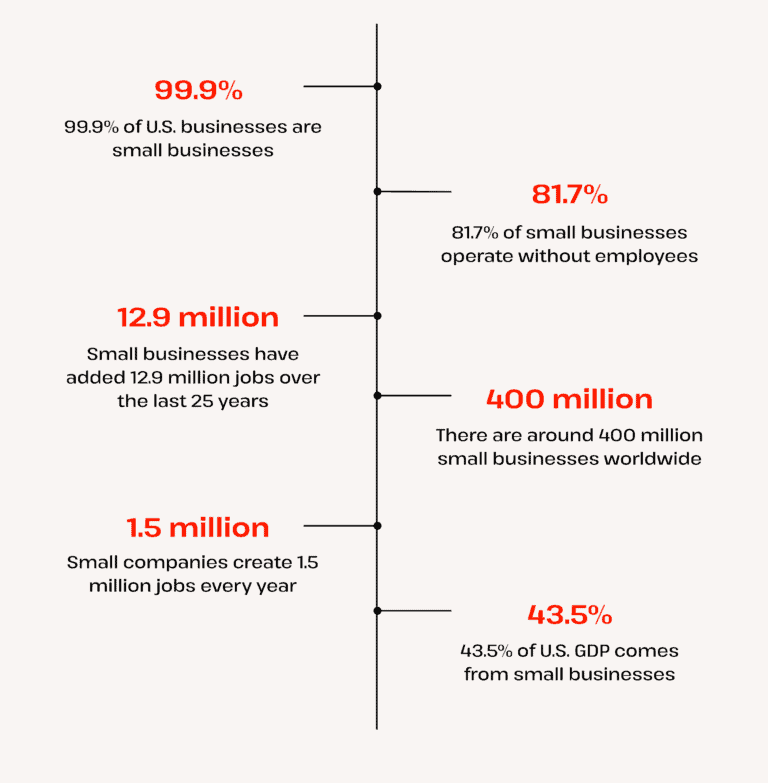
| 1 | 99.9% of U.S. businesses are small businesses |
| 2 | 81.7% of small businesses operate without employees |
| 3 | Small businesses have added 12.9 million jobs over the last 25 years |
| 4 | There are around 400 million small businesses worldwide |
| 5 | Small companies create 1.5 million jobs every year |
| 6 | 43.5% of U.S. GDP comes from small businesses |
Small Business Statistics Worldwide
99.9% of U.S. businesses are small businesses (Forbes)
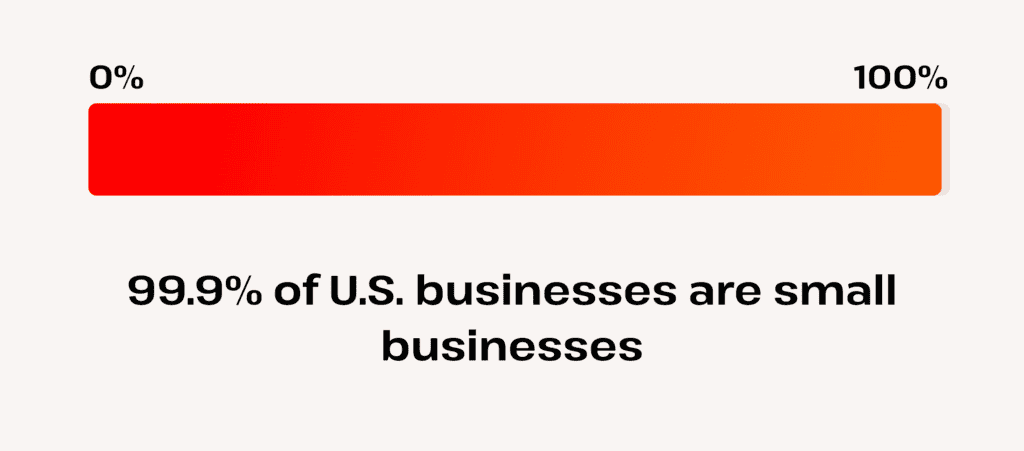
Small businesses are the backbone of the U.S. economy, making up 99.9% of all businesses. With 33.3 million small businesses across the country, they play a huge role in creating jobs and keeping the economy stable. Even though big corporations often steal the spotlight, it’s these small enterprises that truly drive America’s economic engine.
Small businesses account for around 90% of businesses globally (Luisa Zhou)
Small and medium-sized enterprises (SMEs) make up about 90% of all businesses worldwide. These small businesses play a huge role in the economy, providing over half of the world’s jobs. In fact, 7 out of 10 new jobs come from SMEs. In emerging economies, these businesses contribute around 40% to the national income, proving just how crucial they are for both employment and economic growth.
There are around 400 million small businesses worldwide (Luisa Zhou)

There are currently estimated to be over 400 million small and medium-sized enterprises around the world. These businesses are often considered the backbone of global economies, creating the majority of new jobs. Their impact is enormous, not just in terms of employment but also in driving innovation and economic growth on a global scale.
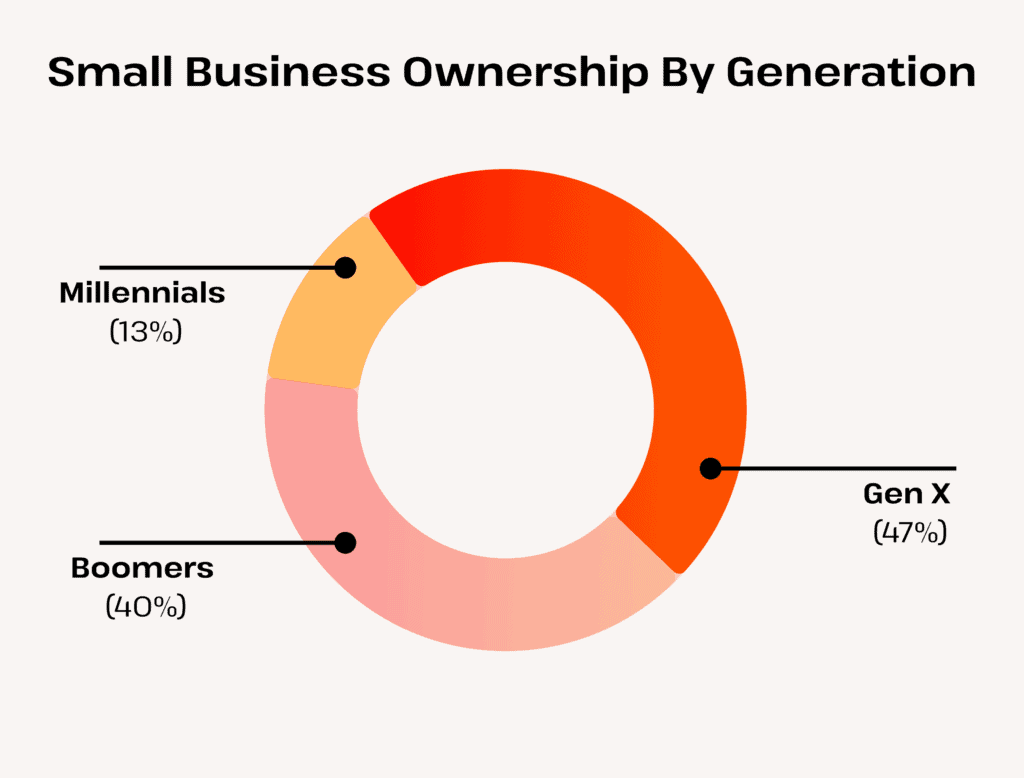
Millennials own just 13% of U.S. small businesses (Forbes)
Even though Millennials are known for their entrepreneurial spirit, they only own 13% of small businesses in the U.S. Most small businesses are still owned by Boomers and Gen X, showing a clear generational gap in ownership. While Millennials are often seen as eager to start their own ventures, the average age for starting a business is around 35, meaning they might just need more time to turn their entrepreneurial dreams into reality.
65.3% of small businesses are profitable (Luisa Zhou)
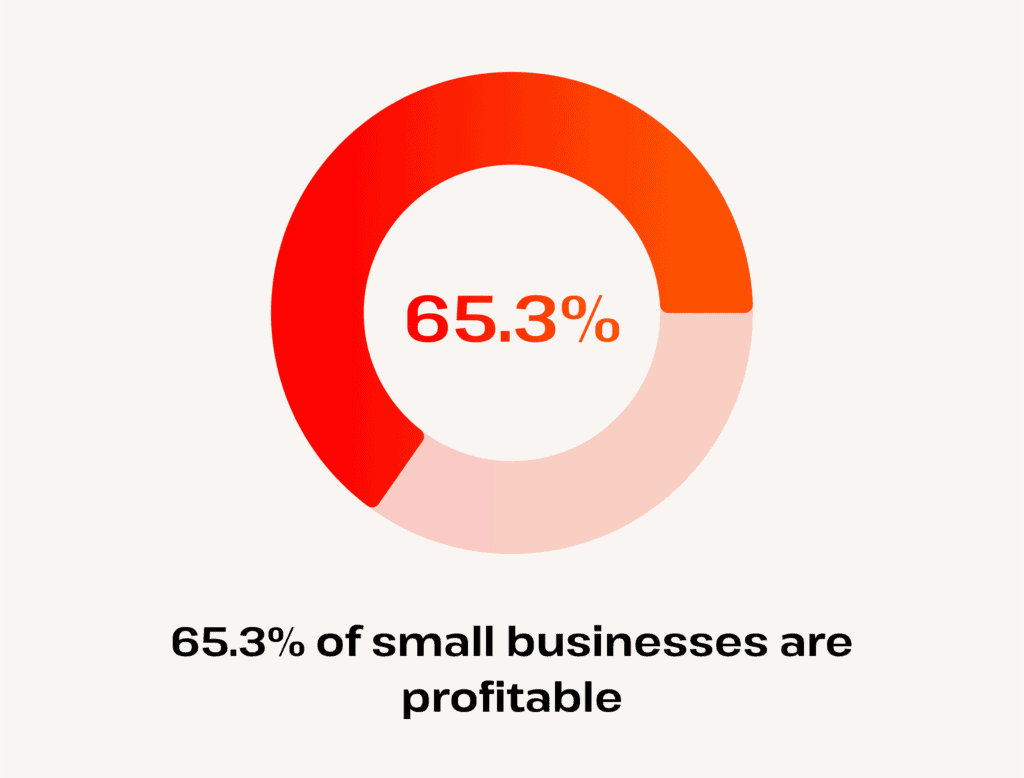
Right now, over 65% of small businesses are profitable, which is a significant improvement from previous years. Back in 2018, only 40% of small businesses reported profitability. However, it’s also important to note that 35% of small businesses are still not profitable. This shift suggests that more businesses are finding ways to succeed, but challenges remain for a significant portion of the market.
Small businesses in Australia account for 35% of the country’s GDP (ASBFEO)
In Australia, small businesses are a massive part of the economy, contributing 35% to the nation’s GDP. That’s a big chunk when you think about it! These businesses, often run by a handful of employees or even solo entrepreneurs, are making a significant impact on the country’s financial landscape, showing just how vital they are in keeping the economy thriving and competitive.
Over 600,000 new businesses start in the U.S. each year (Luisa Zhou)
Each year, the U.S. sees a surge of entrepreneurial activity, with over 600,000 new businesses starting up. This shows how dynamic and resilient the U.S. market is, as individuals from various industries step into the world of business ownership. Despite challenges, the steady number of new businesses reflects ongoing innovation and the willingness of people to turn their ideas into viable ventures.
19% of small business owners put in over 60 hours a week (Fundera)
Over 70% of small business owners find themselves working more than 40 hours weekly, with 19% even clocking in over 60 hours—way above the national average of 38.6 hours per week. They’re often not paying themselves extra for those hours, which explains why their salaries can be surprisingly low. It’s a reminder of just how demanding and relentless running your own business can be.
Small Business Ownership By Generation:
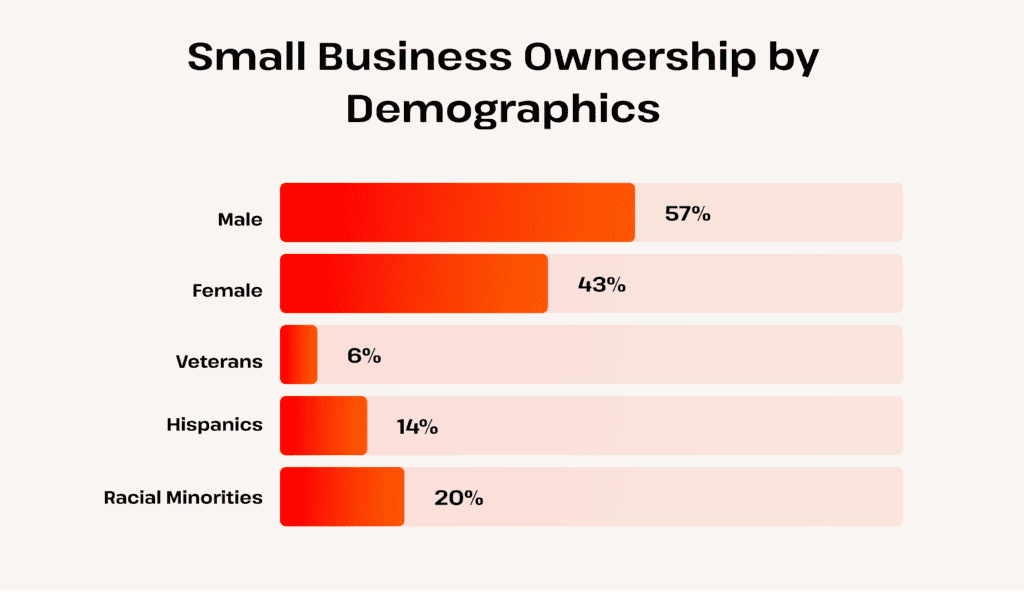
More small businesses are owned by males than females (Forbes)
While men still own the majority of small businesses, women now own 43.4% of them. This growing percentage highlights a positive shift toward gender equality in entrepreneurship. The rise in women-owned businesses reflects broader social changes and the increasing support available for women in the business world. It’s a sign that traditional barriers are slowly being broken down, and more women are taking the entrepreneurial leap.
Small Business Ownership by Demographics:
56% of small business owners find digitalization too pricey (Mckinsey)
According to a McKinsey study in Singapore, over half of small business owners think digitalization costs too much. Many digital tools are made for big companies, making them tricky and expensive for small businesses to use. Plus, 40% of these owners say they don’t have the digital skills needed to successfully adopt new tech. This makes it even harder for small businesses to keep up with digital trends.
Now, let’s talk about different types of businesses:
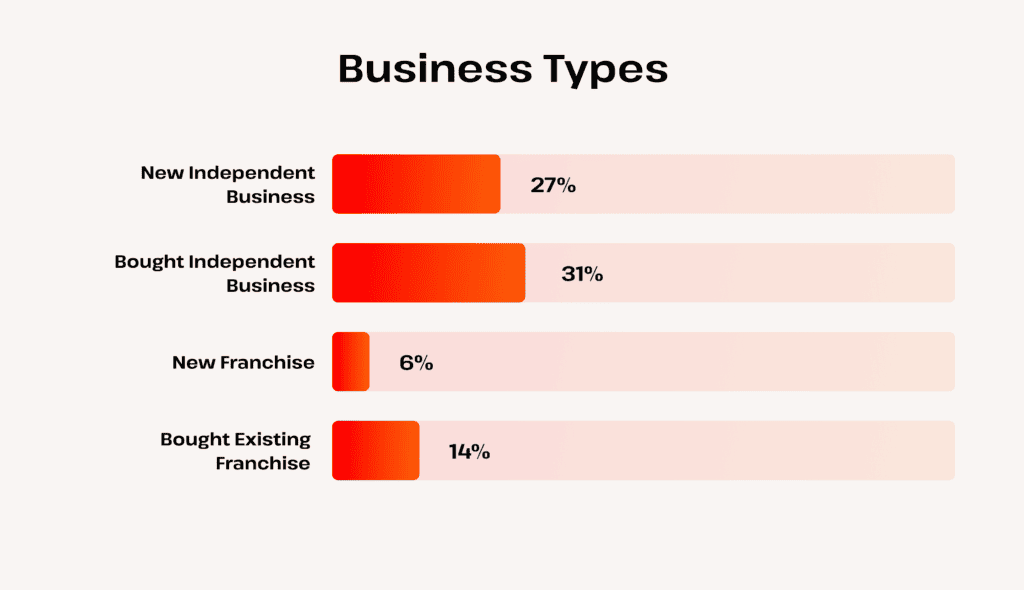
Independent businesses have grown by 4% this year (Guidant Financial)
Independent businesses are on the rise, showing a 4% increase compared to last year. Meanwhile, franchises have seen a matching 4% decrease. This trend highlights a growing preference for independent ventures, with more entrepreneurs choosing to establish their own businesses rather than going the franchise
Let’s also take a look at the leading industries for small businesses:
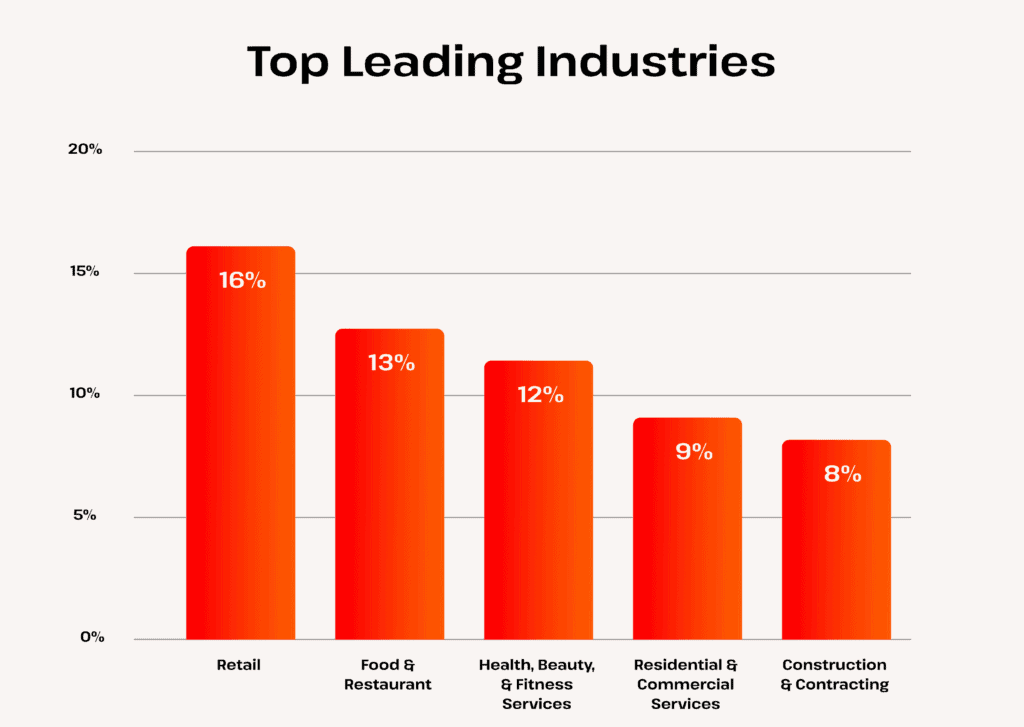
Residential and commercial services hold steady at 9% (Guidant Financial)
“Residential and Commercial Services” continue to hold their place, representing 9% of businesses. Meanwhile, the “Construction and Contracting” sector closely follows, making up 8% of businesses. These industries remain significant players in the business landscape, reflecting ongoing demand in these areas.
83% of small business owners believe having an organized office is vital (Review42)
A large majority of small business owners, 83%, think that keeping their office organized plays a crucial role in running their business smoothly. Staying organized likely helps them manage tasks more efficiently, reduce stress, and maintain a productive work environment.
74% of owners say they couldn’t run their business without organizational tools (Review42)
Almost three out of four business owners admit they rely heavily on tools to keep things organized. Whether it’s managing projects, tracking progress, or handling daily tasks, these tools are a lifeline. For many, it’s not just a matter of convenience – it’s crucial to staying on top of everything and keeping their operations running smoothly.
38% of small business owners say self-discipline is key to success (Review42)
More than a third of small business owners believe that self-discipline is the most important trait when it comes to running a successful business. Managing your own time and staying focused on goals, without someone telling you what to do, can make all the difference in achieving business success.
10% of small businesses in the U.S. are veteran-owned (Military.com)
Veterans aren’t just serving in the military; many are stepping into the world of entrepreneurship. In fact, about 10% of small businesses across the U.S. are owned by veterans. They’re using their leadership skills from the military to run businesses and make a big impact on the economy. This shows how veterans are transitioning into civilian life and thriving as business owners.
Small Business Market Size
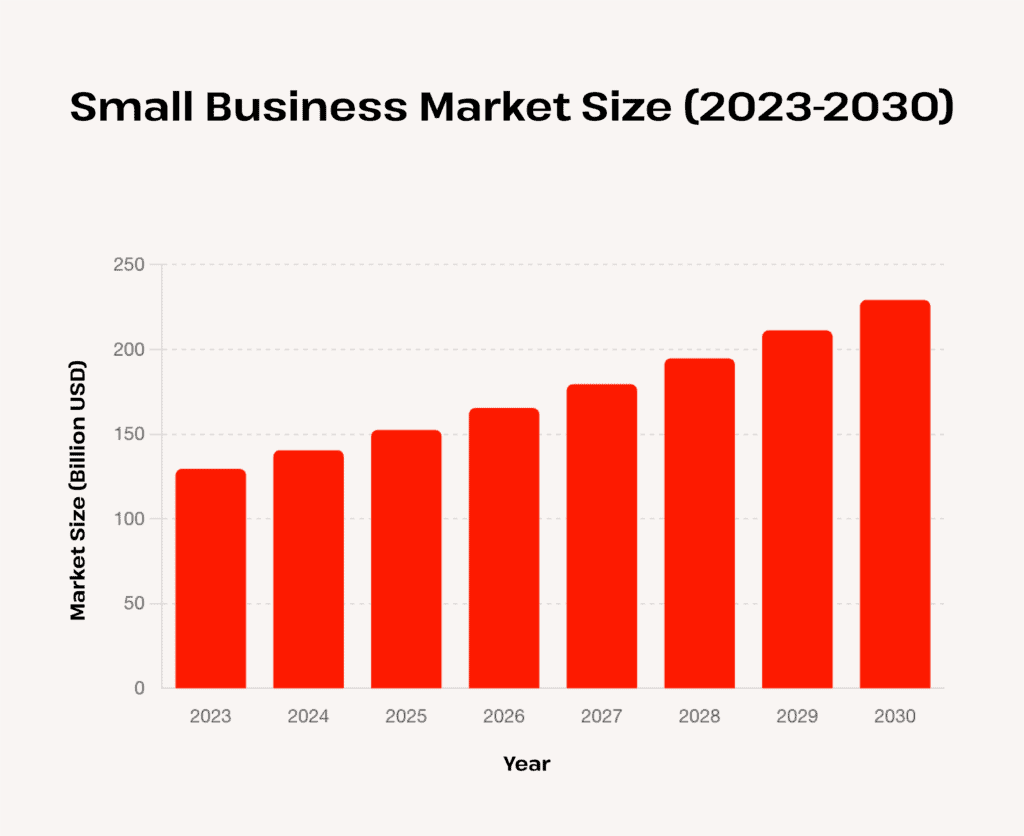
The small business market is currently valued at $129.49 billion (Sky Questt)
By 2030, it’s expected to reach $229.216 billion, growing at a rate of 8.5% each year. This steady rise shows that small businesses are becoming a stronger force in the economy. For anyone looking to get into this space or expand their current venture, there’s a lot of growth potential ahead.
Let’s take a look at the projected growth for small businesses for 2023-2030:
Small Business Employment Statistics
81.7% of small businesses operate without employees (USA Today)

Believe it or not, most small businesses are run by just the owner without any employees. These are known as nonemployer firms. It’s pretty impressive when you think about how many businesses out there are driven by solo entrepreneurs who manage everything on their own.
16% of small businesses have 1 to 19 employees (Forbes)
While most small businesses in the U.S. operate without employees, 16% of them have between 1 and 19 employees. This means over 5.4 million businesses fall into this category. On the larger side, only about 648,000 small businesses have 20 to 499 employees. These numbers show that most small businesses either have no staff or a small team, with only a small percentage employing a larger workforce.
46% of U.S. employees work for small businesses (Forbes)
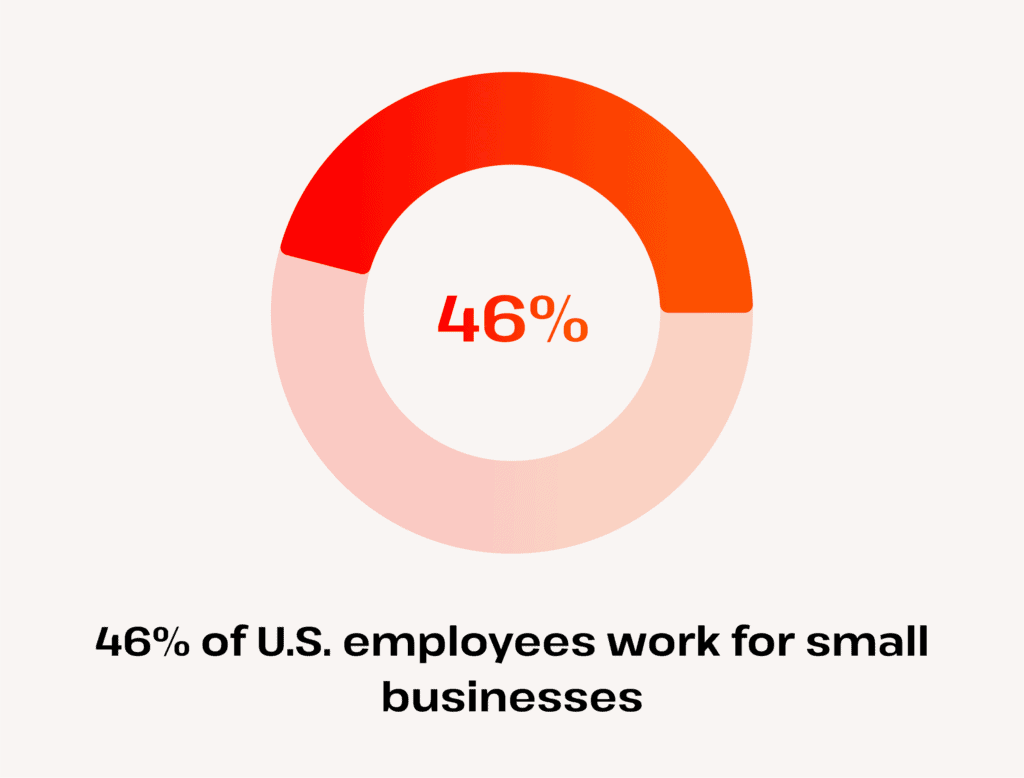
Nearly half of all U.S. workers are employed by small businesses. Despite most small businesses not having any staff, they still provide jobs to 61.6 million people. This shows how crucial small businesses are for creating jobs and keeping the economy stable. Their growth is essential for the continued health of the U.S. workforce and economy.
The average small business with employees has a staff of 11.7 people (Semrush)
Small businesses with employees typically have an average of 11.7 staff members. For comparison, larger firms have around 3,300 employees on average. Newer businesses, less than two years old, usually start even smaller with about 6 employees, and as they grow older—beyond 20 years—they average around 60 employees. This stat gives a clear picture of how employee numbers scale as businesses mature over time.
Small businesses have added 12.9 million jobs over the last 25 years (Forbes)

Small businesses have played a major role in job creation, adding nearly 13 million net new jobs in the U.S. over the past 25 years. This accounts for about two-thirds of all new jobs during that time. Despite many small businesses being run by solo founders, they continue to be a vital source of employment and economic growth, contributing significantly to the nation’s job market.
Leisure and hospitality industry leads in job growth (BLS)
Over the past year, the leisure and hospitality sector added an average of 52,000 jobs each month, the highest among all industries. This growth highlights the sector’s strong recovery after the pandemic’s impact. Overall, the job market added 5.8 million jobs since last year, surpassing pre-pandemic levels by 240,000.
Small companies create 1.5 million jobs every year (Nawbo)
Small companies in the U.S. generate 1.5 million new jobs annually, which accounts for a substantial 64% of all new jobs created in the country. This highlights the crucial role these businesses play in driving employment and economic growth, showing how integral they are to the overall job market. Whether you’re running a startup or a local shop, the impact on the economy through job creation is significant.
Professional and business services industry leads in job openings (BLS)
The professional and business services industry now has the most job openings, overtaking education and health services. This shift means there’s a big demand for roles in management, administration, and consulting. If you’re on the job hunt, this industry could be a goldmine. On the flip side, businesses in this field might struggle to find and keep the right talent. The job market is clearly shifting, so it’s a good time to explore these growing opportunities.
Small Business Growth and Expansion Statistics
Businesses that perform market research are 28% more likely to grow (Market Research)
Conducting market research gives businesses a significant edge, with companies that take the time to understand their market being 28% more likely to see growth. This research allows businesses to better understand customer needs, industry trends, and competitive landscapes, helping them make informed decisions that drive success.
Subscription-based business models have seen over 300% growth in the past seven years (Subscribed)
In recent years, subscription-based business models have exploded in popularity, achieving an average growth rate of over 300% in the last seven years. This surge is driven by the appeal of convenience and the ability to provide recurring value to customers. As consumers increasingly seek personalized and ongoing services, businesses across various industries are adopting this model to secure steady revenue and improve customer loyalty.
Companies utilizing a franchise model have a success rate of roughly 90% within the first 5 years (NBC News)
Franchising proves to be a strong business model, with around 90% of franchises succeeding within the first five years. This high success rate is attributed to the structure, support, and proven business models that franchises offer. By adopting an established brand and system, franchisees can mitigate the risks typically associated with starting a new business from scratch, increasing their chances of long-term viability.
Businesses that budget effectively are 30% more likely to expand (Investopedia)
Companies that create and stick to a budget have a 30% better chance of expanding their operations. Effective budgeting helps businesses track expenses, manage cash flow, and allocate resources to growth initiatives. This proactive approach not only improves financial health but also opens up opportunities for investments in new markets, products, or services. By planning ahead financially, businesses are more prepared to seize growth opportunities.
68% of small-to-midsize businesses consider digital tools essential for scaling (Deloitte)
A solid 68% of small and midsize businesses say digital tools are a key part of growing their operations. Whether it’s using project management software, CRM systems, or marketing automation, technology helps them run things more smoothly and stay competitive. It’s becoming clear that, for most businesses, going digital isn’t just helpful, it’s necessary for staying on top of things and continuing to grow.
1.2 million small businesses opened in just a year (USA Today)
Between March 2021 and March 2022, around 1.2 million small businesses were launched, while nearly 834,000 had to close their doors. Despite the closures, small businesses played a significant role in job creation, contributing to 70% of all new jobs during that period. This highlights how essential small businesses are to the economy, even as they face challenges.
9,456 agricultural business applications were filed in September 2023 (NAWBO)
Agriculture is seeing a surge in interest. In September 2023, 9,456 applications were filed to start agricultural businesses. This marks a significant rise, with an 86.6% increase from August 2023. The growing interest in this sector could be a sign of increasing opportunities and innovations in agriculture, attracting new entrepreneurs to the field. If you’re considering an agriculture business, now might be a great time to get started given the rising momentum.
Almost 50% of small businesses consider increasing profit as their top goal (Luisa Zhou)
Nearly half of small business owners say their main focus is boosting profits. It makes sense since growth and sustainability often depend on improving the bottom line. Whether they’re aiming to cut costs, raise prices, or expand their customer base, increasing profit is a priority that drives many business decisions.
Businesses with 10 to 19 employees bring in $2.16 million a year (USA Today)
The more employees a small business has, the more money it tends to make. For instance, a business with just one to four employees averages around $387,000 a year. But as you add more staff, that number climbs. Companies with up to nine employees see revenues around $1 million annually. And if you have 10 to 19 employees, you’re looking at an average revenue of $2.16 million a year. It’s clear that growing your team can really boost your earnings.
Small business acquisitions grew by 2% year-over-year in Q3 2023 (NAWBO)
There’s been a slight uptick in small business acquisitions, with a 2% increase year-over-year in Q3 2023. This growth suggests that more entrepreneurs and companies are seeing value in acquiring existing businesses rather than starting from scratch. Whether you’re looking to expand your portfolio or enter a new market, this trend might indicate that now is a good time to explore acquisition opportunities.
Only 60% of startups have a strategy to adapt to technological changes (Quixy)
It’s surprising that 40% of startups don’t have a game plan for handling tech changes. With how fast technology shifts, having a strategy to adapt is key for staying competitive. Without it, businesses might miss out on growth opportunities or fall behind. Being ready to tackle tech developments is what helps companies stay in the game and keep pushing forward.
Small Business Salaries & Wages
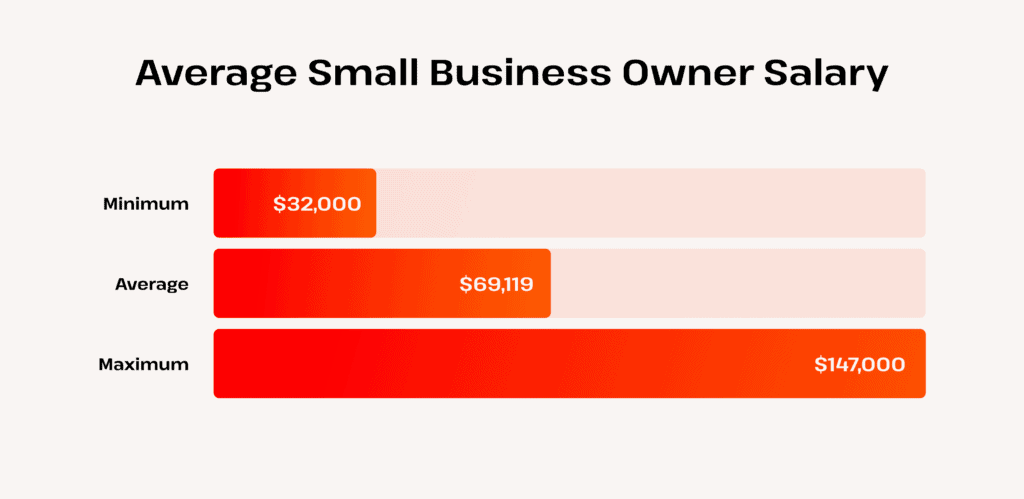
The average salary of a small business owner is just 16% above the U.S. average wage (Payscale)
While being a business owner is often seen as a path to wealth, the reality is more modest. The average small business owner earns just 16% more than the national mean wage, with a salary of around $69,119 per year. Pay can vary significantly, ranging from $32,000 on the lower end to as much as $147,000 for top earners. For many entrepreneurs, the financial rewards are modest, and the journey requires a lot of dedication and effort.
Average Small Business Owner Salary:
Hourly earnings have risen by more than 4% in the past year (BLS)
In the last year, hourly earnings have gone up by 4.6%, which is higher than the 3.2% inflation rate. This means that workers are actually seeing more buying power, which is a good sign. But it’s important to remember that not everyone will feel these gains equally, as wage growth can differ depending on the industry. This trend shows that the economy is recovering, and people are starting to feel it in their paychecks.
The median net worth of self-employed families was $380,000 (JP Morgan Chase)
In a recent study, self-employed families had a median net worth of $380,000, which is significantly higher than the $90,000 median for families of wage earners. Even before launching a business, future small business owners typically hold 40% more liquid wealth than their wage-earning counterparts. This financial foundation can give aspiring entrepreneurs a stronger start, providing a cushion as they transition into running their own businesses.
Here are the top five states where small business owners make the most:
| State | Average Annual Salary |
| New York | $126,515 |
| Vermont | $114,198 |
| Maine | $113,885 |
| Massachusetts | $111,458 |
| Nevada | $111,324 |
On the flipside, here the the lowest earning states for small business owners:
| State | Average Annual Salary |
| Arkansas | $83,178 |
| North Carolina | $83,967 |
| Kentucky | $84,571 |
| Idaho | $87,951 |
| Nebraska | $88,080 |
Small Business Funding Statistics
64% of businesses start with $10,000 in capital (Luisa Zhou)
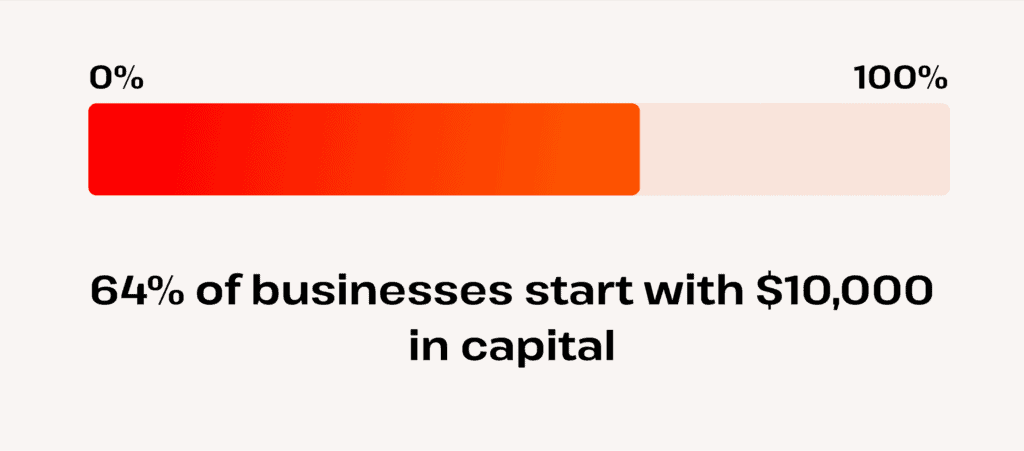
Most small businesses kick off with around $10,000 to get going. For micro-businesses, it’s even less—some start with just $3,000. Interestingly, about 25% of small businesses dive in with no outside funding at all, relying solely on personal savings or other resources. This just goes to show that starting a business doesn’t always require a ton of money; it’s more about making the most of what you have.
Small businesses often struggle more to get bank loans than larger companies (World Bank)
Small and medium-sized enterprises frequently face challenges when trying to secure bank loans compared to bigger firms. This issue isn’t just in the U.S.; it’s a global problem. The International Finance Corporation (IFC) estimates that 65 million businesses in developing countries have unmet financial needs. Raising capital is a significant hurdle for many small businesses, making it harder for them to grow and compete with larger companies.
Labor remains the number one cost for businesses at 70% of spending (Forbes)
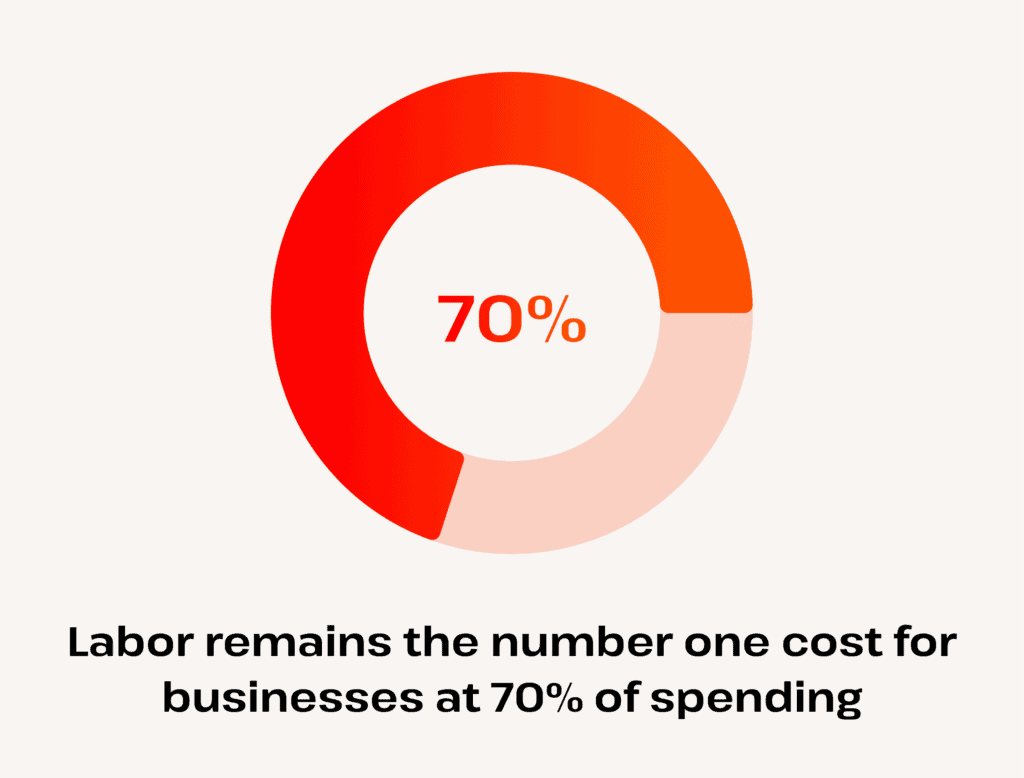
For most businesses, labor is the biggest expense, accounting for 70% of their total spending. Because of this, companies often look to cut labor costs first when trying to save money. This can mean layoffs, outsourcing to cheaper labor markets, or using software to reduce the need for as many employees.
Women-owned businesses receive smaller loans (NAWBO)
Women entrepreneurs often get smaller loans compared to their male counterparts. On average, loans for women-owned businesses are about $49,712, which is nearly 50% less than the $83,198 average loan size for men-owned businesses. This disparity highlights the challenges women face in securing equal financial support for their ventures, making it harder for them to scale their businesses at the same rate. It’s a gap that needs addressing to foster more equitable opportunities in the business world.
78% of small business owners use personal savings to get started (USA Today)
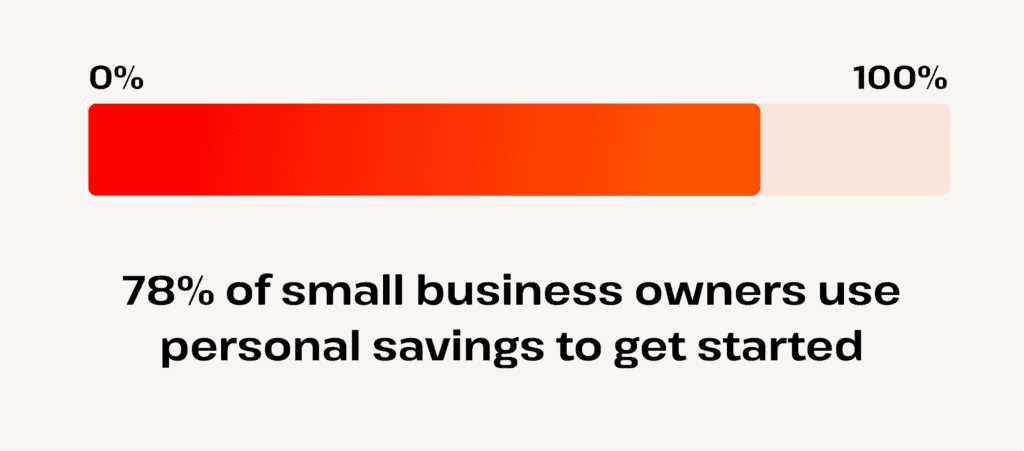
When it comes to launching a small business, most owners lean on their own savings to get things off the ground. About 78% of entrepreneurs start their ventures with personal funds rather than seeking bank loans or outside help. Bank loans only cover 16% of the initial funding, and just a small fraction—between 2% to 6%—comes from friends and family. It’s clear that personal savings play a huge role in making those entrepreneurial dreams a reality.
60% of small businesses have $50,000 or less in debt (Semrush)
Most small businesses carry less than $50,000 in debt. This means they are typically managing to keep their borrowing low, which helps reduce financial strain and risk. For many small business owners, keeping debt manageable is important to staying on track and ensuring the business can grow without taking on too much financial pressure.
49.8% of businesses use accounting software (Review42)
Nearly half of all businesses have embraced accounting software to manage their finances. Instead of relying on traditional methods, these businesses are turning to digital tools to streamline everything from invoicing to payroll. It’s clear that accounting software is becoming a key part of managing a business’s finances efficiently.
Small Business Marketing, Sales, and Branding Statistics
Only 25% of small businesses have a website (Godaddy)
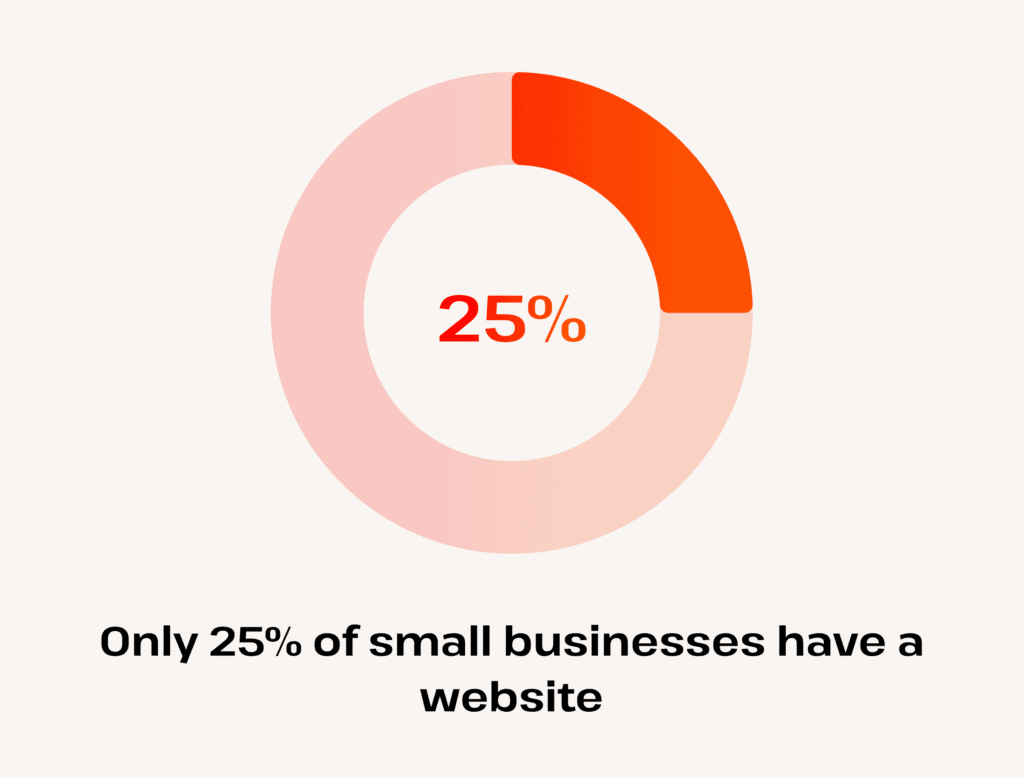
Surprisingly, just 25% of small businesses have their own website, even though it’s a crucial part of many marketing strategies. This lack of online presence might mean missed opportunities for growth and customer engagement, especially in today’s digital age where having a website is often expected by consumers.
15.3% of small business owners manage their own marketing (Semrush)
Around 15.3% of small business owners handle their marketing by themselves, while 56.9% rely on an in-house team. This shows how some small business owners prefer to take on the challenge of marketing on their own, while others delegate the task to a dedicated team, depending on what’s best for their business.
Small businesses spend an average of 1% of their revenue on advertising (Forbes)
Most small businesses keep their ad budgets modest, with an average of 1% of their revenue going toward marketing and advertising efforts. Whether it’s digital ads, print, or social media campaigns, this figure shows how cautious small business owners are when allocating resources to promote their services and reach new customers. It’s a manageable cost that allows businesses to build awareness without overspending.
73% of small businesses say they need more help with marketing and outreach (WebFX)
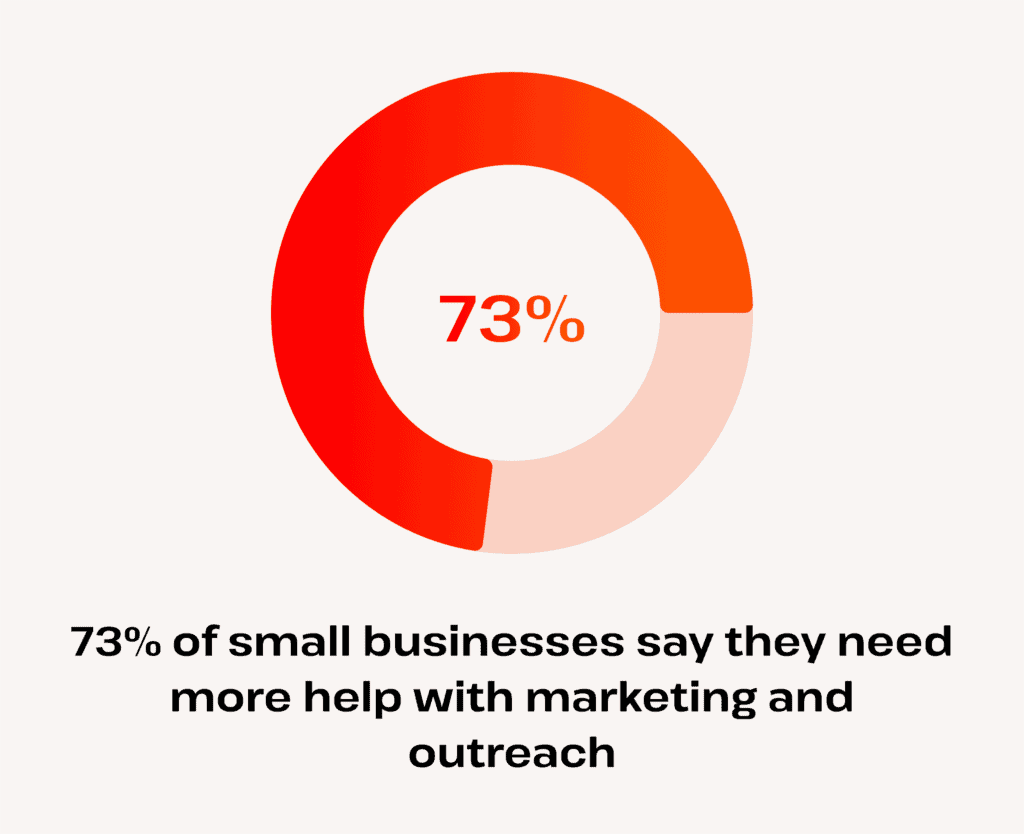
Almost three-quarters of small businesses feel like they could use some extra support in getting their name out there. Competing in a crowded space and trying to boost visibility can be tough, and many businesses recognize they can’t go it alone when it comes to marketing. Whether it’s social media strategies, email campaigns, or just building brand awareness, a lot of small businesses are looking for better ways to stand out and grow.
72% of small businesses believe branding is essential for growth (Marq)
A lot of small businesses recognize that good branding isn’t just for the big guys. In fact, 72% say it’s key to their growth. It’s all about creating a strong identity, whether that’s through a memorable logo or connecting emotionally with your customers. When done right, it can help you stand out and build trust. And, in today’s competitive market, having a solid brand is one of the best ways to leave a lasting impression.
Small businesses that utilize consistent branding see a 23% increase in revenue (Marq)
Consistency in branding can really pay off. Small businesses that keep their branding on point across all platforms and customer touchpoints see, on average, a 23% jump in revenue. It’s a simple but powerful way to grow your business, helping you build recognition, trust, and loyalty with your customers. A consistent message, look, and feel makes your business stand out, and those small details can add up to big returns.
70% of small businesses use Facebook for marketing (Campaign Monitor)
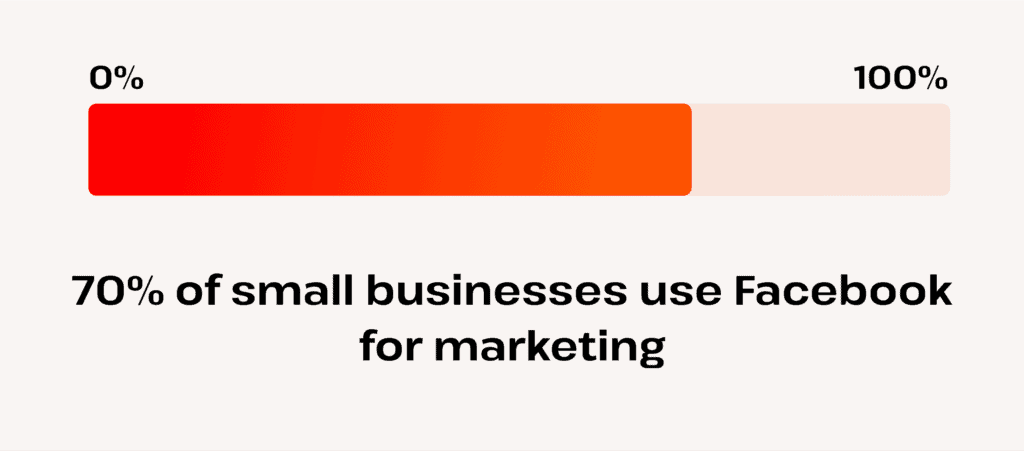
Around 70% of small businesses rely on Facebook as part of their marketing efforts. In addition, 64% of them use email marketing, and 43% invest in paid search. This shows that social media and digital tools are key strategies for reaching customers and growing their businesses.
Email marketing has the highest return on investment (Campaign Monitor)
For small business marketers in 2023, email marketing delivered the best return on investment (ROI) compared to other channels. This indicates that focusing on email campaigns could be a highly effective strategy for maximizing marketing spend and reaching customers efficiently.
45% of small business leaders use a CRM system (Review42)
Nearly half of small business leaders report using a CRM system to manage and track customer interactions. These systems are valuable for organizing customer data, streamlining communication, and improving client management.
55% of consumers learn about new brands through social media (Sprout Social)
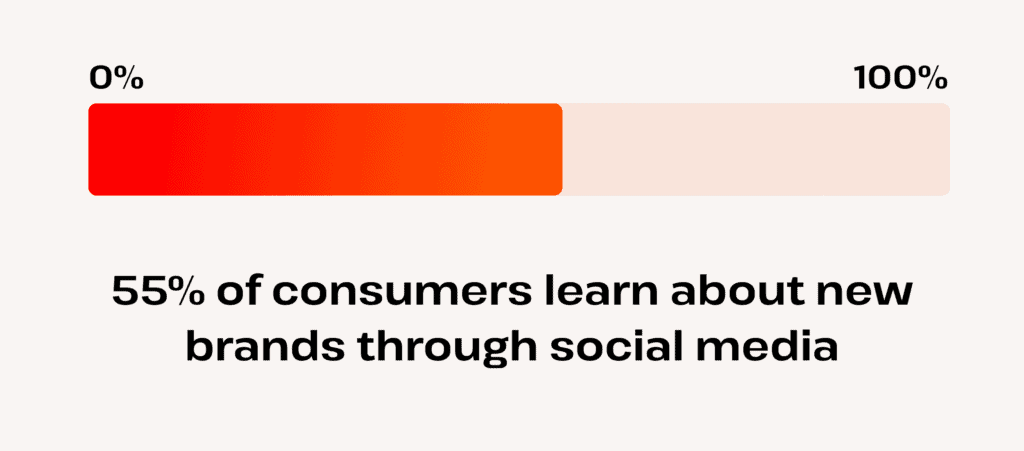
With over half of consumers discovering new brands via social media, it’s clear that maintaining an active presence online is crucial for business growth. If your business isn’t leveraging social platforms, you could be missing out on connecting with a large audience and building brand awareness.
Small business marketers find influencer marketing and SEO marketing challenging (Campaign Monitor)
Small business marketers often struggle the most with leveraging influencer marketing and SEO marketing. These channels are seen as the most difficult to navigate, likely due to the specialized knowledge and time investment required to achieve meaningful results. Despite their potential benefits, these strategies can be tricky to master, especially for smaller businesses with limited resources.
Mobile devices generate 54.4% of global web traffic (Statista)
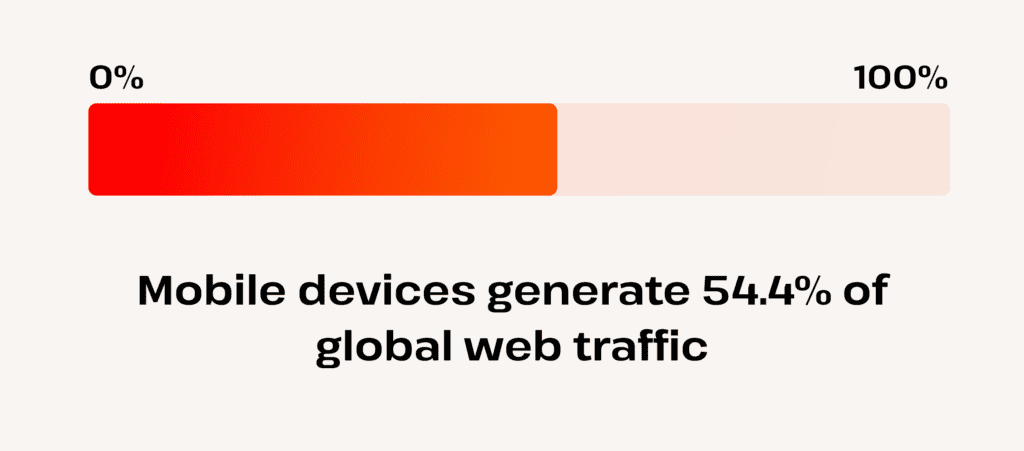
More than half of all web traffic worldwide comes from mobile devices. For small businesses, this means making sure your website is mobile-friendly is crucial. If your site isn’t easy to use on a phone, you could be losing potential customers. Ensuring your website works well on mobile can help you reach a larger audience and keep your business competitive.
Small businesses usually spend 7% of their revenue on digital marketing (Localiq)
For small businesses, it’s common to set aside 5-10% of their revenue specifically for digital marketing. This money goes towards essential online efforts like social media ads, email marketing, and boosting their presence on search engines. Keeping a budget within this range helps businesses stay competitive online without stretching their finances too thin.
32.7% of small businesses spend over $100 weekly on social media advertising (Chamber of Commerce)
Almost one-third of small businesses are putting more than $100 into social media ads every week. It shows just how important platforms like Facebook and Instagram are for boosting visibility and attracting new customers.
76% of people search on a smartphone and visit a related business nearby within a day (ThinkWithGoogle)

Most people who search for something on their phone end up visiting a nearby business within 24 hours. Plus, 28% of those searches turn into a purchase. If your business isn’t showing up on mobile searches, you might be missing out on customers who are ready to buy.
72% of people trust local businesses more after seeing positive reviews (Invespcro)
When people see positive reviews, 72% are more likely to trust a local business. On the flip side, 86% of potential customers hesitate to buy if they come across negative reviews. This just goes to show how much reviews can sway opinions and why it’s so important to keep an eye on what people are saying about your business online.
49% of businesses say organic search delivers the best ROI (Backlinko)
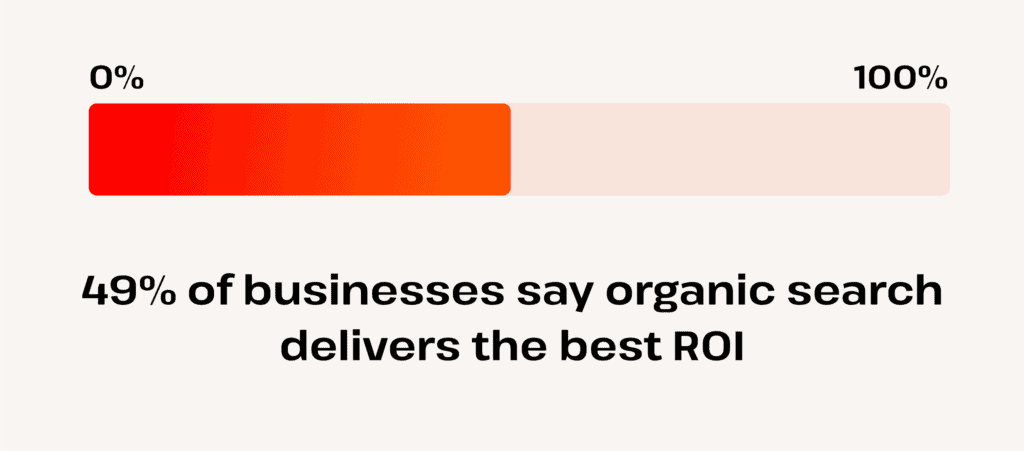
Nearly half of businesses report that organic search provides the highest return on investment for their marketing efforts. This highlights the importance of optimizing your website for search engines, as it can significantly drive traffic and lead to better profitability. If you’re not focusing on SEO, you could be missing out on a cost-effective way to grow your business.
60% of smartphone users contact businesses directly through Google search (Salesforce)
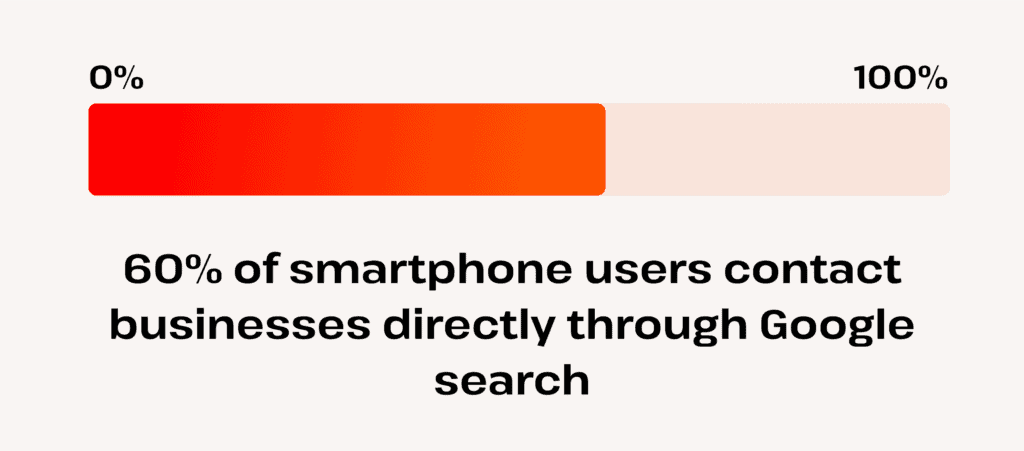
Around 60% of smartphone users reach out to businesses directly through Google search results. This shows how important it is to have accurate online contact information. If your business details aren’t correct or easy to find, you might miss out on potential customers who are ready to connect right from their phones.
81% of small businesses say online sales are essential (Insureon)
A significant majority of small businesses, about 81%, say that online sales play a critical role in their success. With the rise of e-commerce, these businesses are increasingly relying on online platforms to reach customers and maintain their operations.
Small businesses that sell products online use the following platforms:
- Company website: 66%
- eBay: 22%
- Shopify: 7%
- Etsy: 4%
- Alibaba: 2%
- Jet: 2%
- Magento: 1%
Challenges Faced by Small Businesses
66% of small businesses face financial challenges (Semrush)
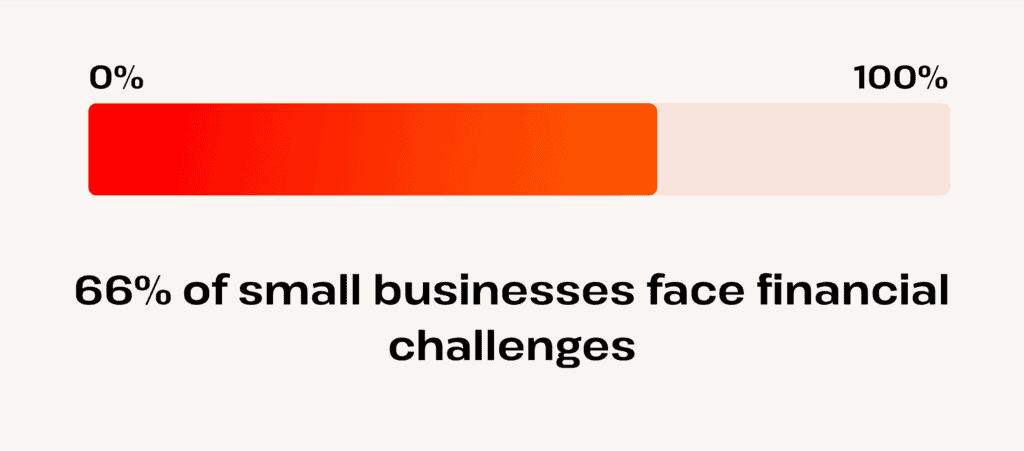
Two-thirds of small businesses struggle with money issues. The biggest problem? Covering operating expenses, 43% of owners find this the toughest part. Starting a retail business can cost around $32,000, but many begin with just $5,000 saved. This gap often leads to financial stress, pushing owners to find creative ways to manage costs or secure extra funding.
2% of small businesses cite inflation as their number one concern (NAWBO)
Over half of small businesses now rank inflation as their top issue, marking a 30% increase since 2021. Additionally, 74% of business owners report that their costs have risen over the past year. This highlights the growing pressure inflation is putting on small businesses, making it a major factor in their financial challenges and planning strategies.
20% of small businesses don’t make it through the first year (Fundera)
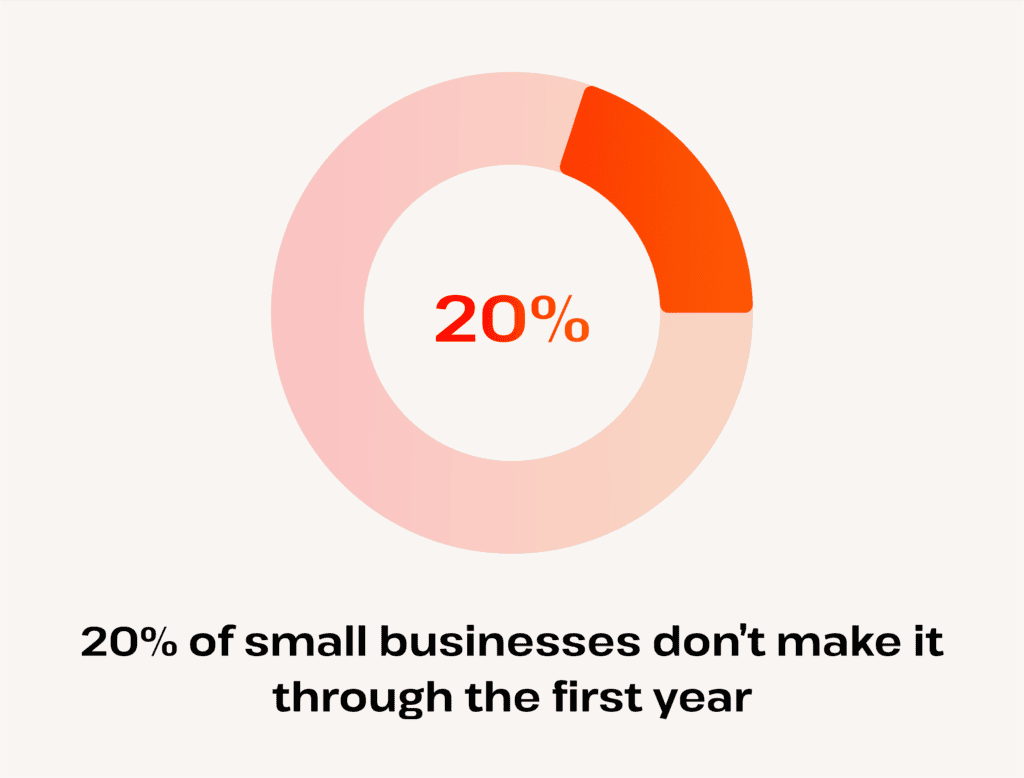
Starting a small business is tough. About 1 in 5 don’t make it through their first year. While 70% of those that do will survive their second year, the road gets bumpier over time. By the 10-year mark, only 30% of small businesses are still running. It’s a reminder that building a business is a long game, and sticking it out requires resilience, adaptability, and a lot of hard work.
22% of small business owners struggle with recruiting and retaining skilled employees (NAWBO)
Finding and keeping skilled employees is a major challenge for 22% of small business owners. Alongside inflation, it’s one of the biggest obstacles they face. About 27% of owners also report a lack of interest in the workforce, with fewer applications coming in. According to the NFIB, 43% of small business owners have job openings they can’t fill. Additionally, 12% struggle to find candidates with the right technical skills, while 11% have trouble finding those with the right soft skills.
56% of small business employers face increased competition from giant corporations when hiring top talent (Scalable)

Finding top talent is becoming tougher for over half of small business owners. With large corporations offering more competitive salaries and benefits, small businesses often struggle to attract the best candidates. This competition is pushing small business employers to get creative in their hiring strategies, offering things like flexible work schedules, unique company cultures, or opportunities for rapid growth to stand out and win over top-tier talent.
40% of small businesses experience a high employee turnover rate (OECD)
Around 40% of small businesses are dealing with high employee turnover, which can be costly and time-consuming. When employees frequently leave, it disrupts workflow, increases hiring expenses, and lowers morale. Many small business owners are focusing on improving workplace culture, offering better benefits, and providing opportunities for growth to help reduce turnover and keep their teams stable.
82% of small businesses fail because of cash flow problems (Semrush)
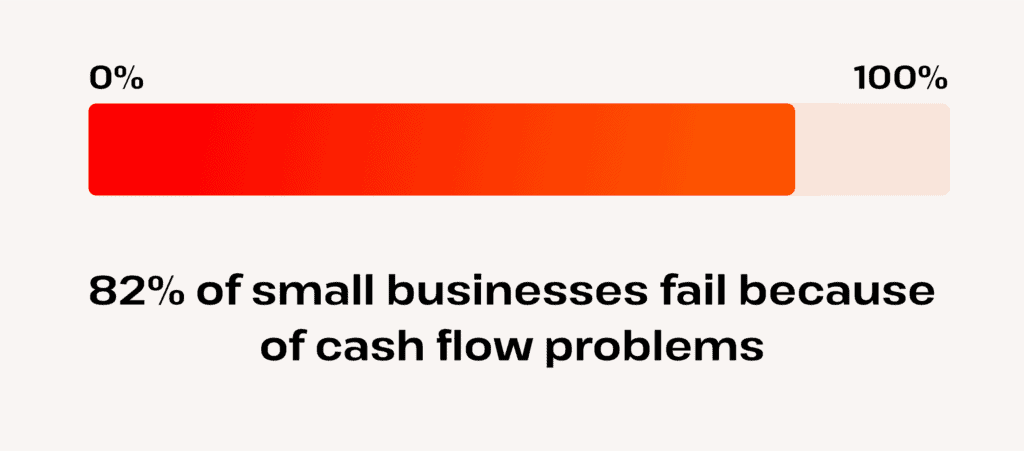
Most small businesses don’t make it because they struggle with cash flow, 82% of them, to be exact. It’s not just about making money; it’s about making sure there’s enough on hand to cover expenses. When cash flow isn’t managed well, businesses can run into issues like unpaid bills and missed opportunities, which can lead to closing down. Keeping a close eye on cash flow is key to staying afloat in the small business world.
Lack of market need is the second most common reason small businesses fail (CB Insights)
After running out of money, not having enough demand for a product or service is the next big reason why small businesses don’t survive. It doesn’t matter how much funding a business has if people aren’t interested in what it’s offering. That’s why understanding your target audience is critical before you launch. You’ll want to make sure there’s enough interest and ongoing demand to keep your business running in the long term.
Businesses with a formal business plan have a 16% better chance of viability (Investopedia)
A study suggests that having a formal business plan can make a big difference. Businesses that take the time to write one have a 16% higher chance of succeeding compared to those that don’t. This shows that careful planning, clear goals, and strategic thinking from the start can significantly increase the odds of long-term business success.
22% of small business owners have faced fines or penalties for non-compliance (Skillcast)
Keeping up with regulations can be a challenge for small business owners, and it turns out that nearly one in four have been hit with fines or penalties for falling out of compliance. Staying on top of legal requirements, whether it’s tax laws, employee regulations, or industry-specific rules, is critical. But for many, it’s tough to juggle everything and still stay compliant, which can lead to costly mistakes down the road.
23% of businesses fail due to not having the right team (Commerce Institute)
A common reason businesses don’t make it is not having the right team in place. Around 23% of businesses cite team-related issues as a key factor for their failure. This can include lacking the necessary skills, experience, or even chemistry among team members to effectively execute the business strategy and adapt to challenges.
Poor communication costs SMBs an average of $62.4M (Review42)
Small and medium-sized businesses lose a staggering $62.4 million on average due to poor communication. When team members don’t stay aligned or important information slips through the cracks, it can have major financial consequences. Improving internal communication could help avoid costly mistakes and keep everyone on the same page.
Over 1 million small businesses closed in 2020 (Semrush)
In 2020, about 1.02 million small businesses in the United States had to shut down permanently. This high number highlights the severe financial pressures small business owners faced, especially during the challenges brought on by the pandemic. It serves as a reminder of the resilience needed to keep a small business running, especially in tough economic times.
71% of small businesses survived the pandemic by going digital (Salesforce)
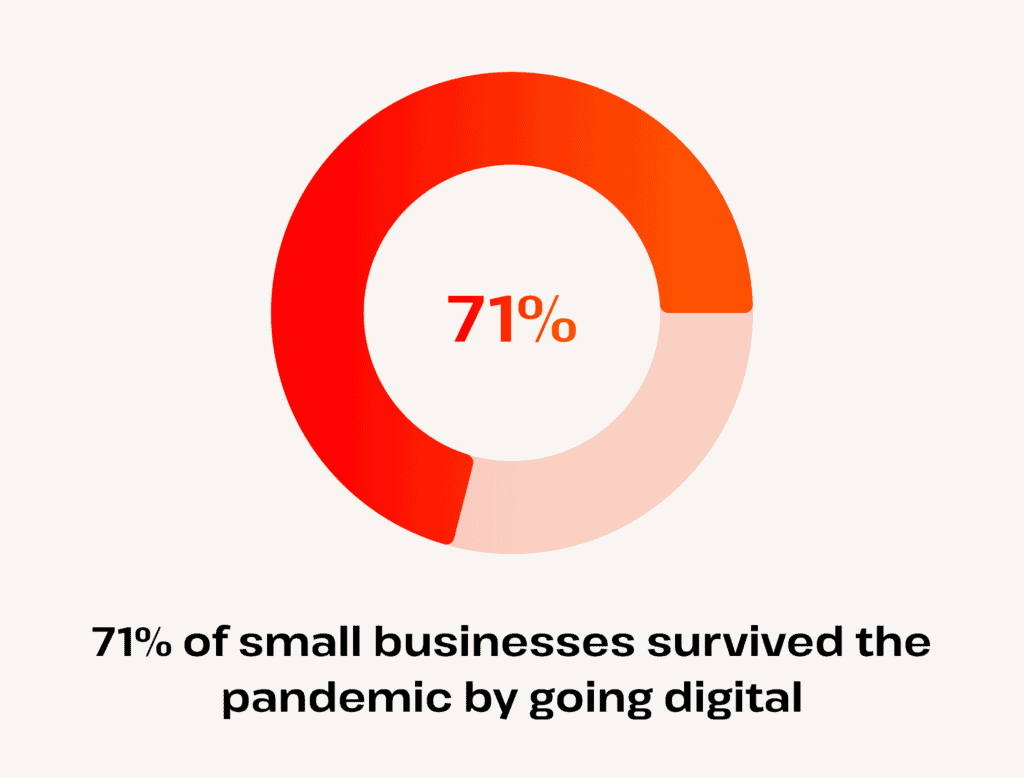
71% of small businesses got through the pandemic through digitization. Having an online presence and using digital tools turned out to be a lifeline for many, helping them keep their doors open when everything else was shutting down.
Small Business Trends
4.7 million jobs projected to be added in the U.S. by 2032 (BLS)
By 2032, the U.S. is expected to see 4.7 million more jobs, bringing total employment to 169.1 million. However, the growth rate is much slower than in previous years, reflecting a lingering recovery from the pandemic. Even with this increase, the job market will still be catching up from the 9.6 million jobs lost during the Covid-19 pandemic. So while more jobs are on the horizon, it will take time to fully bounce back.
Small businesses contribute 39.4% to private sector payroll (USA Today)
Small businesses do more than just employ people—they account for 39.4% of the private sector payroll. They’re responsible for nearly half of the private sector workforce in the U.S. and contribute 43.5% to the nation’s GDP. That’s about $2.9 trillion each year. Plus, they create around 1.5 million new jobs annually. This really shows how vital small businesses are to keeping the economy strong and growing.
About 36,000 businesses make between $1 million and $2.5 million each year (Fora Financial)
Research from Fora Financial shows that around 36,000 businesses in the U.S. are earning between $1 million and $2.5 million annually. This number is growing, indicating that more companies are hitting these significant revenue milestones. This trend highlights the potential for small businesses to not just survive but thrive, making a substantial impact on the economy.
74% of small business owners say rising costs are hurting their ability to secure funding (NAWBO)
Three out of four small business owners are feeling the squeeze, saying rising costs are making it harder to secure funding. With expenses going up, many are finding it tough to get the money they need to keep things moving or grow their business. It’s a reminder that with the current economic challenges, business owners might need to get creative or look into alternative ways to fund their operations.
43.5% of U.S. GDP comes from small businesses (USA Today)
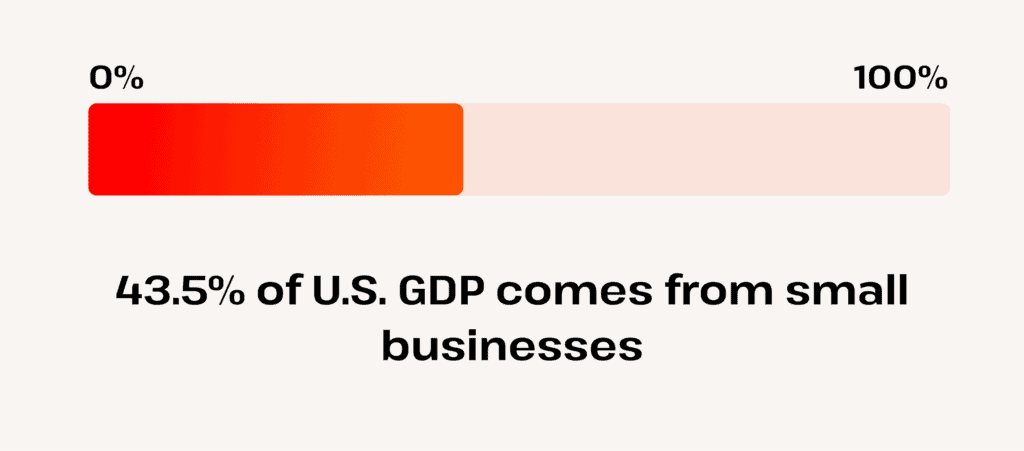
Small businesses play a huge role in the U.S. economy, contributing 43.5% of the country’s GDP. They also account for 35.6% of all private sector revenue, totaling around $13.3 trillion. This shows just how essential small businesses are to the economy, driving growth and innovation across the nation.
11.86% of business owners plan to sell their business (NAWBO)
Due to the challenging economic environment, including high interest rates, labor shortages, and supply chain issues, nearly 12% of business owners are planning to sell their businesses by the end of 2023. This shows how tough it is for small businesses to navigate these financial strains and uncertainties.
32.6% of known export value comes from small businesses (NAWBO)
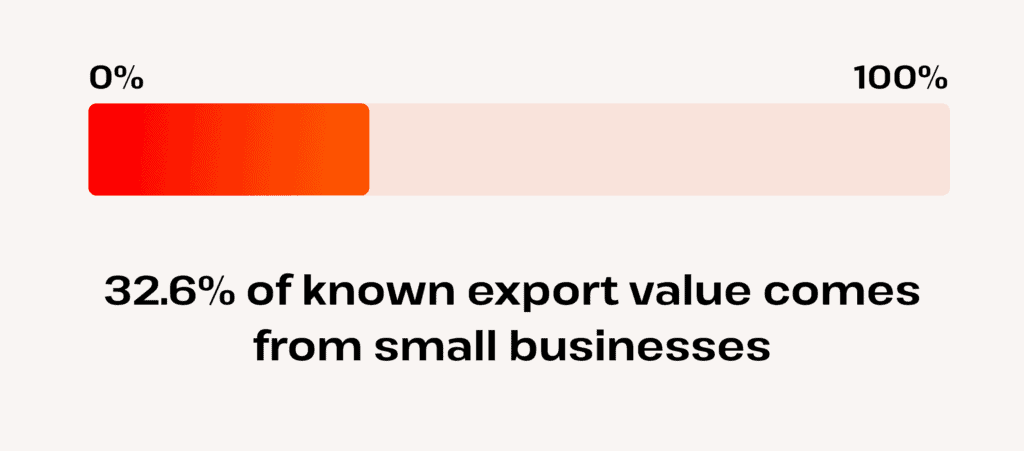
Small businesses in the U.S. make up 32.6% of the country’s total export value. This shows how important small businesses are in the global market, proving that even smaller companies can have a big impact on international trade.
50% of all new businesses start at home (Luisa Zhou)
Half of new businesses get their start in the owner’s home, whether they have employees or not. Among businesses with employees, only 24% are home-based. The newer the business, the more likely it is to be run from home. For example, 32% of businesses two years old or younger operate from home, while this drops to 17% for those over 16 years old. This shows how many entrepreneurs start small, often at home, and then expand as they grow.
The healthcare industry boasts a first-year survival rate of 60% for small businesses (NAWBO)

Healthcare stands out with 60% of small businesses in the industry making it through their first year. This high success rate suggests that the healthcare sector offers a more stable environment for new businesses compared to other industries. If you’re considering starting a business in healthcare, this statistic could be encouraging, as it indicates a relatively strong chance of early survival.
28% of small businesses are unprepared for potential cyberattacks (Fundera)
Nearly one-third of small businesses aren’t ready for the possibility of cyberattacks. Without the necessary cybersecurity measures in place, these businesses face heightened risks in today’s digital landscape. For companies operating online, investing in strong cybersecurity tools is more critical than ever to prevent data breaches and protect sensitive customer information. Ignoring these precautions could lead to significant financial losses and damage to reputation.
The construction industry has the highest failure rate (Freshbooks)
Construction businesses have a tough time staying afloat, with 25% of them failing within the first year. This could be due to unpredictable material costs, the need for skilled labor, and complex projects. The industry’s sensitivity to economic shifts, like changes in real estate demand, adds even more pressure, making it a challenging field for new businesses to thrive in.
424,000 new small business applications in May 2024 (Bankrate)
In May 2024, 424,000 people in the United States applied to start new small businesses. This high number shows that many are eager to launch their own ventures, reflecting a strong interest in entrepreneurship across the country. Despite the challenges in the current economy, there’s a clear trend of individuals wanting to take charge and build something new.
More than 60% of Amazon’s sales come from small businesses (Amazon)
Small and medium-sized businesses make up over 60% of sales on Amazon. These independent sellers not only succeed on the platform but also drive job creation and economic growth in their local communities. By selling on Amazon, these businesses can reach a larger customer base while supporting their local economies.
77% of consumers are willing to pay more for better customer service at small businesses (Zendesk)
Customers are so keen on great service that 77% say they’d spend extra at a small business offering a superior experience. This means focusing on customer care isn’t just nice—it’s a smart way to stand out from bigger competitors and justify charging a little more. It’s not just about what you’re selling, it’s about making people feel valued. That can make a big difference in growing your business.
97% of small businesses still rely on paper checks (Small Biz Trends)
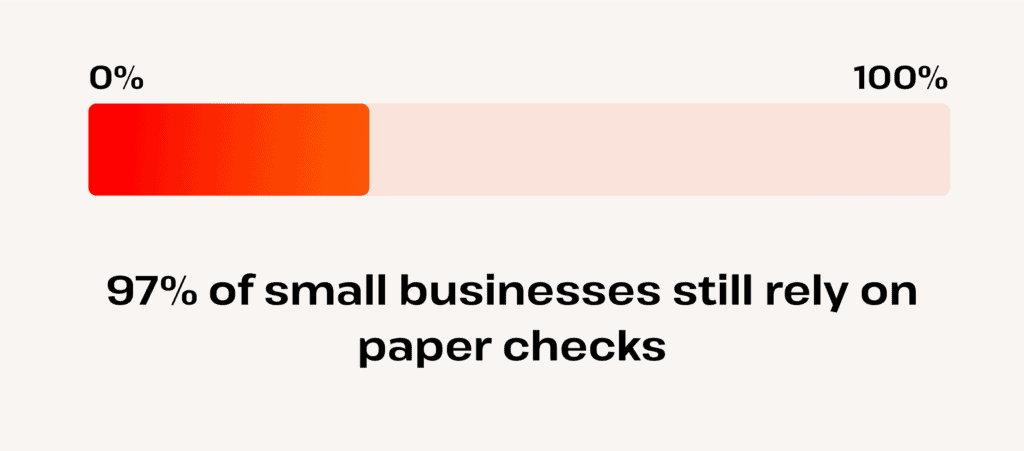
Despite the rise of digital payment methods, nearly all small businesses still use paper checks for transactions. This old-school payment method remains surprisingly popular, showing that many companies haven’t fully embraced digital alternatives yet.
31% of businesses adopted new payment technologies because of customer demand (Review42)
Nearly a third of businesses upgraded their payment systems because their customers wanted it. It goes to show that companies are listening to their clients and making changes to keep them happy, especially as more people expect modern and convenient payment options.
30% of small businesses are built with the intention of being sold (HBR)
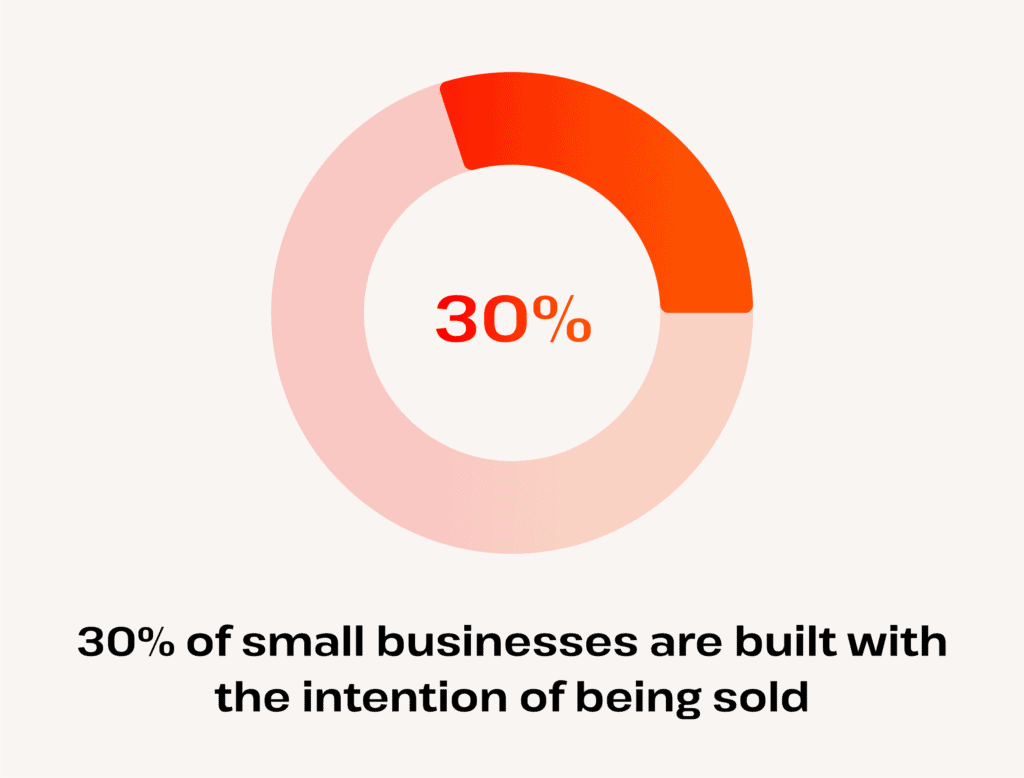
Roughly 30% of small business owners start their companies with the goal of selling them in the future. Instead of building a business to run long-term, many entrepreneurs aim to grow and eventually sell to a larger company or private buyer. This exit strategy allows owners to cash in on their hard work and investment once the business reaches a certain level of success.
28% of small businesses in the U.S. are involved in the clean energy sector (DOE)
It’s clear that sustainability is becoming more than just a trend. Around 28% of small businesses in the U.S. are part of the clean energy sector, focusing on renewable energy and environmentally friendly initiatives. These businesses are helping lead the charge toward a greener future while also creating jobs and innovation in one of the fastest-growing industries.
Service-based industries account for nearly 60% of new startups (OECD)
It turns out that most new businesses popping up are in service-based industries, covering things like healthcare, consulting, and personal services. Nearly 60% of startups are heading in this direction, probably because they’re easier to get off the ground with lower startup costs and fewer barriers. Entrepreneurs seem to be jumping into service sectors because they can grow quickly and meet rising customer demands. This trend shows how service-based businesses are taking the lead in today’s entrepreneurial landscape.
Conclusion
Small businesses are incredibly important, making up nearly all U.S. businesses and contributing a huge chunk to the economy.
Every year, they create about 1.5 million jobs just in the U.S. and are responsible for 43.5% of the U.S. GDP. They also generate 1.5 million jobs annually in the U.S. alone.
Looking ahead, the secret for small businesses will be to stay sharp with technology and roll with the punches of economic changes. Staying adaptable and innovative can really help them continue to grow and stand out in a competitive global market.
FAQ
What percentage of US businesses are small businesses?
99.9% of US businesses are classified as small businesses.
How many small businesses are there in the US?
There are about 33.3 million small businesses in the US.
Do small businesses really drive the US economy?
Yes, small businesses really drive the US economy, contributing 43.5% to the US GDP and creating a significant number of jobs.
What percentage of small businesses are profitable?
Around 65.3% of small businesses are profitable.
What’s the most common reason a startup fails?
The most common reason a startup fails is due to cash flow problems.