Hiring posts on social keep dying in the feed and nobody notices until the pipeline runs dry. The post goes up, three colleagues like it, and the algorithm concludes nobody wants to see it. The role you urgently needed to fill gets maybe sixty impressions, mostly from people already on the payroll.
That isn’t a motivation problem for the recruiter. It’s a format problem and a distribution problem at once. AI has reshaped how teams hire everywhere, and social hiring posts are the sharp end. Below, we cover why the posts get buried and what actually gets reach now, then how to run distribution so good roles don’t die on arrival.
Why Hiring Posts Keep Getting Buried
The feed is tuned for a different outcome than a job application. Most hiring content runs straight into that mismatch and loses.
The Feed Rewards Engagement, Not Applications
The algorithm scores a post on comments and watch-time, not on whether anyone clicked the apply link. A hiring post with a bland headline and a link to a job board collects almost none of those signals, so the feed stops showing it. The post isn’t bad. It just doesn’t earn distribution.
One Platform, One Post, One Shot
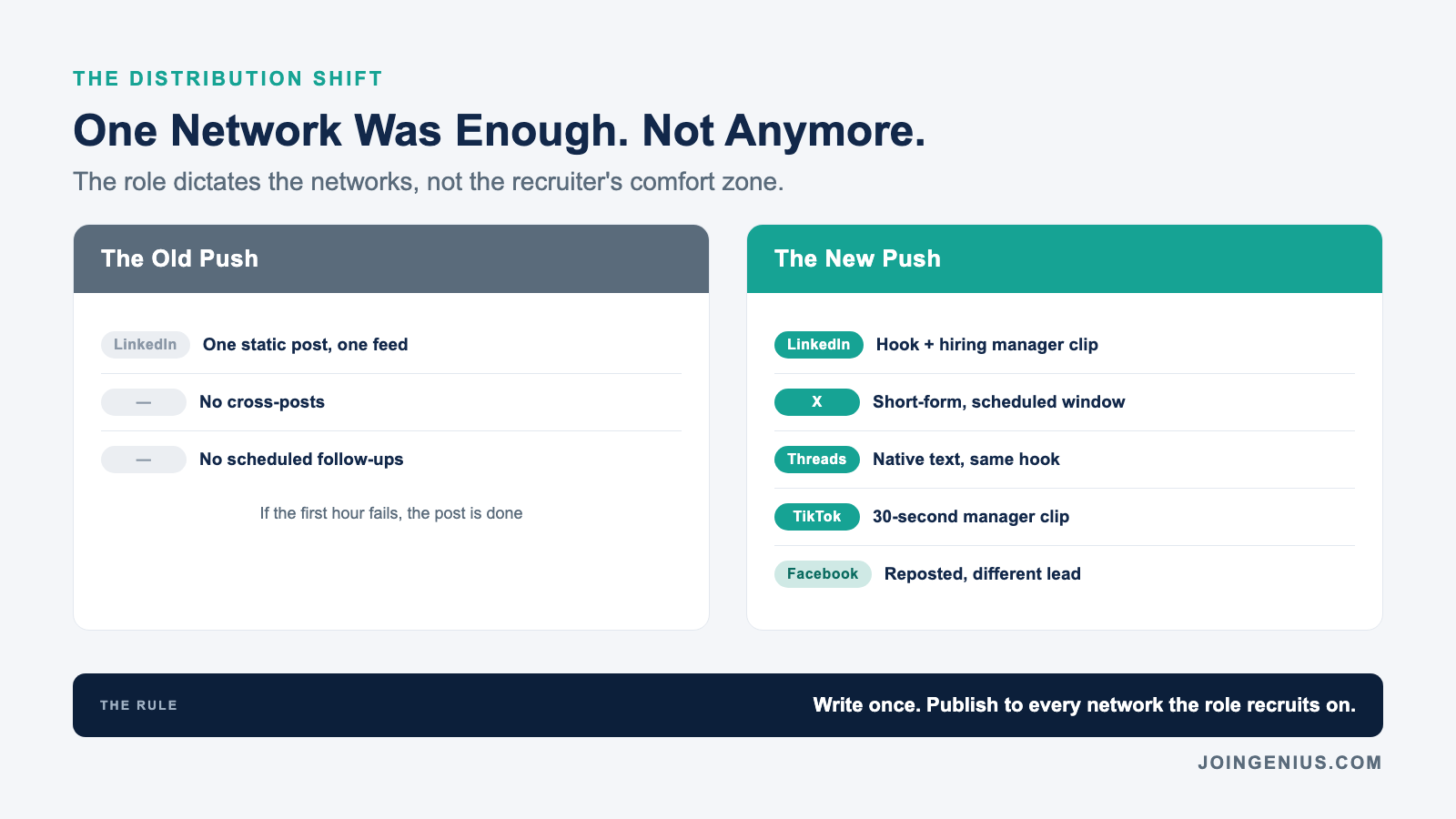
Most hiring posts go up on one network, with one static image, and then nothing. If the first hour doesn’t take, the post is done. Teams that know how to attract the right candidates treat a job post as a mini campaign, not a single send.
The “We’re Hiring!” Template Nobody Clicks
Open any LinkedIn feed and you’ll see twenty versions of the same post: a corporate logo and bullet points, with a stock photo on top. Readers scroll past because the pattern reads as corporate. The format itself tells people this isn’t for them.
What the 2025–2026 Numbers Say About Social Hiring
Two things changed at the same time. Reach collapsed and candidates moved. Both affect how a hiring post has to work now.
Organic Reach Keeps Falling While Posting Volume Climbs
Posting more does not solve for a feed that shows less. Reach per post keeps dropping on LinkedIn and Facebook year over year, and any team banking on volume is paying for the loss. The posts that break through are a smaller share of a bigger stream.
Where Candidates Actually See Job Content Now
Short-form video platforms show up where listings used to work. Candidates scroll TikTok and Instagram Reels, and the companies they recognize there are the ones they consider. The static post on a single platform is already behind the behavior.
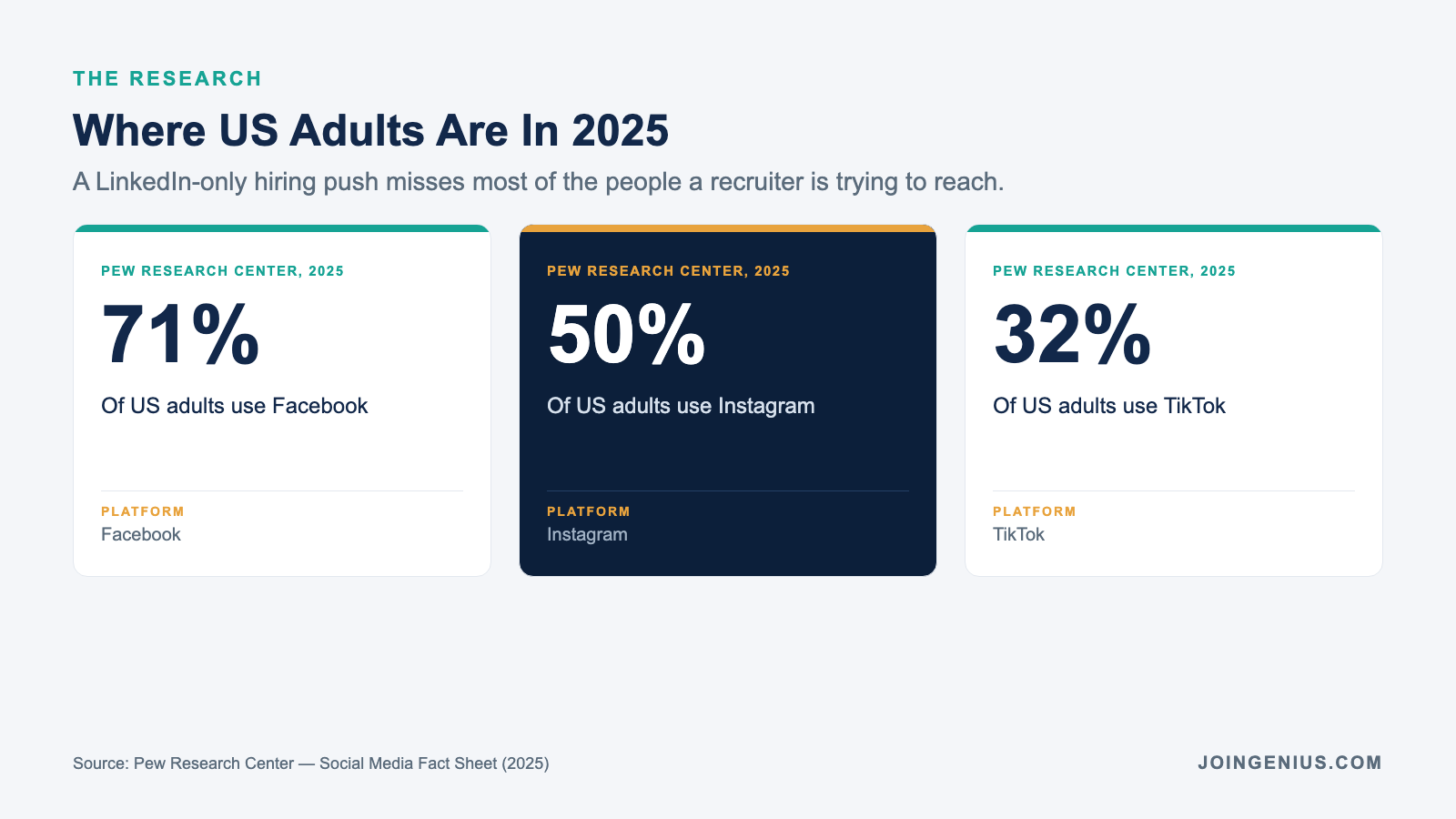
In Pew Research Center’s 2025 Social Media Fact Sheet, 71% of US adults use Facebook and 50% use Instagram. TikTok reaches 32%, which means a LinkedIn-only hiring post misses most of the people a recruiter is trying to reach.
What Actually Works — Format, Not Platform
The platform matters less than people think. The format decides whether anyone sees the post at all.
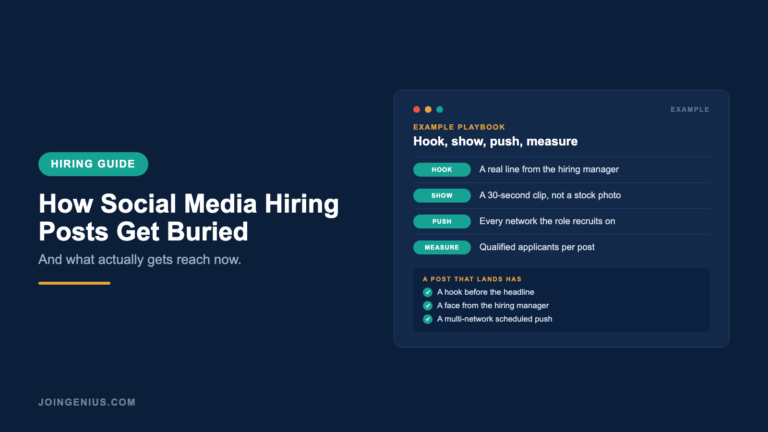
Lead With a Hook, Not the Headline
A hiring post that opens with “We’re hiring a senior data engineer” gets scrolled past. One that opens with “We lost a round of candidates because our tech test took five hours — fixing that this quarter, come help” gets saved. The hook decides the first second.
Show the Hiring Manager, Not the JD
A short video of the person doing the hire talking about the role beats a bullet list of requirements. Candidates buy into people, not postings. A visible manager also screens out candidates who don’t want that type of boss.
Metricool’s 2025 State of Short-Form Video report found that short-form video posts have grown by 70% year over year across its sample of 582,000 accounts, which is the format doing the work the feed used to.
Pair the Post With a Short-Form Video Clip
Static job posts die faster than ever. A thirty-second clip from the manager, cross-posted to the networks the role recruits on, outperforms the identical copy as text. The clip does not need to be polished. It needs to be real. A workable talent acquisition strategy accepts this and builds a small content habit around it.
A Quick Signal Table
| What to Check | Typical Hiring Post | Post That Gets Reach |
|---|---|---|
| Opens with | Company name and role title | A hook from the hiring manager |
| Shows | A stock photo and a bulleted JD | A 30-second clip or a candid moment |
| Posts to | One network only | Every network the role recruits on |
| Measures by | Likes and reach | Qualified applicants per post |
Make the Distribution Match the Role
Once the format is right, distribution does the rest. The posts that fill pipelines are the ones that go out on every network a candidate actually uses.
Multi-Network Is Table Stakes Now
A candidate for a senior role might see your post on LinkedIn. A candidate for a hands-on role might see it on TikTok or Threads. The old habit of picking one platform and hoping is gone. The role dictates the networks, not the recruiter’s comfort zone.
Schedule for When Candidates Look, Not When You Remember
Posts drafted at 4 pm on a Thursday die on a Thursday feed. Candidates look on Monday mornings and Sunday nights. The content calendar has to match that, which means real scheduling and not improvisation.
Teams that keep hiring content moving use a tool like Postfast to write once and publish to every network you recruit on, so one job post goes out to LinkedIn, X, Threads, TikTok, and Facebook in the same push, with per-platform previews.
Repost Without Copying Yourself
A single hiring post should ship three or four times across different formats. Change the hook, lead with a different line, cut the clip differently. Candidates who missed the first version won’t recognize it as a repeat, and the role gets its real audience.
Who Should Actually Own Hiring Content
Good hiring content comes from someone with time and context. Shoving it onto a recruiter at 5 pm is not that.
Recruiters Are Not Social Media Managers
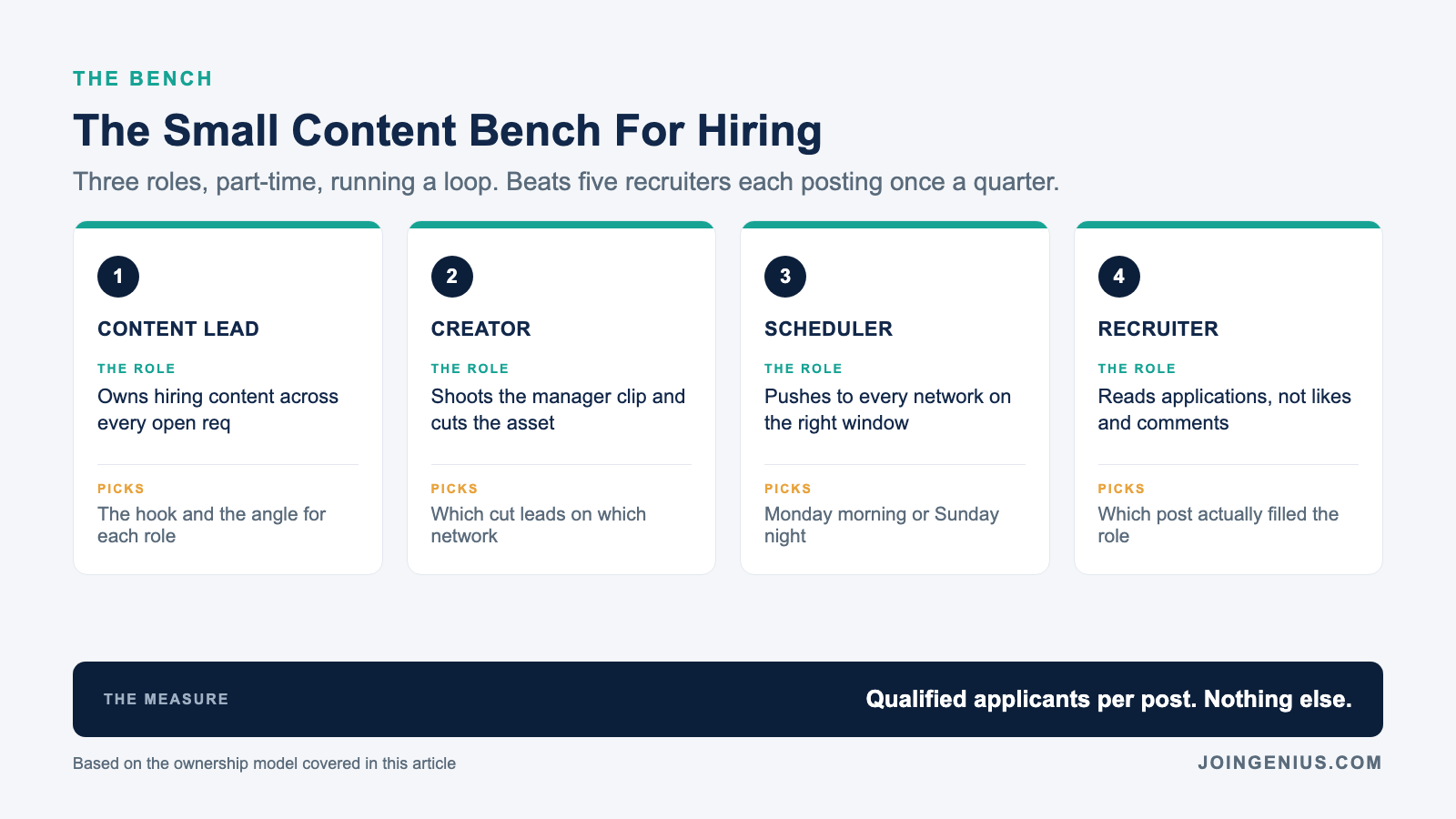
A recruiter running a req can’t also write and shoot the content on top of running the loop. They can’t cross-post it and reply to comments on a schedule either. A marketing recruitment agency model doesn’t fit here either — hiring content needs someone inside the company who knows the roles.
Keep a Small Content Bench for Hiring
The right setup is a small bench. One content lead who owns hiring content across roles. One or two creators who can shoot and edit. A scheduler who keeps the calendar honest. Three people, part-time, running a loop. That beats five recruiters each posting once a quarter.
Measure Applications, Not Likes
Views and likes are vanity on hiring posts. The number that matters is qualified applications per post and the time it takes to fill the role. Tracking those keeps retention and attraction on real metrics, not comment counts.
SignalHire’s 2026 Passive Candidate Report notes that job boards reach only about 30% of the talent pool, so a plan that stops at posting listings is leaving most qualified candidates untouched.
Conclusion
The posts that work are not the ones with cleverer copy. They are the ones whose format matches how people actually scroll and whose distribution matches where candidates actually look. If a hiring post is getting fewer than 500 impressions in the first day, the problem is almost never the headline. It is the format and the push behind it.
We built Genius so companies can hire the people behind that content without rebuilding their whole org. We place the top 1% of marketing and operations talent from the Philippines and Latin America, at around 80% less than comparable local hires. The relationship stays direct, with no monthly agency fees and a 6-month replacement guarantee on every placement. If running hiring content keeps falling to someone who doesn’t have time, see how we source and place content talent.