Spotting resume red flags used to be simpler. A typo-ridden page or a three-month stint jumped out, and you moved on. Now every resume arrives polished, keyword-matched and formatted by software, so the obvious tells are gone. The real red flags are still there; they are just quieter and easier to miss.
The risk cuts both ways. Miss a real flag and you make a bad hire. Over-react to a harmless one and you reject someone great. AI has reshaped how people apply, so the skill now is telling a real warning from noise. Below, we cover the red flags that still matter and how to weigh them without over-rejecting.
Why Resume Red Flags Are Harder to Spot in 2025
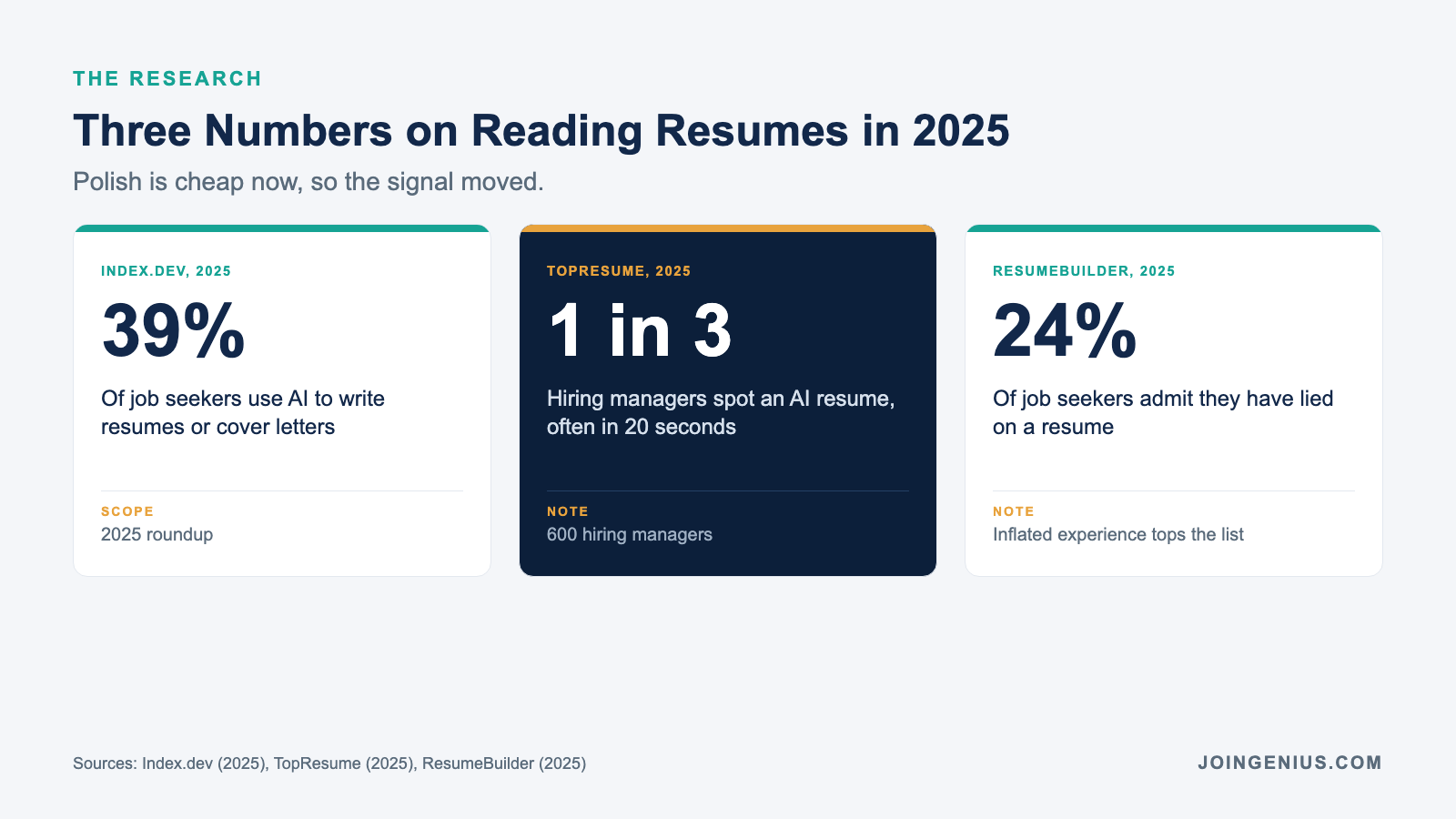
The resume in front of you was probably not written alone. In a 2025 Index.dev roundup, 39% of job seekers used AI to write resumes or cover letters, which means polish tells you less than it used to.
AI Made Every Resume Look Good
Grammar and keyword matching are now free and automatic. A candidate who would have sent a rough draft two years ago now sends something clean. That is not a red flag by itself, but it means a sharp-looking resume is no longer a signal of a sharp candidate. The surface is solved; you have to read deeper.
A clean resume is table stakes now, not a differentiator.
The Flags That Still Matter Are About Substance
The warnings that survive are the ones AI cannot paper over, like what someone actually did and whether the story holds together. Those live in the content, not the formatting. Train your eye on the substance and the polish stops distracting you. Everything that is easy to generate is now close to worthless as a signal.
Over-Reacting Costs You Good People Too
The flip side of missing flags is seeing them everywhere. Treat every gap or short stint as disqualifying and you will screen out strong people with normal, imperfect careers. A red flag is a reason to look closer, not an automatic no. The goal is calibration, not suspicion.
Red Flags in the Work History
The work history is where the most reliable flags live. Dates and tenure are hard to fake and easy to check.
Unexplained Gaps With No Story
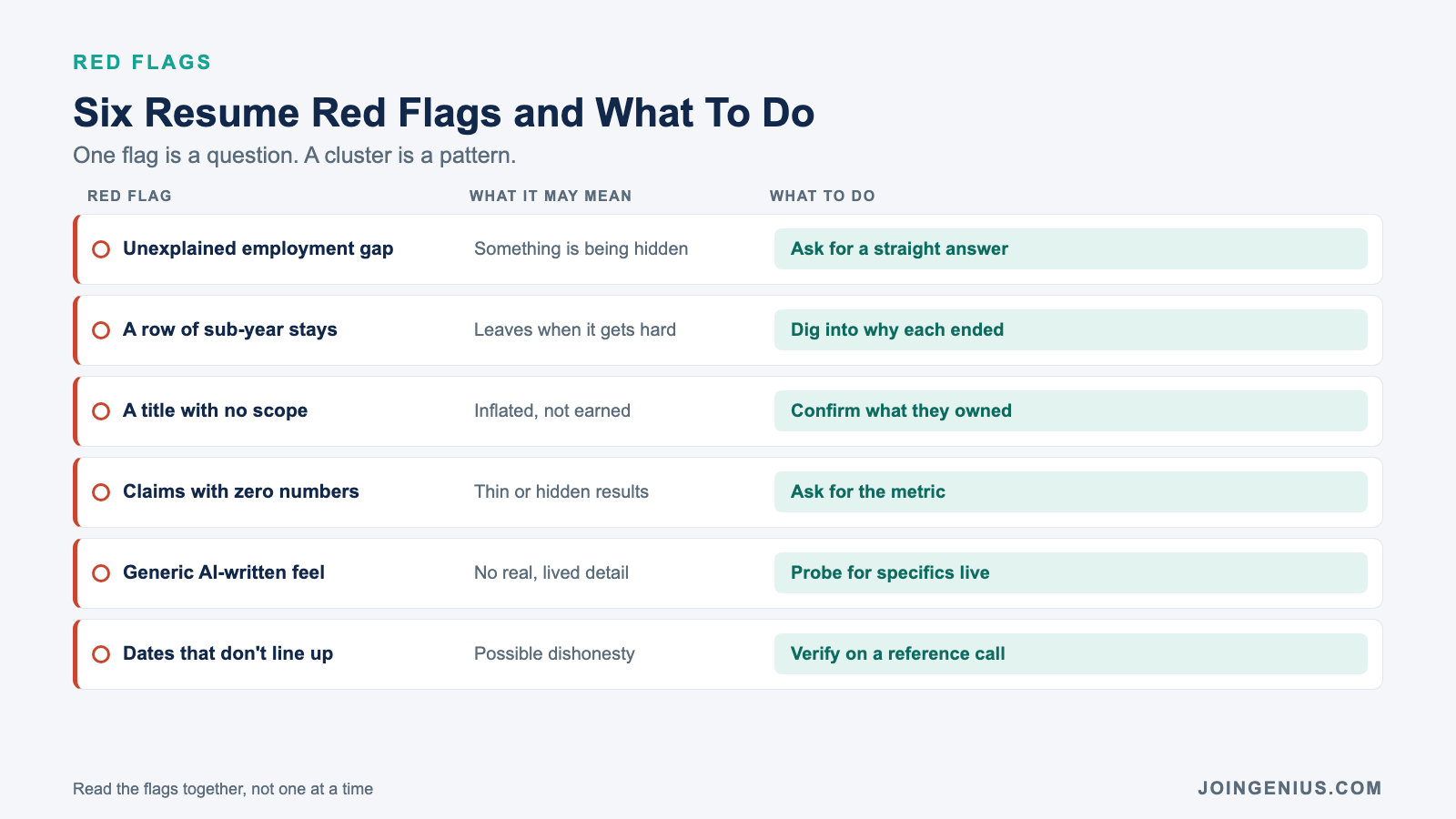
A gap is not a red flag; an unexplained gap is a prompt. People take time off for health or a failed startup, and none of that should sink a candidate. What is worth noting is a gap the resume hides with vague, year-only dates. The fix is simple: ask, and see if the answer is straight.
A candidate who explains a gap openly is usually a lower risk than one who buries it.
A Pattern of Short Stays
One short stint means nothing. A row of them, each under a year with no promotions, is worth a question. It can mean bad luck, or it can mean the person leaves the moment things get hard.
This is the same signal behind hires who don’t stay past their first stretch, and it is worth understanding before you hire, not after.
Titles That Keep Inflating With No Scope
Watch for a title that climbs fast while the responsibilities stay flat. Going from associate to senior to lead in two years can be real, or it can be a small company handing out titles instead of raises. The title is a claim. The scope behind it is the evidence, so ask what the person actually owned at each step.
Red Flags in How the Resume Is Written
Beyond the facts, how a resume is written leaks information. A growing tell is content that reads like a machine wrote it.
The Generic AI-Generated Sameness
AI resumes share a certain flavor, fluent but oddly interchangeable. Recruiters are learning to spot it. In a 2025 TopResume survey of 600 hiring managers, a third spotted AI-written resumes in about twenty seconds, and nearly 20% would reject one outright.
The flag is not that someone used AI. It is a resume with no specific, lived detail that only that person could have written.
Vague Claims With Zero Numbers
“Improved performance” and “drove growth” are not accomplishments; they are placeholders. Strong resumes attach numbers and context to a claim, like what changed and by how much. A resume full of responsibilities and empty of results is not lying, but it is hiding how much the person actually moved. Push for the specifics in the interview.
The strongest candidates tend to volunteer the numbers before you ask for them.
Buzzwords Standing In for Real Work
When every line is a cloud of buzzwords, the writer is often covering for thin substance. Jargon density tends to rise as real, demonstrable work falls. Translate the buzzwords into plain verbs and see what is left. If nothing concrete survives, that is your flag. Plain language is a quiet green flag, and evasive language is the opposite.
Red Flags That Signal Dishonesty
Most red flags are ambiguous. A few cross into dishonesty, and those are worth catching before an offer goes out.
Claims That Don’t Add Up
Dishonesty is more common than teams like to think. In a 2025 ResumeBuilder survey, 24% of job seekers admitted lying on a resume, with inflated years of experience the top lie at 38%.
Watch for dates that overlap oddly or a seniority that does not match the timeline. None of these is proof, but each earns a verification step.
Skills Nobody Could Actually Have
Be skeptical of a junior resume claiming deep expertise in a dozen tools at once. Real depth takes time, and a wall of expert-level skills on a two-year career is usually aspiration, not fact. A structured hiring process with a simple skills test sorts the real from the claimed faster than any resume read.
Depth in two tools usually beats a shallow list of twenty.
Claims That Unravel on a Reference Call
The cheapest lie detector is still a reference. A candidate who inflated a title or a scope gets vaguer when you ask a former manager to confirm specifics. You are not trying to catch people out. You are checking that the story on the page matches the story the people who were there will tell.
One honest reference is worth more than a page of polished bullet points.
When a claim looks shaky, a quick check usually settles it:
| Resume claim | A quick way to check it |
|---|---|
| Inflated years of experience | Line up the dates against each role |
| Vague, unquantified results | Ask for the number in the interview |
| Expert in everything | Give a short, real skills test |
| A big title with no scope | Confirm it on a reference call |
None of this is about distrust; it is about checking the page against reality.
How to Screen Without Over-Rejecting
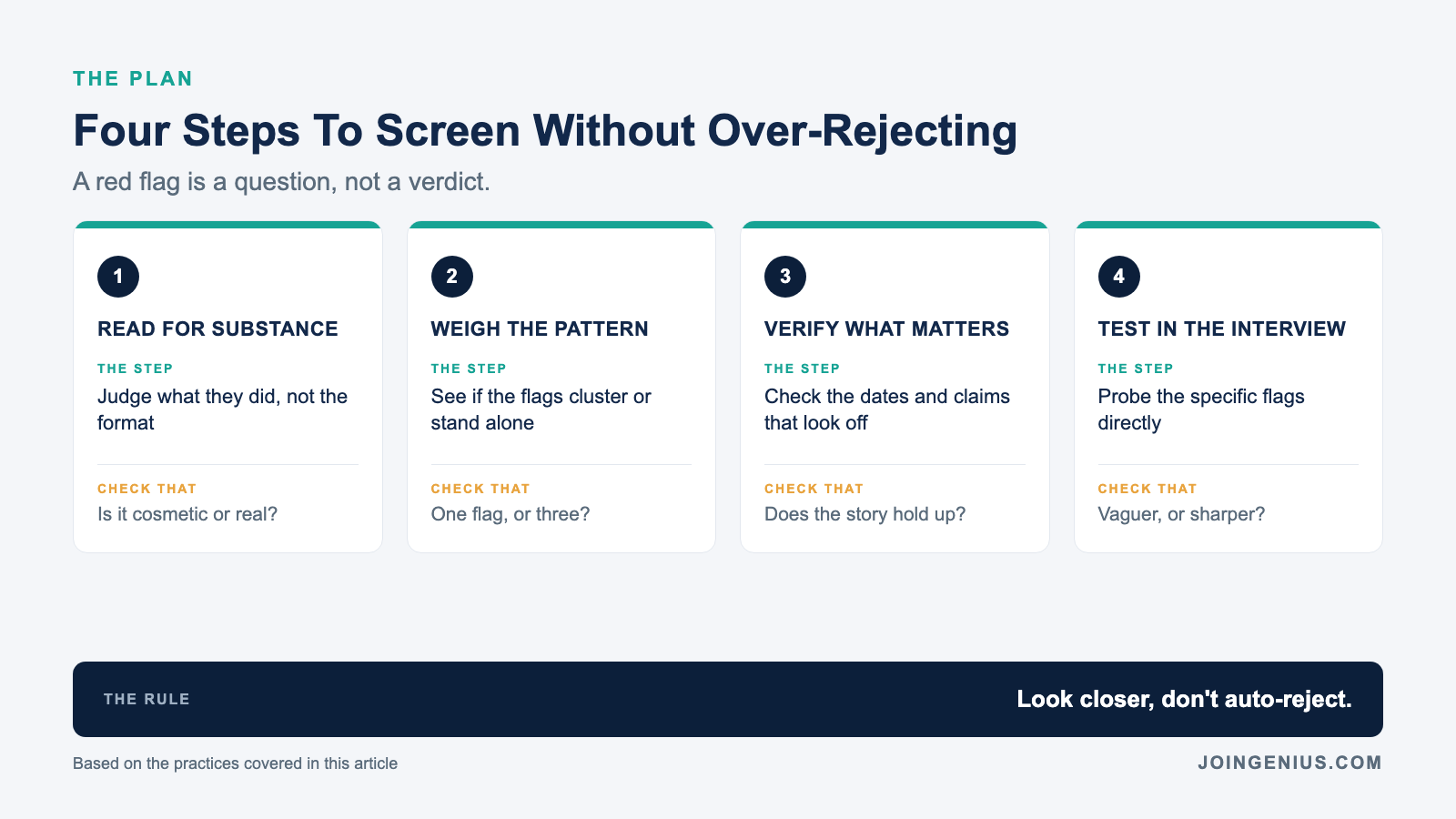
A red flag is a question, not a verdict. The teams that hire well treat flags as prompts to look closer, not reasons to toss a resume.
Separate Real Flags From Surface Noise
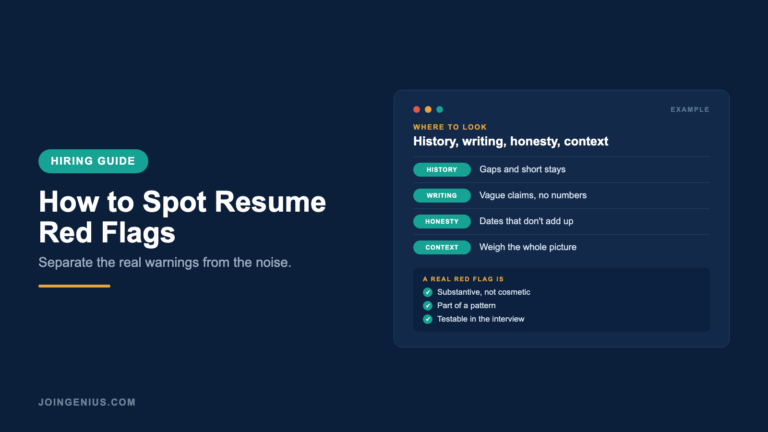
Not every imperfection is a warning. A plain template or a format you dislike says nothing about the person, and plenty of strong candidates use a resume builder and move on. Formatting is where good candidates get screened out for no good reason. Spend your attention on substance, not on fonts and margins.
Weigh Flags Against the Whole Picture
One flag on an otherwise strong resume is usually noise. Three flags that point the same way are a pattern worth acting on. Look at whether the warnings cluster or stand alone, and weigh them against the evidence of real, relevant work. Context turns a scary-looking resume into a clear yes or no.
No single resume is perfect, and the best hires rarely look flawless on paper.
Use the Interview to Test, Not to Confirm
The resume raises questions; the interview answers them. Go in with the specific flags you want to probe and ask for the detail the page left out. A candidate who inflated will get vaguer under real questions. One who undersold will get sharper. Let the conversation settle what the resume only hinted at.
Conclusion
Spotting resume red flags in 2025 is less about catching typos and more about reading substance through the polish. The format is solved for everyone now, so the signal is in what someone actually did and whether the story holds up.
Treat each flag as a question and check the ones that matter. Do that, and you catch the real problems without rejecting good people for cosmetic ones.
If the deeper issue is that you are drowning in look-alike resumes and short on time to read them well, that is worth fixing at the source.
At Genius, we help companies hire pre-vetted, top 1% talent from the Philippines and Latin America, at around 80% less than local hires, so the shortlist is strong before you ever open a resume.
You get people whose track record is already checked, with no monthly agency fees and a 6-month replacement guarantee. If sorting real candidates from polished noise is eating your week, see how we source and vet talent.