A buyer forms an opinion about a brand in the three seconds between picking up the parcel and setting it on the counter. Weight, print, and the way the flap opens all read before the product does. Custom packaging and brand perception are one topic, not two, and most teams still treat the box as a shipping cost.
Below, we cover the design decisions that move brand perception the most, what sustainability actually signals to buyers in 2026, where custom packaging beats generic on the numbers, and who should own the design. We finish with the brand trust signals that get missed when design lives only inside the ad team.
Why The Box Is The First Piece Of Branding A Buyer Holds
Most marketing debates are about ads, the site, and the product page. The box is the only piece of brand work a buyer actually holds, and it is the one piece most teams never test with a buyer in the room.
The Three Seconds That Decide The Review
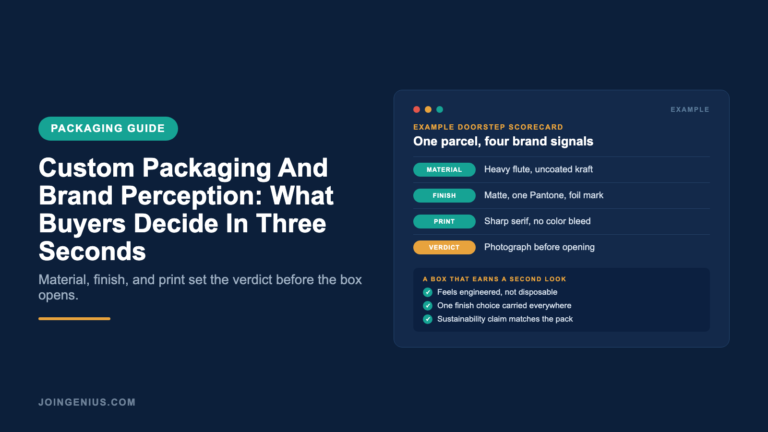
A buyer handles the parcel for roughly three seconds before deciding whether to photograph it or toss the wrapping. In that window they read the material, the print quality, and whether the box feels engineered or disposable. Nothing on the inside of the box can recover a verdict formed before it opens.
Why Shelf Packaging Carries A Different Weight Than Shipper Boxes
A shelf box competes with a dozen others under store lighting. A shipper arrives on a doorstep with no competition at all. Those two jobs look similar on a cost sheet and are completely different on brand perception. Teams that run one artwork brief for both flatten the thing that was supposed to differentiate them.
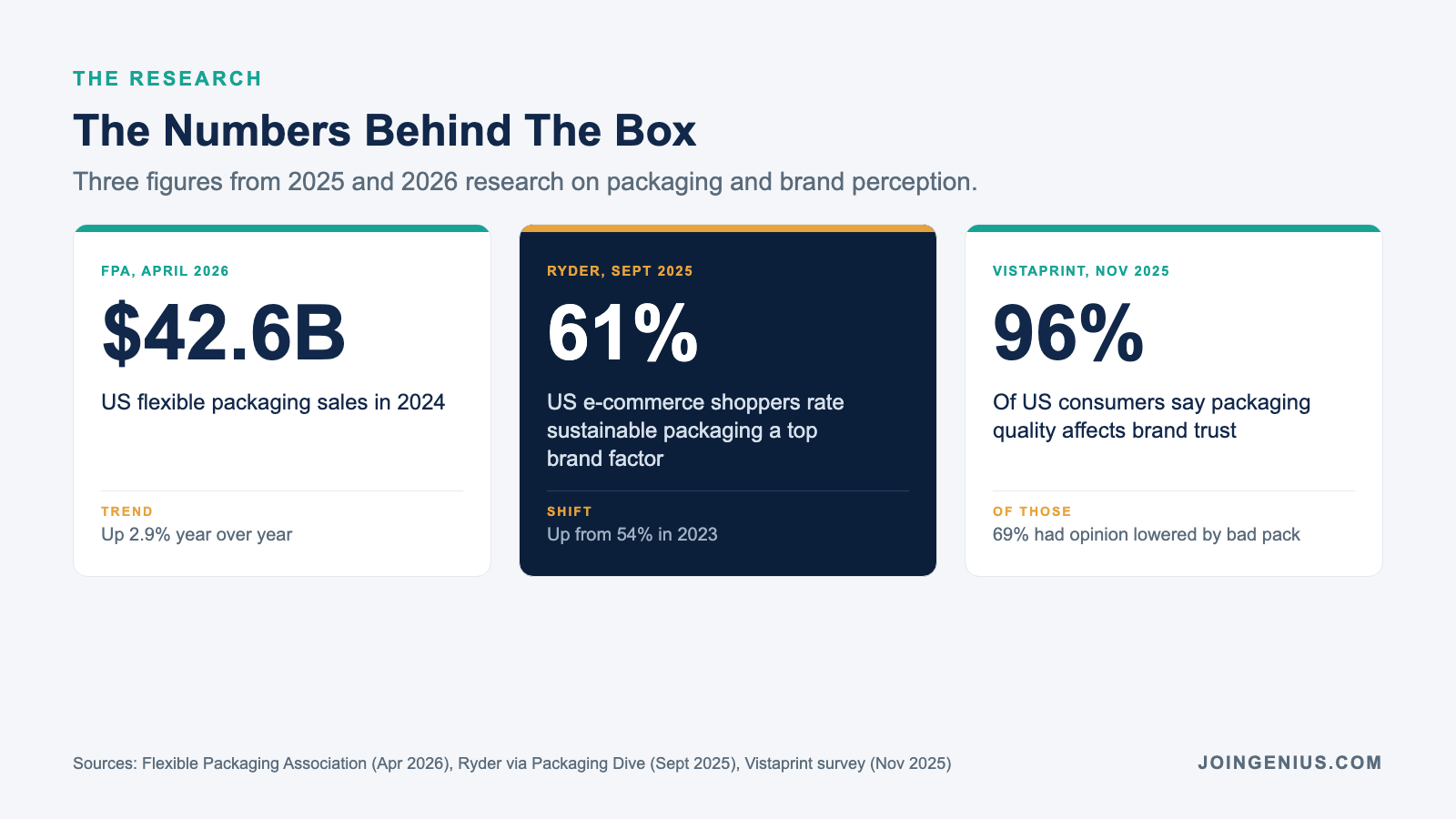
The Flexible Packaging Association reports that US flexible packaging sales reached $42.6 billion in 2024, up 2.9% from the year before, in its April 2026 State of the Industry report. That is the budget a buyer meets at the doorstep, and most of it is spent where the box has one job.
Four Design Choices That Shift How Buyers Rate A Brand
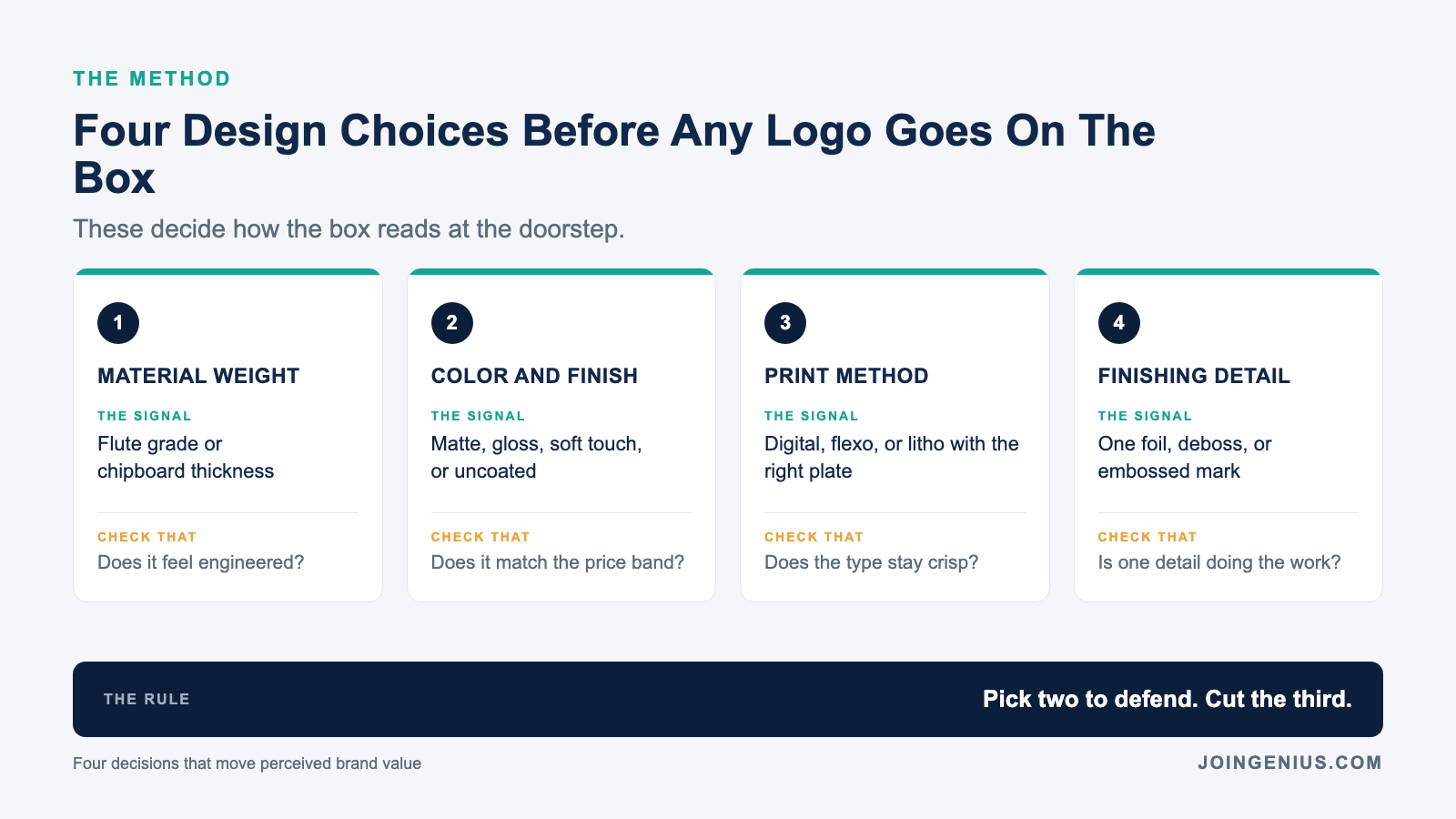
Custom packaging and brand perception track four design decisions more than the rest. Teams that fix these four before they argue over logo placement get the biggest shift in how the box reads to a buyer.
Color, Finish, And The Trust Signal
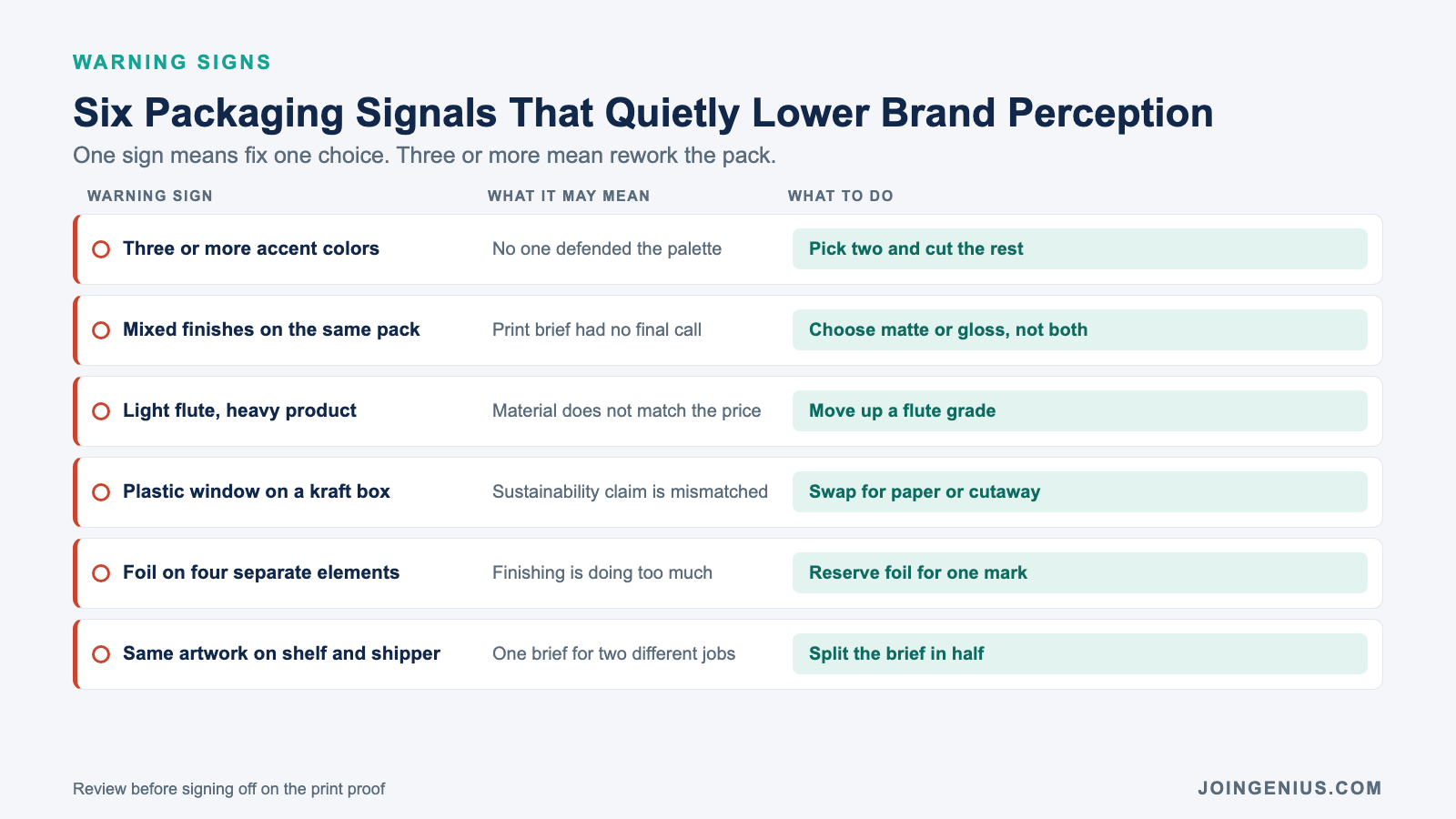
Matte finishes read as expensive. Gloss reads as mass market. A single Pantone across the whole pack reads as confident; three competing accent colors read as a brand that could not decide. The finish choice costs little at the print stage and changes the perceived price band of the product inside.
Material Weight And The Perceived Value Jump
Buyers rank perceived product value from the box before they weigh the product. Corrugated under 32 ECT reads as fragile; a heavier flute or rigid chipboard reads as premium. The weight jump that signals “well made” costs cents per unit and usually pays back in the review photos alone.
- Pick a finish that matches the price band, not the one that matches the budget line.
- Run the artwork past a buyer who has never seen the brand before the final print run.
- Test the box under warm store light and cool outdoor light, not only under studio light.
- Decide the two colors you will defend and cut the third before it reaches the proof.
Print Method And How The Logo Actually Reads
Digital print holds fine type well on short runs. Flexo reads cleaner at scale but bleeds on thin serifs. Foil stamping and embossing are the two moves that signal “the brand paid attention” to a buyer, and both are easy to overdo. One foil element is a brand mark. Four foil elements is a party invitation.
The Sustainability Signal Buyers Now Read Instantly
Sustainable packaging is no longer the premium story it was in 2022. It is a baseline buyers expect to see, and the brands that signal it credibly get a lift in brand perception that paid media cannot buy.
What Visibly Sustainable Boxes Communicate In 2026
A buyer reads three things in a sustainable box: the material, the finish, and the inner fill. Kraft paper, uncoated print, and paper fill each carry a visible signal. A box that gets two right and one wrong reads as greenwashed, which is worse than not trying at all.
Ryder’s 2025 E-commerce Consumer Study, reported by Packaging Dive in September 2025, found that 61% of US online shoppers now name sustainable packaging as a top factor in whether they will shop with a brand, up from 54% in 2023. That is a brand perception number, not an environmental one.
Where The Claim Has To Match The Material
A “100% recyclable” stamp on a box with a plastic window loses the buyer who was ready to pay the premium. The claim has to match every element of the pack, and the words have to be specific. “Recyclable in curbside bins” beats “eco friendly” because it tells the buyer what to do next.
Where Custom Packaging Beats Generic On The Business Case
The business case for custom packaging is not about looking nicer. It is about four measurable outcomes, and the generic stock box loses on each one in the categories where custom has been tested against it.
Four Outcomes That Separate Custom From Stock Boxes
A brand considering custom packaging and brand perception usually wants numbers. The table below is the shape of the comparison, with the direction of the gap each measurable outcome moves in when teams upgrade from stock.
| Outcome | Stock Brown Box | Custom Branded Box | Why The Gap Opens |
|---|---|---|---|
| Unboxing share rate | Rare, incidental | Routinely photographed | A distinctive exterior invites the camera |
| Return damage rate | Higher on mid value items | Lower with a fitted insert | A custom fit removes freight play |
| Perceived product value | Reads as commodity | Reads at the price band | Material weight sets the expectation |
| Repeat purchase mention | Rarely cited in reviews | Named in review comments | Memorable packaging becomes shorthand |
The cost difference between stock and custom at any serious volume is small. The personalized SKU effect is the same effect in packaging, which is that a buyer pays attention to the thing that was clearly made for them, not for a warehouse.
A November 2025 Vistaprint survey of 1,000 US consumers put a hard number on it: 96% said packaging quality affects their trust in a brand, and 69% had lowered their opinion of a brand after a poorly packed order. The stock brown box is the default that keeps drawing from that trust budget.
Who Should Design The Packaging And When To Bring In A Supplier
A brand that outgrows stock boxes has to decide who owns the packaging design, and the usual three options each have a different cost, speed, and quality shape. The wrong pick is the most common reason packaging projects stall for six months.
In House, Agency, Or Supplier Studio
An in house designer keeps the system consistent but rarely has print production experience. An agency delivers a beautiful concept and hands the build problem back to the brand. A supplier studio does the production right but needs a sharp brief to deliver anything on brand. Each of the three has a scope they shine in.
- Pick in house for packaging that reuses an existing brand system with minor extensions.
- Pick an agency when the whole system needs a reset, not only the box.
- Pick a supplier studio when the design problem is already solved and the build is the hard part.
- Write the dieline requirement before any of the three starts, so revisions do not multiply.
Where A Dedicated Packaging Supplier Fits
External suppliers work well when the brief is clear and the design system already exists. Refine Packaging produces custom packaging boxes for brands that already have a design system and want production, print, and fulfillment under one roof instead of three.
Who Owns The Brand Guardrails After Launch
Packaging drifts the moment the design system does. The brand guardrails have to live with one owner who signs off on every new SKU, because template sprawl is the same problem in boxes as it is in decks. A good freelance packaging designer keeps the brief tight and the dieline consistent.
Conclusion
Before any new box goes to print, pull three people into a short review: the designer, the person who ships it, and a buyer who has never seen the brand. If any of the three stumble over the box’s signals, the design is not finished. Custom packaging and brand perception move together only when all three agree.
Genius staffs either side of this. We place top 1% packaging designers, brand managers, and print production specialists from the Philippines and LATAM for 80% less than a comparable US hire. No monthly fees, and every hire comes with a 6 month talent guarantee. If your next SKU needs a box that photographs itself, hire with Genius.