Most referral programs are measured as if they were acquisition channels. The companies that compound off a referral program do it differently. They treat every referred customer as a retention bet, and they pay the referrer only when the bet pays back. Done right, a referral program turns the loyal half of the customer base into the growth team. This post walks through 12 ways to design the loop so the referrers stay and the referred customers stay longer. The retention line does the work the acquisition line used to. The template a marketing manager ships first is the one that compounds.

1. Reward The Second Purchase, Not The First
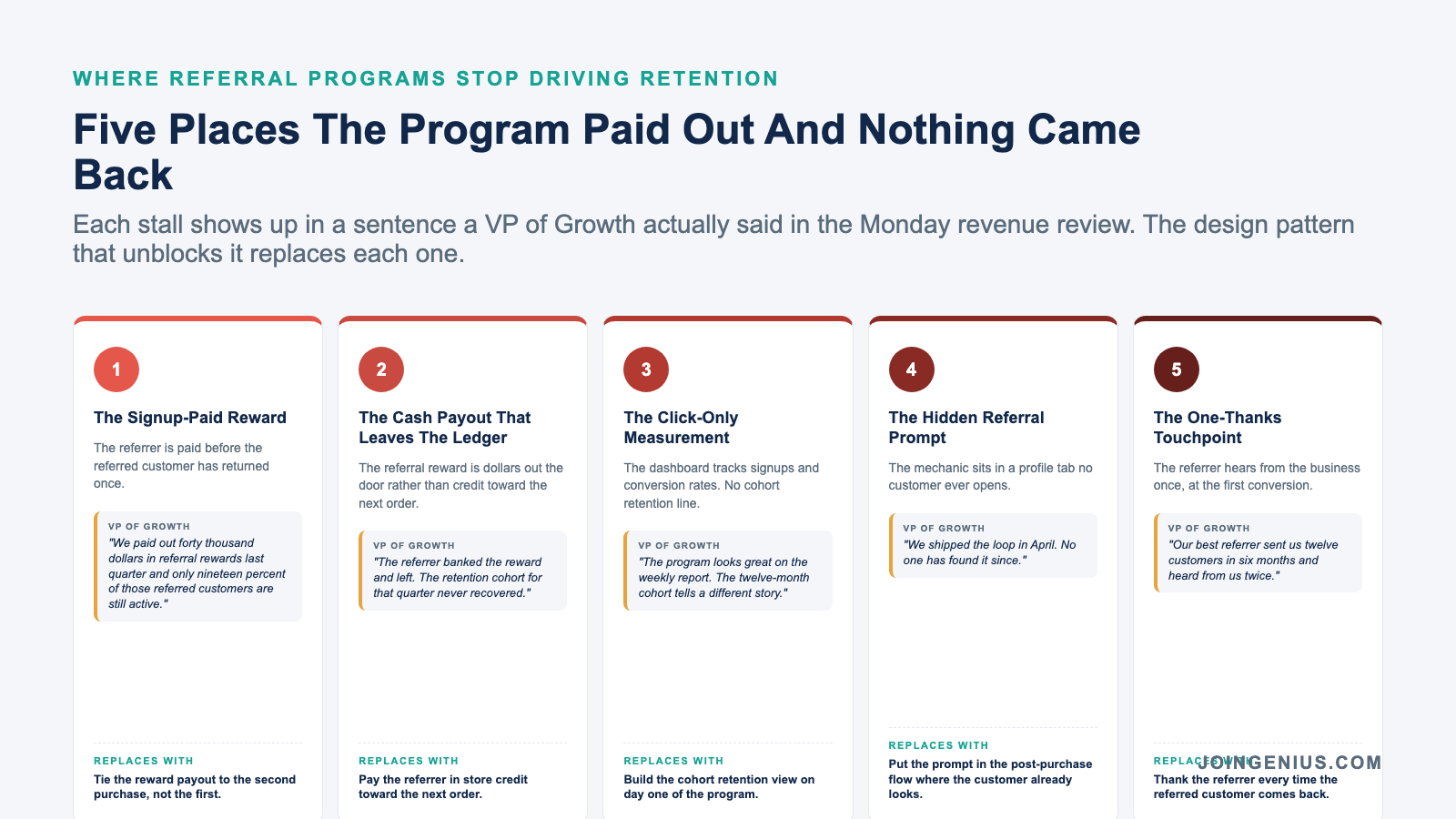
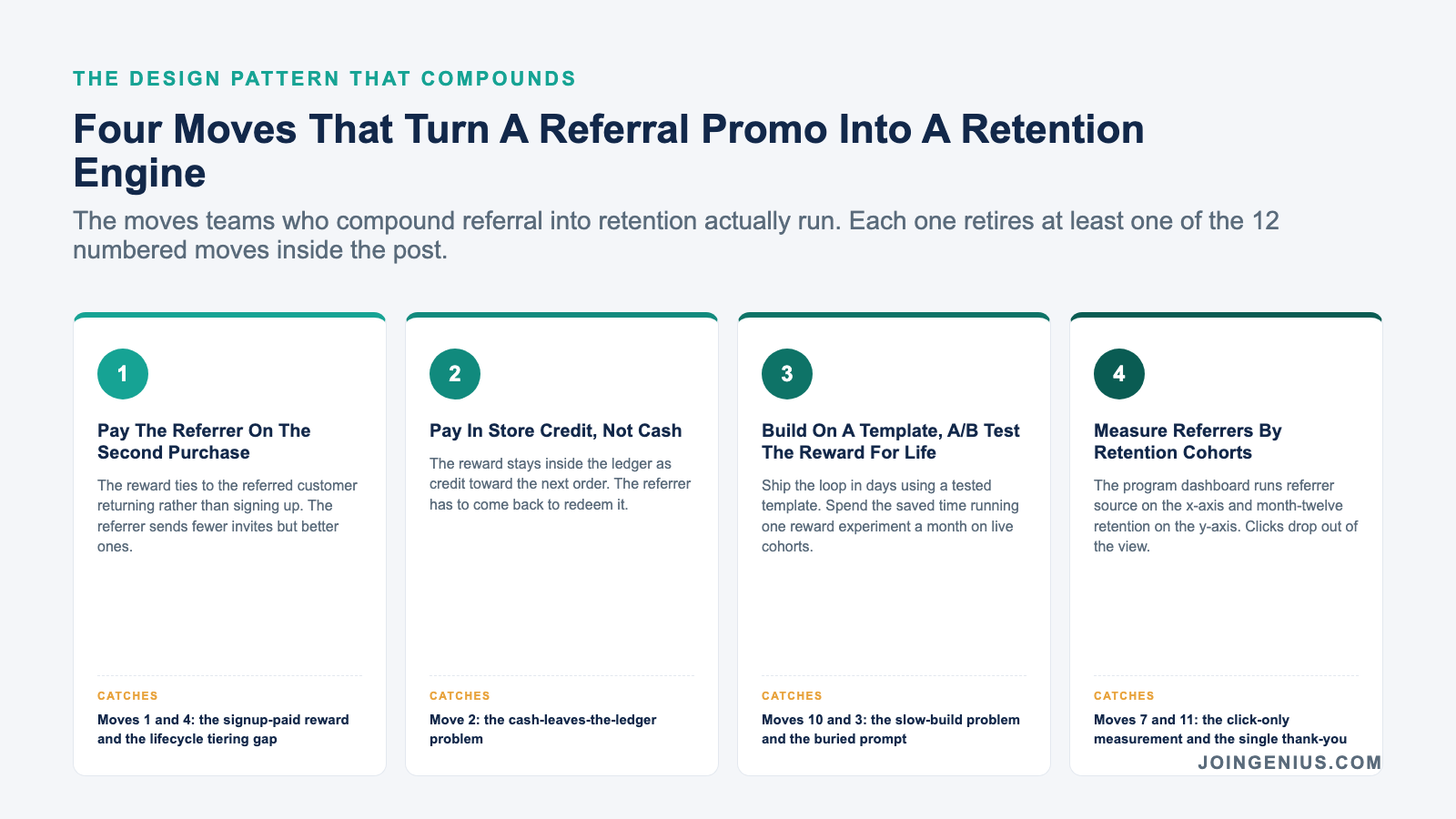
The default referral reward pays when the referred customer signs up. That rewards acquisition. Rewarding retention means paying the referrer when the referred customer comes back for a second purchase.
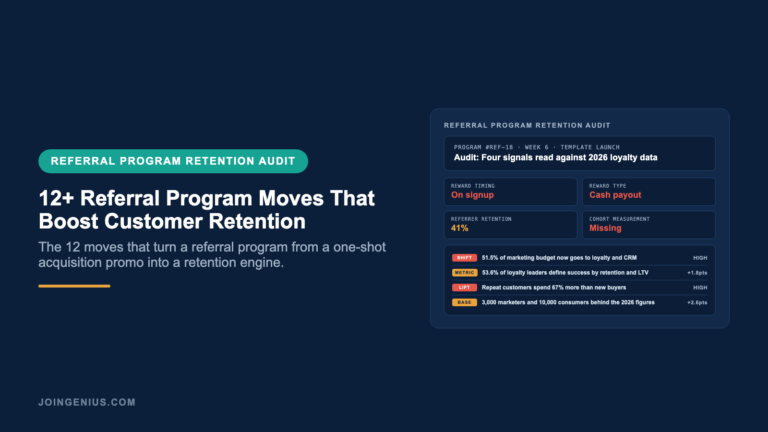
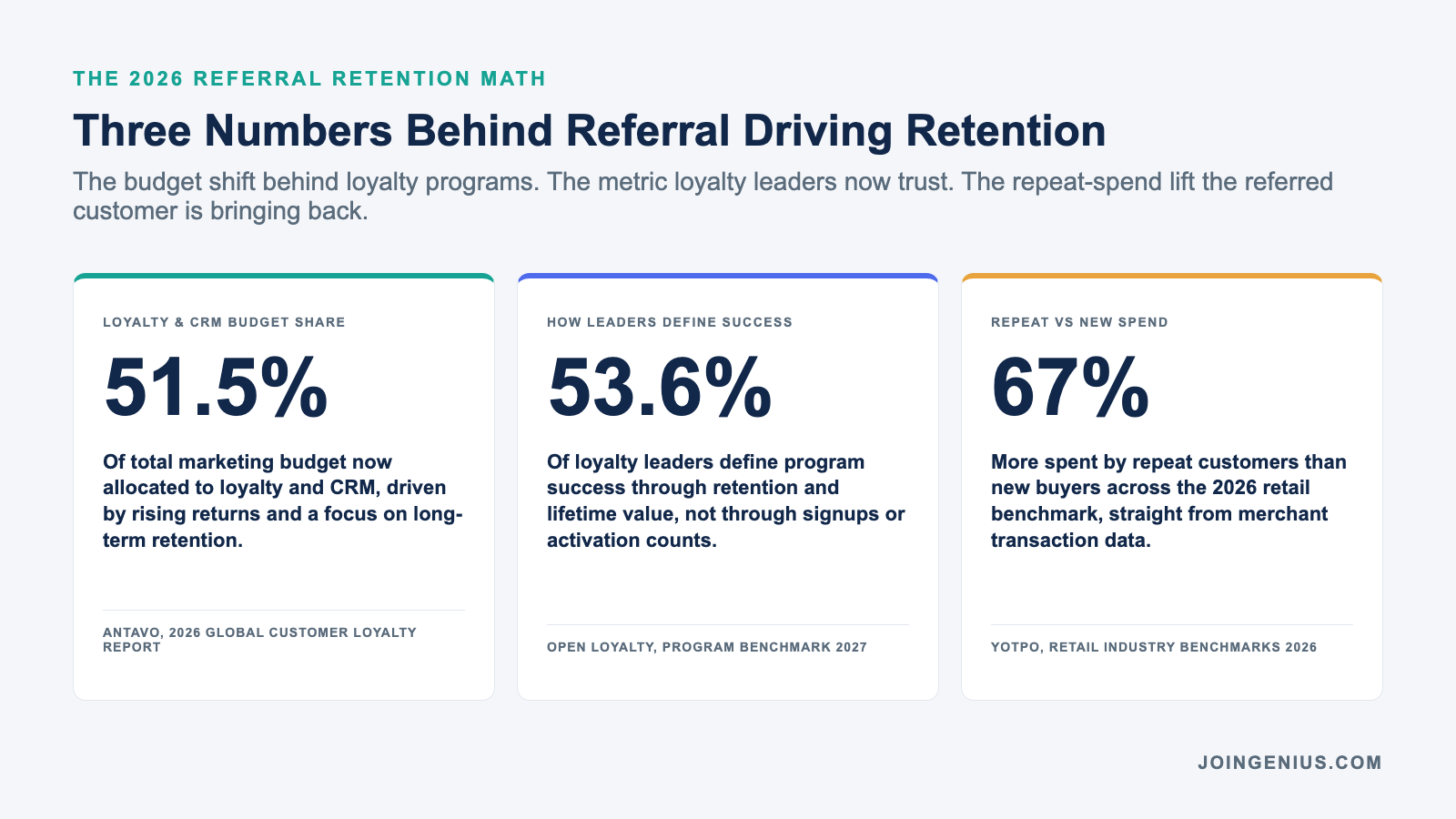
Antavo’s 2026 Global Customer Loyalty Report, based on a survey of 3,000 marketers and 10,000 consumers, found that marketers now allocate 51.5 percent of their marketing budget to loyalty and CRM programs. The budget has moved. The program design should follow.
A referrer paid on a second purchase sends fewer invites. They send better ones. The referred cohort retains at a higher rate because the invite itself was filtered for fit.
2. Pay In Store Credit, Not Cash
Cash leaves the ledger. Store credit does not. A referrer paid in credit has to come back to spend it, which is a built-in retention event.
Store credit also widens the range of defensible rewards. A ten-dollar cash payout feels thin on a two-hundred-dollar order. A twenty-five-dollar credit toward the next order reads more generous and costs less at the margin.
Companies that run credit-based referral programs typically see the referrer return in 30 days to redeem. That return visit is where the retention compounding starts.
3. Build The Referral Prompt Into The Post-Purchase Flow
The best moment to ask for a referral is right after the customer has confirmed they trust the product. The order confirmation page is one such moment. The shipping notification is another.
Most teams bury the referral mechanic in a profile tab no one visits. The prompt needs to be where the customer already looks when the product is top of mind.
Copy matters here as much as placement. A sharp copywriter running this prompt will outperform a generic template by a factor the analytics tool will surface in the first two weeks.
4. Tier The Reward By The Referred Customer’s Lifecycle Stage
A referral that signs up and never comes back is worth something close to zero. A referral that becomes a monthly buyer is worth the lifetime value of a monthly buyer. The reward should reflect that.
Tiering is simple to run. Pay a small reward when the referred customer completes the first purchase. Pay a larger one at month three. Pay the largest at month twelve.
This shapes the referrer’s behavior toward the retention metric the business actually cares about.
5. Index The Referral Landing Pages For Brand Queries
Referred customers often check the referrer’s shared link before clicking it. Those searches are branded queries with high intent. The referral landing page should be built to rank for them.
The usual fix is a simple page per campaign with the referrer’s name or code in the H1. Sitemap entries and indexable canonicals follow, with lightweight schema markup on the better pages.
An SEO specialist who audits the referral surface typically finds a dozen landing pages that have been serving a traffic signal the search index was never shown.
6. Pair Referral With Loyalty And Milestone Mechanics
A standalone referral button is a weak engagement hook. The same mechanic bolted to a loyalty tier is a strong one. The referrer sees the referral as the fastest path to the next tier benefit they already want.
The simplest pairing is a milestone unlock. Hit three successful referrals that convert into retained customers, unlock a status benefit that costs the business nothing to grant.
The loyalty program becomes the referral engine. The referral program becomes the retention engine.
7. Measure Referrers By Retention Cohorts, Not Clicks
A click is a lagging indicator of a bad program and a leading indicator of nothing. The retention cohort is the only measurement that tells the team whether the referral loop is building the business.
Open Loyalty’s Loyalty Program Benchmark Report 2027 found that 53.6 percent of loyalty leaders now define program success through retention and lifetime value, not through signup or activation counts.
Build the cohort view on day one. Referrer source on the x-axis. Month twelve retention rate on the y-axis. Watch the curve, not the clicks.
8. Distribute The Mechanic Where Loyal Customers Already Live
A referral program lives or dies on its distribution. Email is the obvious one, and the one most teams over-rely on. The loyal customer is on the brand’s social channels too, often more actively than the brand itself.
A good social media manager finds the format the loyal customer already shares. Then they build the referral mechanic inside that format, rather than asking the customer to leave a channel they prefer.
The distribution that compounds is the one the customer would use anyway.
9. Segment Referral Rewards By Product Mix
A referral into a high-margin product category is worth more than a referral into the discount SKU. The reward should reflect the margin, not just the revenue.
The simplest version pays a 5 percent credit for a referral into any product. A 10 percent credit applies when the referred customer buys from the premium category. A 15 percent credit when they buy a subscription.
The referrer sees the signal. They route their invites toward the products the business wants retained customers in.
The segmentation also protects margin. The program stops subsidizing referrals into categories where the retention math does not work in the first place.
10. Build The Template Once, A/B Test The Reward Curve For Life
The teams that ship a referral program on a template reach break-even weeks before teams that build from scratch. The time saved is not the main payoff. The main payoff is that the team can now spend that time on the reward curve.
Run one experiment per month. Change the reward structure. Move the trigger from first purchase to second. Move the credit from twenty-five to thirty.
Twelve experiments a year compound. The team that ships the loop and then stops testing loses to the one that keeps iterating on the reward.
11. Thank The Referrer Every Time The Referred Customer Comes Back
The default referral program thanks the referrer once, when the first invite converts. The retention-oriented program thanks them every time the referred customer comes back.
Yotpo’s 2026 Retail Industry Benchmarks reports that repeat customers spend 67 percent more than new buyers. Each repeat visit by a referred customer earns the referrer a share of that lift, if the program is built to see it.
The right ownership of this touch is a community manager running a lifecycle thread, not a one-shot email from a shared inbox.
12. Run A Referral Win-Back For Churned Customers
Churned customers know what the product is worth. They are also the easiest segment to ask for honesty about why they left. A small subset of them will return when invited through a referral loop that offers them credit for sending someone new.
The cost of acquiring a win-back customer through this mechanic is a fraction of the cost of acquiring a cold one. The retention math reads differently because the customer has history inside the platform.
Treat the churned list as the highest-value referral source the business is not currently using. The win-back offer is the cheapest second chance in the customer file, and the one most referral programs forget exists.
What To Do When You Need To Ship The Program This Quarter
The twelve moves above describe how a referral program should work. They do not describe how most teams build one. Most teams build from scratch and ship in month four. They spend month five arguing about why the first cohort has not retained.
The alternative is to ship on a template that has been tested on a billion-dollar brand’s loop, then spend month one onward testing the reward curve on live cohorts. The program compounds because the team starts iterating earlier. The reward curve matures faster when real customer behavior is informing it from week two rather than week sixteen.
Platforms like Viral Loops publish referral program templates inspired by billion-dollar brands’ loops, so a retention team can launch in days and spend the saved time on the reward curve that actually compounds.
Conclusion
A referral program designed as an acquisition channel pays back once per customer. A referral program designed as a retention engine pays back every time the referred customer comes back. The twelve moves above are what moves the program from the first design to the second.
Most of them are not expensive to run. Most of them are expensive to run badly. The teams that staff the program with a growth owner and a lifecycle operator reach break-even faster. The teams that need those operators can find them through Genius.