
Sometimes a company loses the trust of the people it depends on. It might follow a crisis, a leadership change, a product failure, or a long run of bad press. Employees stop believing what they hear. Customers hesitate. Investors ask harder questions. In that moment, the communications seat becomes one of the most important hires the company will make.
Rebuilding trust is a different job from running day-to-day communications. A standard job description for a head of communications will find people who are good at announcements, campaigns, and media relations. It will not necessarily find the person who can steady a company when its credibility is on the line.
This guide covers what the role really requires, where to find the right people, how to assess them, and how to set them up to succeed. If you are rethinking your PR strategy after a rough stretch, the hire you make here will shape how well that strategy holds.
Why Trust Rebuilding Needs a Different Kind of Communications Leader
Trust is not rebuilt with messaging. It is rebuilt through consistent action over time, and communication is how people learn that the action is real. A leader who understands this will spend as much energy influencing decisions as they do writing statements.
That is a different skill from the one that makes someone excellent at launches or brand storytelling. A person who thrives when audiences are curious and friendly may struggle when stakeholders are skeptical, angry, or tired of hearing promises.
The role also sits close to the center of the company. A trust-focused communications leader works with legal on what can be said, with HR on what employees are experiencing, with finance on what investors need, and with the CEO on what the company is willing to change. Influence inside the organization matters as much as craft outside it. Someone who cannot get a seat at those tables will end up writing statements about decisions they had no part in shaping.
The Core Traits to Hire For
Skills can be taught faster than judgment can. When you hire for this role, look closely at these traits.
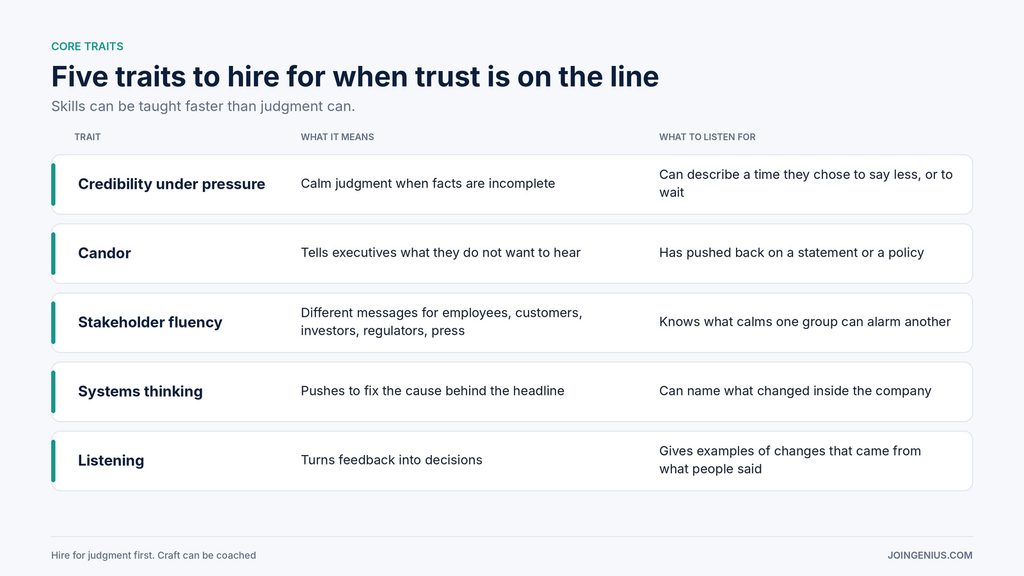
Credibility under pressure comes first. This is calm judgment when facts are incomplete, deadlines are tight, and everyone wants an answer. Strong candidates can describe a moment when they chose to say less, or to wait, because the facts were not yet clear.
Candor is next. A trust-focused leader has to tell executives what they do not want to hear, such as that a planned statement will backfire or that the problem is the policy, not the wording. Candidates who describe only agreeable relationships with leadership may not have been tested.
Stakeholder fluency matters because the audiences differ. Employees, customers, investors, regulators, and the press each need something different, and a message that calms one group can alarm another.
Systems thinking separates repair from cover. The best leaders look for the cause behind the headline and push to fix it, so that the message has something true to say.
Finally, listening. Rebuilding trust means hearing what people are actually upset about and turning that feedback into decisions. This applies inside the company too. When employees feel unheard, low morale spreads fast, and staff are often the first audience to notice if the repair is not real.
Where to Find Trust-Focused Communications Talent
The people with this experience usually come from places where credibility is under constant test. Looking only at traditional communications job boards will miss many of them.
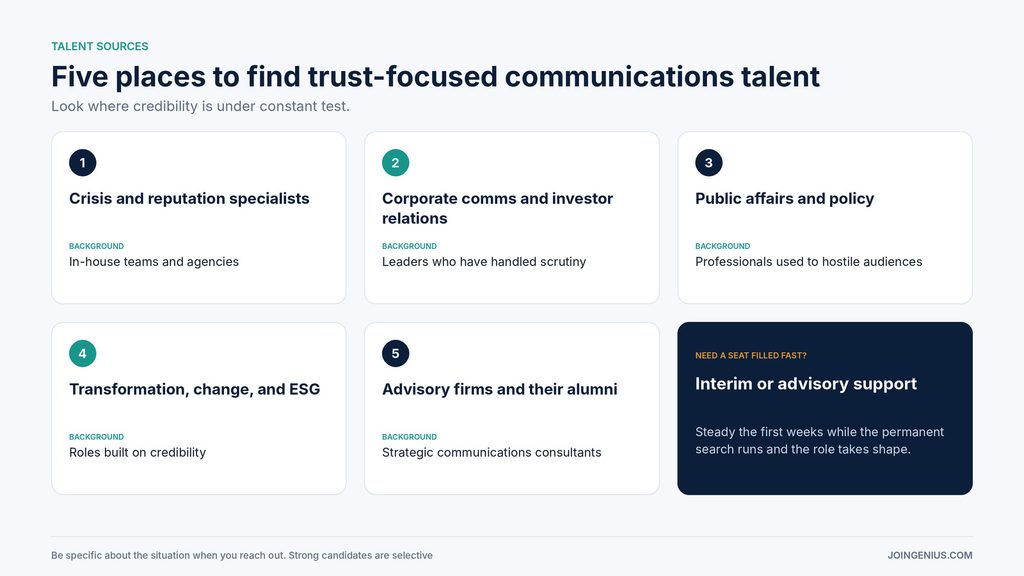
Crisis and reputation specialists are the most direct source. They work in both in-house teams and agencies and are used to moving quickly when something goes wrong. Ask about the situations they have handled and what changed afterward.
Corporate communications and investor relations leaders are another strong pool. Those who have guided a company through earnings misses, restatements, or activist pressure have learned to communicate with audiences that do not give the benefit of the doubt.
Public affairs and policy professionals bring experience with hostile and highly informed audiences. They tend to be disciplined about facts and careful about commitments.
Leaders from transformation, change, and sustainability work are worth a look as well. Those roles depend on credibility, because people will not change their behavior or believe in a company’s goals unless they trust the people asking.
Strategic communications advisory firms and their alumni are a useful source too. Firms such as H/Advisors, which works across crisis and reputation management, corporate communications, public affairs, and transformation, are a useful place to understand what trust-focused expertise looks like and to find experienced practitioners. Their former consultants often move in-house with a broad view of how different companies handle similar problems.
When you approach any of these groups, be specific about the situation. Strong candidates are selective, and they want to know whether leadership is truly ready to change or only wants a better statement. Say plainly what happened, what you have already done, and what you are prepared to do next. Honest framing attracts the candidates you want and filters out the rest.
When the seat needs to be filled quickly, consider interim or advisory support while a permanent search runs. A senior adviser can steady the response in the first weeks and help define the role you are hiring for. If you are weighing a part-time leader, this comparison of a business coach and a fractional executive can help you decide what kind of support fits.
How to Assess Candidates
Interviews for this role often reward polish, which is exactly what you should be cautious about. A smooth talker is not the same as a trusted adviser. A more reliable approach is to test judgment directly.
Start with a case-based interview. Describe a real trust problem, such as a product recall, a leadership scandal, or a data breach, and ask the candidate how they would approach the first week. Listen for sequence and priorities. Strong candidates ask about facts, affected groups, and legal limits before they draft anything.
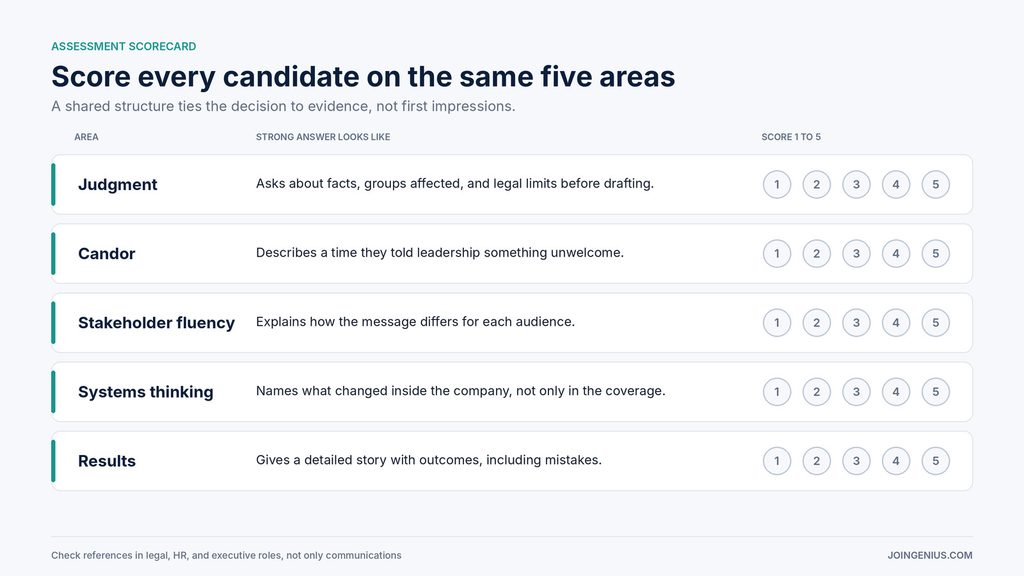
Ask for specific stories. What did you advise, what did you push back on, and what happened? A candidate who can tell a detailed story, including mistakes, has probably lived through it. A candidate who speaks in generalities may have watched from the sidelines.
Check references beyond the communications team. Talk to people in legal, HR, and executive roles who worked with the candidate under stress. They will tell you whether the candidate was a calm, honest partner or a source of friction.
Finally, look for the difference between fixing and managing. Someone who fixed a situation can describe what changed inside the company. Someone who only managed the coverage can describe how the headlines shifted. You want the first kind of leader.
Use the same scorecard for every candidate. Rate judgment, candor, stakeholder fluency, systems thinking, and results, and compare notes as a group. A shared structure keeps the final decision tied to evidence instead of a good first impression.
Red Flags to Watch For
Be cautious of spin-first thinking, where the first question is how to frame the story rather than what happened. Watch for a history of avoiding blame, vague accounts of past crises, and an inability to name a decision they would make differently. Also be wary of candidates who promise fast results. Rebuilding trust takes quarters, not weeks.
Setting the Leader Up to Succeed
Even the right hire will struggle without the right conditions. A few commitments from the company make a large difference.
Give the leader direct access to the CEO and a seat in major decisions. If they hear about choices only after they are made, they cannot advise on how those choices will land.
Grant clear authority, including a mandate to say no. A leader who cannot challenge a risky statement is only a messenger.
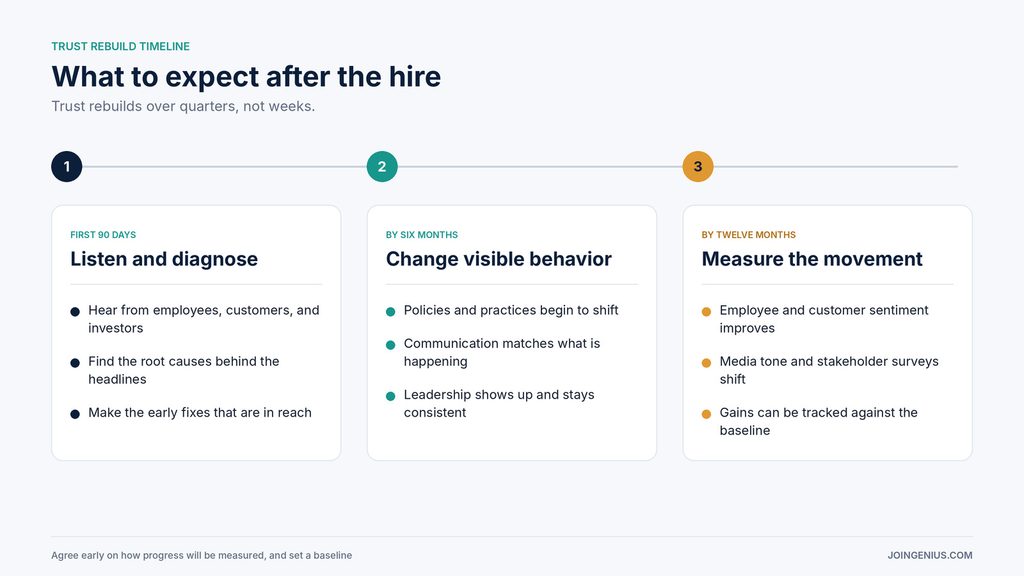
Set realistic timelines. In the first ninety days, expect listening, diagnosis, and early fixes. Over six months, expect visible changes in how the company behaves and communicates. By twelve months, expect measurable movement in how people talk about and trust the organization.
Agree on how progress will be measured. Employee sentiment, customer feedback, media tone, and stakeholder surveys can all help, and having a baseline early makes later gains easier to see and defend.
Hire for Judgment, Not Polish
The best communications leaders for a trust problem are not always the smoothest speakers. They are the people with sound judgment, the nerve to tell leaders the truth, and the patience to rebuild credibility one honest action at a time. Search widely, assess with real cases, and back them with access and authority.
A practical first step is to rewrite your job description around the trust problem you actually face. Describe the audiences, the history, and the changes you are prepared to make. If you are deciding whether to promote someone you already know or to bring in a new voice, this guide to internal vs external recruitment can help you weigh the trade-offs before the search begins.