Most founders feel the need for an operations hire before they can describe it. A crowded calendar, things slipping through the cracks and a growing pile of admin all point to “someone to run operations”, but the role is easy to hire badly because “operations” covers so much.
This guide explains how founders can hire their first operations person well. It covers whether you need a hire yet, how to name the problem before the role, which attributes to screen for, how to set the hire up with a lean tool stack and what the first 90 days should look like. It ends with a table of warning signs to check before you make an offer. It is general information, and the right timing depends on your stage and your team.
Is Operations a Hire or a Habit Yet?
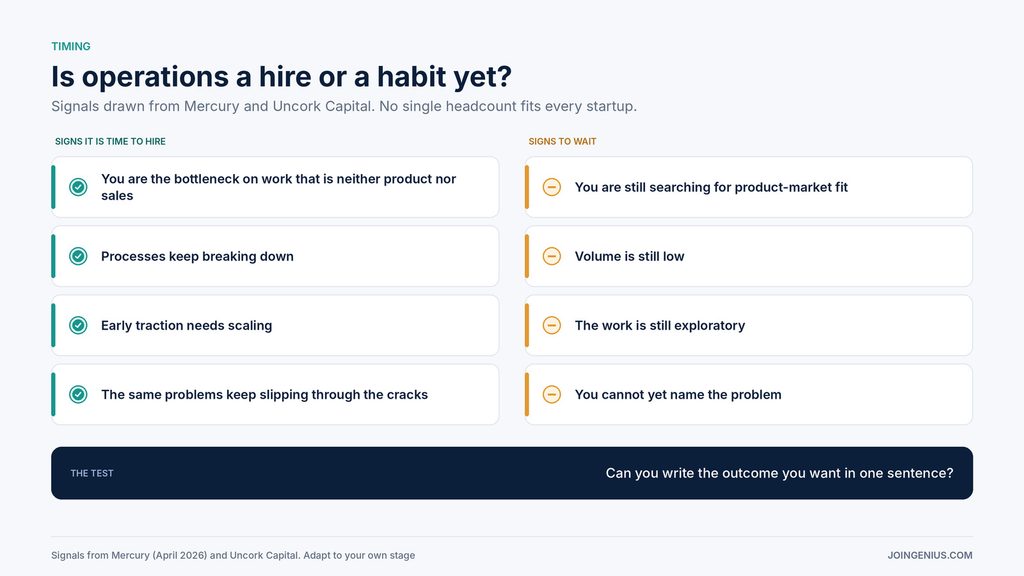
A Mercury article by Zolzaya Erdenebileg, published in April 2026, argues that at seed stage “operations isn’t a department” and that running it well is about creating leverage. It describes operations as covering finance, go-to-market systems such as CRM and pipeline, people basics such as hiring, onboarding and payroll, and the tools and workflows that hold everything together. Its advice on timing is practical: consider a hire when the founder becomes a bottleneck, processes break down or early traction needs scaling, and wait if you are still searching for product-market fit, volume is low or the work is still exploratory.
Sources disagree on the exact moment. A Q&A page from eChai Ventures suggests hiring when you become the bottleneck for work that is neither product nor sales, usually at around eight to fifteen people. PostHog’s founders blog describes the early-stage ops role as mostly firefighting at companies up to about 50 people. Rather than chasing a headcount, ask whether the same operational problems keep coming back.
Mercury also describes three ways to own operations early: founder-led, a first generalist operator, or function-specific hires such as a finance or people lead. The last option, without a clear and persistent problem, risks “building silos too early”. If you are weighing the wider picture, the guide to hiring for startups covers the bigger decisions.
Name the Pain Before You Name the Role
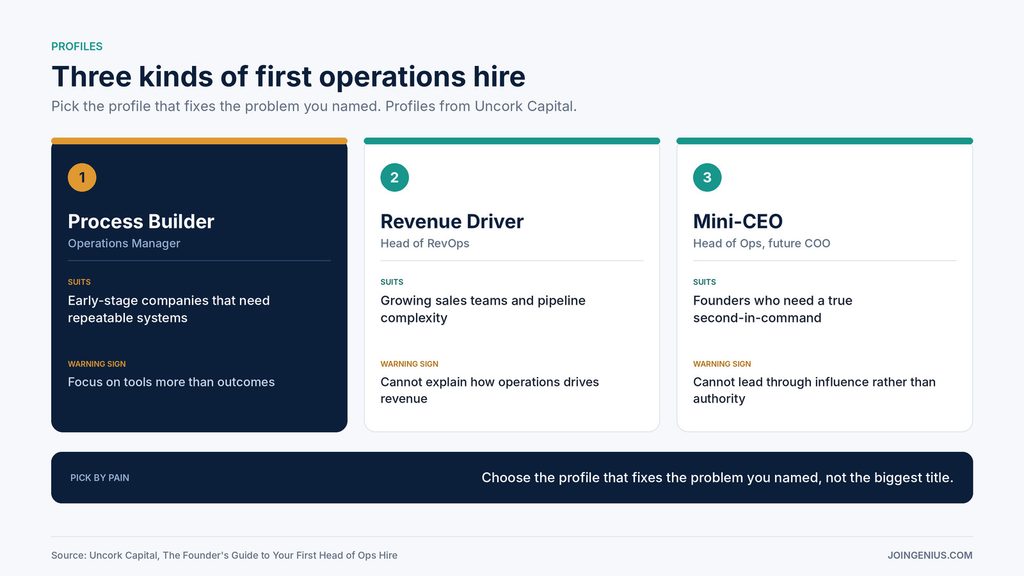
Uncork Capital’s guide to a first head of ops hire, written by Adriana Roche, starts with a warning: “operations” is too broad to hire for. It tells founders to define the specific pain first, such as a messy sales process, administrative overload, poor team communication or a bottlenecked hiring process, and then decide how much autonomy the person needs. Mercury makes the same point bluntly: “The biggest mistake founders make is hiring operators without defining outcomes.”
Uncork describes three profiles. A Process Builder suits early-stage companies and enjoys building repeatable systems, and the warning sign is focusing more on tools than outcomes. A Revenue Driver suits growing sales teams and pipeline complexity, and the warning sign is being unable to explain how operations drives revenue. A Mini-CEO suits founders who need a true second-in-command, and the warning sign is being unable to show leadership through influence rather than authority. Your pain decides which one you need.
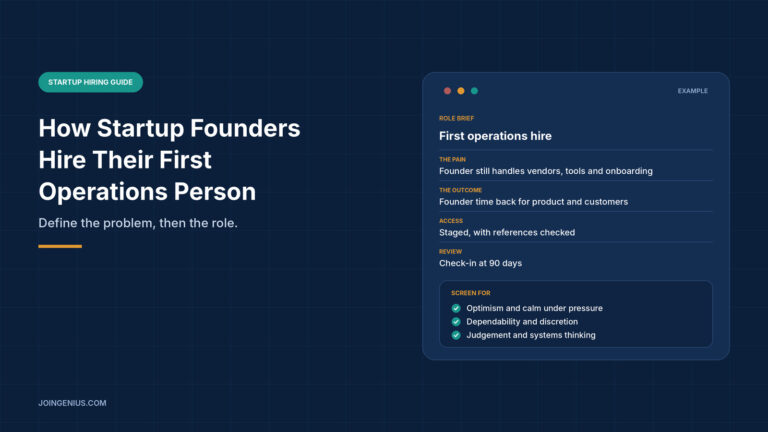
Write the role down as outcomes, not tasks: what should be different after six months, and what stays with you. The eChai page, which summarises advice from a16z, suggests capping routine admin at roughly 20% so the role does not turn into a glorified assistant job. A written HR scorecard keeps the outcomes and criteria in front of everyone who interviews.
What to Screen For: Attributes Over Admin Experience
Charles Cook of PostHog argues on the company’s founders blog that for a first ops hire, “attributes >>> technical expertise”. He lists three. The first is extreme optimism, meaning someone approachable who sees problems as fixable. The second is willingness to take the hits, because early ops is reactive and the hire has to stay calm when people complain or ignore policy. The third is total dependability. He calls early ops “a 100% defensive position”. Mercury adds high agency, strong judgment and systems thinking, and says the first hire should not be too senior, who may overbuild, or too junior, who may lack the ability to drive change.
Trust deserves its own check. PostHog notes that this person gets top-level admin access to banking, passwords and cloud infrastructure, and advises waiting to hire someone you trust with it. Check references for discretion and availability, not only skills.
Build the interview around evidence. Uncork suggests a pain-point probe, a real-world test and a scale test, with questions such as “Tell me about a process you built that scaled with the company” and “Tell me about a time you drove a major change without formal authority”. PostHog suggests asking about a time they got something done while everyone else panicked. The guides to HR generalist interview questions and a clear interview guide can help you structure the conversation.
Set Them Up With a Lean Tool Stack Before Day One
Operations hires inherit your tools, so decide what they will inherit. Mercury recommends building habits before you hire: a simple customer and pipeline system, clear expense and cash management, shared key metrics and lightweight routines such as weekly reporting. It also recommends prioritising finance operations early because it affects hiring, planning and trade-offs. Its summary of the goal applies to the stack too: “The goal is consistency, not perfection.”
Keep the stack small and tied to those habits. RocketHub’s startup perks program, a paid membership, lists discounts and credits across categories an ops hire is likely to touch. They include finance tools such as Wise and Airwallex, operations tools such as Asana, Airtable, Notion and Slack, and automation through Make. The page notes that some offers have eligibility requirements and that redemption may need checks by the partner, so confirm each perk applies to your company before you plan around it. Perks reduce the cost of a tool. They do not decide whether you need it.
Uncork’s warning sign for a Process Builder, focusing more on tools than outcomes, is a useful brake. Let the new hire audit the first-month stack against the problems they were hired to fix, then add or drop tools from there.
Make the First 90 Days Count
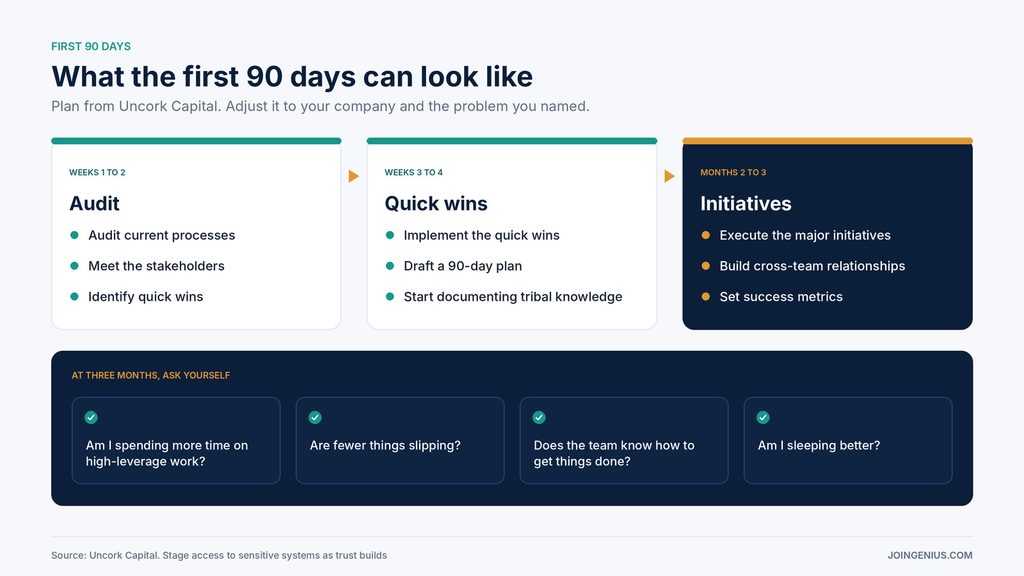
Uncork lays out a simple 90-day shape. In weeks one and two, the hire audits current processes, meets stakeholders and identifies quick wins. In weeks three and four, they implement those quick wins, draft a 90-day plan and begin documenting tribal knowledge. In months two and three, they execute the major initiatives, build cross-team relationships and set success metrics.
Add two founder commitments. First, stage access to sensitive systems as trust builds, which is a sensible way to apply PostHog’s point about banking and password access. Second, agree how you will judge the role. Uncork suggests asking after three months whether you are spending more time on high-leverage work, whether fewer things are slipping, whether the team knows how to get things done and whether you are sleeping better. Its closing idea is that a great ops hire creates leverage, not just order.
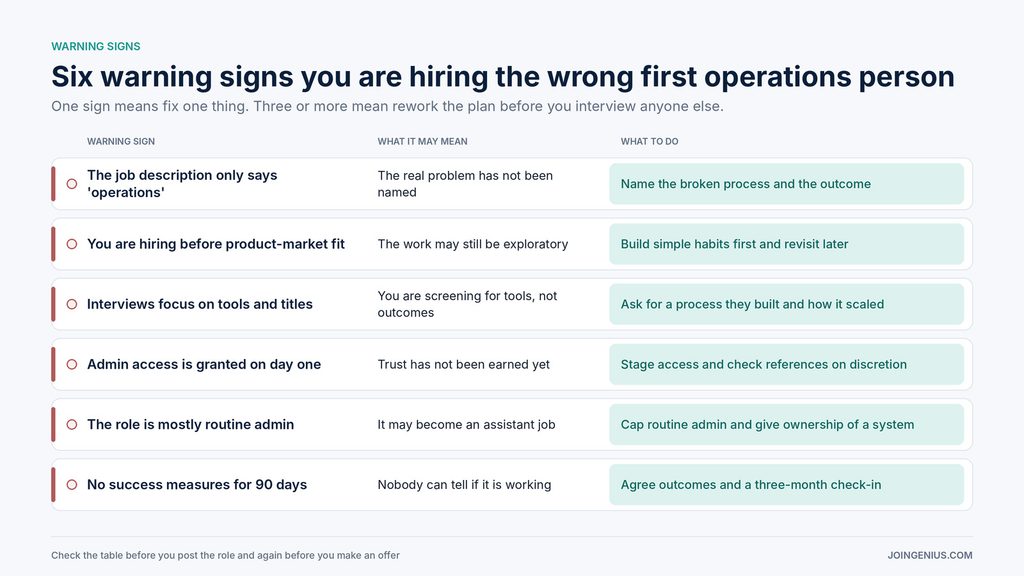
Warning Signs You Are Hiring the Wrong First Operations Person, and What to Do About Each
Check this table before you post the role and again before you make an offer. One sign means fix one thing. Three or more mean pause and rework the plan before you interview anyone else.
Hire for the Problem
The best first operations hire is the one who fixes the problem you named, not the one with the grandest title. Decide whether operations is a hire or a habit yet, write the outcomes down, screen for optimism, dependability and judgement, give the person a lean stack and a 90-day plan, and check the work at three months. If the problem is clear and the plan is written, the hire has something real to own.