Nobody quits a tech job and writes “eye strain” on the exit survey. They say burnout, or a better offer. But for a lot of remote engineers, the slow grind of daily screen fatigue is part of what made them start looking. Eye strain rarely gets named, and that is exactly why it keeps costing companies good people.
This is a quiet, fixable driver of attrition. Headaches and afternoon fog build up over months until the job just feels worse than it should. Below, we cover why remote tech workers get hit hardest and how eye strain turns into a resignation, then what actually helps, because this is a retention problem hiding as a health one.
Why Eye Strain Hits Remote Tech Workers Hardest
Every knowledge worker stares at a screen, but tech roles are an extreme case. The numbers on eye strain are already high across the whole workforce.
The Job Is Screens, All Day
An engineer’s entire day is dense text on bright displays, often across two or three monitors, with no natural pause the way a meeting-heavy role has.
In VSP’s 2025 Workplace Vision Health report, 68% of employees had digital eye strain symptoms, and that is the general workforce, not people who code for eight hours. For engineers, the exposure runs heavier.
That gap in exposure is why the general numbers probably understate the problem for engineers.
Home Setups Make It Worse
The office at least standardized the basics, like decent monitors and controlled lighting. Home setups are a gamble. A laptop on a kitchen table, or a window glaring behind the screen, pushes strain higher than any office would allow. Remote engineers absorb all of that with no facilities team to fix it.
The Strain Is Invisible to Managers
You cannot see eye strain on a standup call. A manager sees normal output and assumes everything is fine, while the engineer quietly nurses a headache by 3pm every day. Because nobody measures it, the problem compounds in the background until it shows up as something else entirely.
By the time it surfaces in a one-on-one, it has usually been building for months.

The Hidden Daily Cost of Screen Fatigue
Eye strain does not announce itself with a sick day. It leaks out of every hour as slightly worse focus and energy.
It Quietly Eats Productive Hours
Tired eyes make everything slower, like re-reading the same block of code or losing the thread after lunch. A 2025 UK survey put the loss at about 40 minutes of productivity a day per worker from strained eyes. Over a team of engineers, that is a meaningful tax you are paying without seeing the invoice.
That is not laziness; it is a body telling someone the setup is wrong.
The Symptoms Follow Them Off the Clock
Screen fatigue does not clock out at 6pm. Headaches and disrupted sleep from blue light bleed into the evening and the next morning. A job that leaves you physically worn down every day is a job you start to resent, even when the work itself is good.
Poor sleep then makes the next day’s strain worse, and the loop tightens.
Morale Erodes One Bad Afternoon at a Time
None of this is dramatic enough to complain about, which is the trap. A single rough afternoon is easy to shrug off, but a hundred of them quietly lower morale. The engineer does not connect it to their eyes. They just notice the job feels heavier than it used to, and that feeling is what eventually moves them.
How Eye Strain Becomes a Reason to Quit
No one leaves over a headache. They leave because the accumulated weight of a draining job tips into burnout, and burnout is a well-documented path to the door.
Strain Feeds the Burnout Everyone Already Fears
Eye strain is one of many small stressors, but small stressors stack into burnout. And burnout is not a soft problem for retention. In Eagle Hill’s 2025 survey, burned-out employees were nearly three times more likely to say they planned to leave within the year. Physical discomfort you feel every workday is a steady contributor to that burnout.
The Afternoon Slump Becomes a Pattern
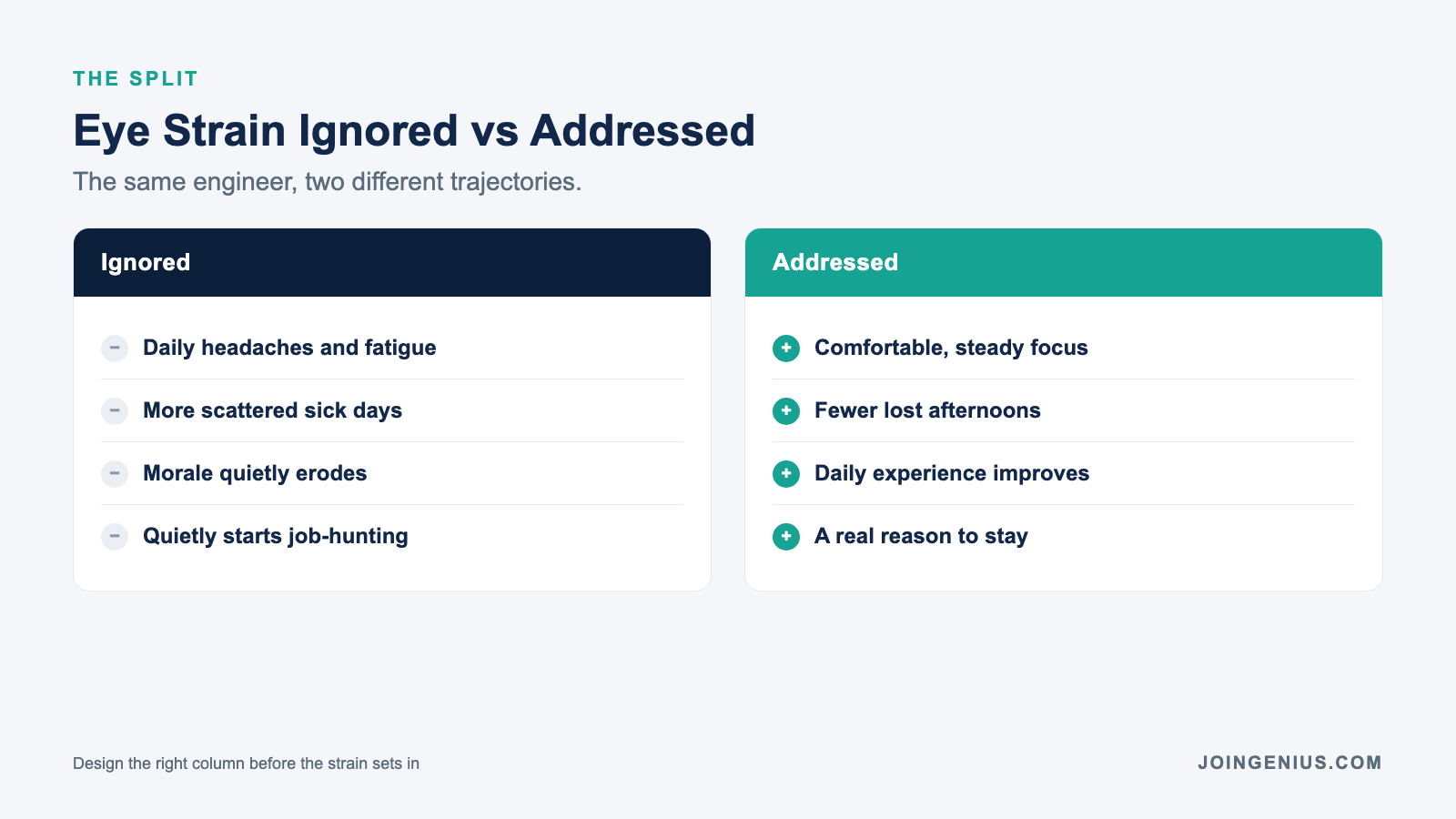
Watch for the shape of it. The engineer who used to push through the afternoon now logs off early and takes more scattered sick days. None of it reads as a resignation risk on its own. Together, it is someone whose daily experience has quietly gotten worse.
A manager who only watches output will miss all of it until the notice lands.
By the Time They Quit, It Is Too Late to Fix
Once someone has decided the job wears them out, a comfort fix feels like too little, too late. The time to address screen fatigue is while it is still an annoyance, not after it has become a reason. This is the same late-recognition pattern behind hires who don’t stay past their first stretch.
What Actually Reduces Digital Eye Strain
The good news is that eye strain is one of the most fixable drivers of attrition on this list. Most of the remedies are cheap and fast.
The Basics Still Do the Most
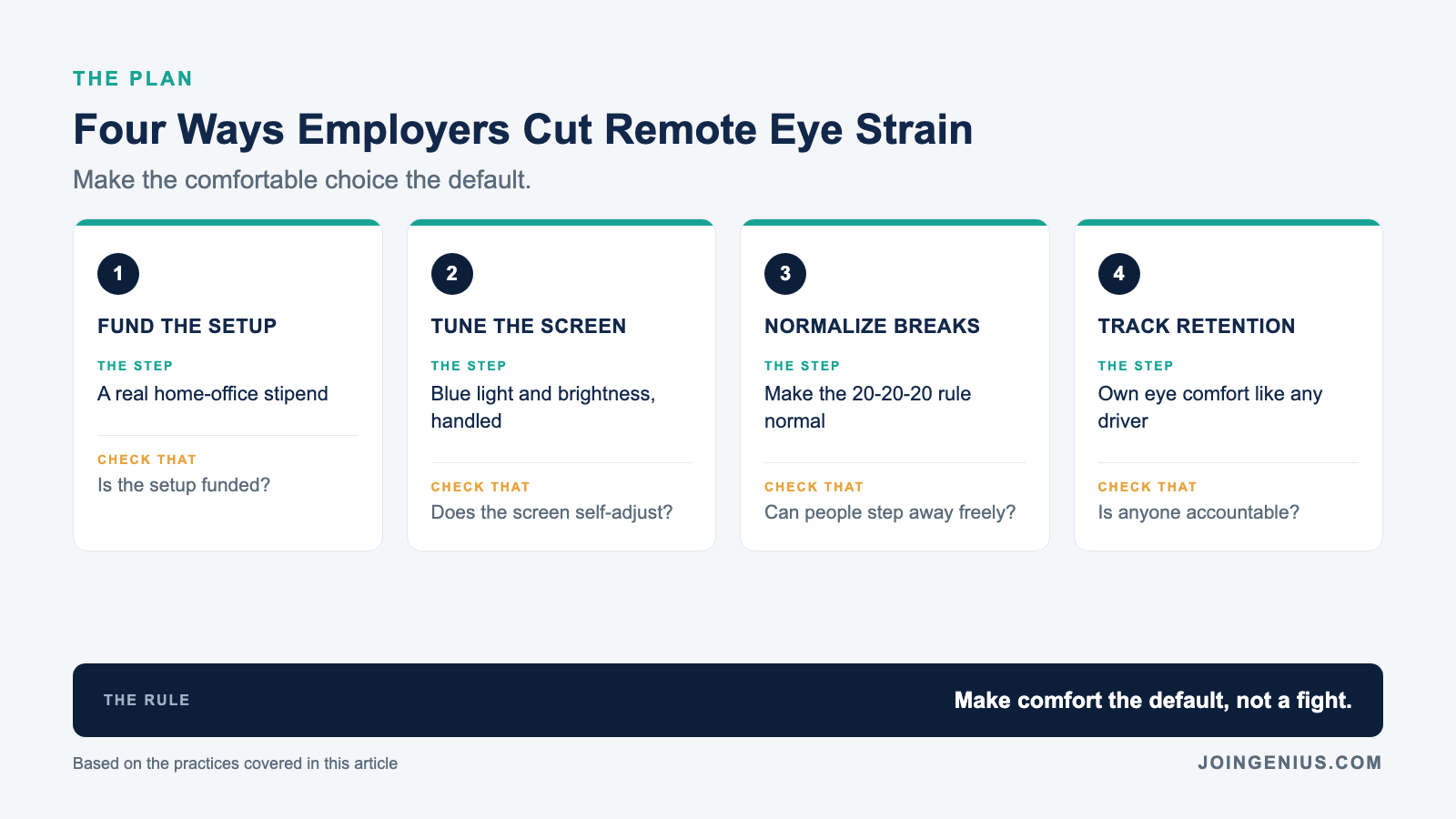
Start with the boring, proven stuff. The 20-20-20 rule and a monitor at arm’s length remove a surprising amount of strain on their own. Add decent ambient lighting and you have covered most of it. None of this is expensive; it just has to actually happen, which is where a little structure and a stipend help.
The hard part is never knowing the fix; it is building the habit around it.
Tune the Screen Itself
The display is doing a lot of the damage, and it is easy to tame. Reducing blue light and matching brightness to the room cut strain without changing how anyone works. Eye-strain software can handle that automatically across the day, so the screen adjusts instead of the person squinting. It is a small install for a daily payoff.
Make the Comfortable Choice the Default
People will not fight their tools for comfort. Set the defaults so the healthy option is the easy one, like break reminders that fire on their own and hardware that is already dialed in when it arrives. The less willpower a fix requires, the more it actually gets used.
A reminder someone has to set up themselves is one most people never set up.
Here is how the main fixes stack up:
| Fix | How it helps |
|---|---|
| 20-20-20 breaks | Relaxes the eye’s focusing muscles |
| Monitor at arm’s length | Cuts close-focus fatigue |
| Lower blue light | Eases strain and protects sleep |
| Controlled lighting | Removes glare and contrast stress |
None of it is dramatic. Stacked together, it changes how the workday feels.
How Employers Keep Eyes and Engineers Healthy
Individual habits only go so far when the setup itself is the problem. The fixes that stick are the ones the company puts in place.
Fund the Home Setup Like You Mean It
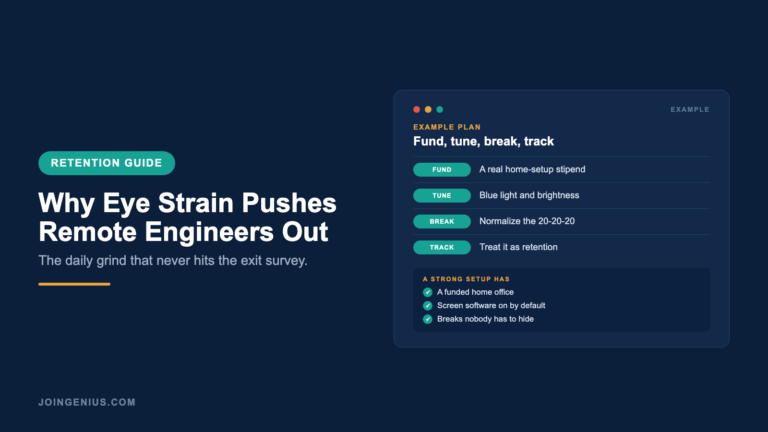
A monitor arm and a decent desk lamp cost less than a week of a lost engineer’s time. Give remote hires a real equipment stipend and a short guide on using it for eye comfort. Treating the home office as a real workspace signals that you take the daily grind seriously.
It also removes the quiet resentment of paying for your own work gear.
Normalize Breaks Instead of Punishing Them
Culture decides whether anyone actually rests their eyes. If logging off for ten minutes reads as slacking, people will power through and pay for it. Make short breaks normal and visible from the top, so stepping away from the screen is expected, not something to hide.
People copy what leaders do, so a manager who takes eye breaks gives everyone permission.
Treat It as Part of Retention, Not Perks
Framing matters. Eye comfort is not a wellness perk; it is part of whether your best engineers stay. Fold it into how you think about retention, with an owner and a budget, the same as any other reason people leave. The teams that treat the daily experience as seriously as the comp package keep people longer.
Conclusion
Eye strain will never top an exit interview, but it is quietly in the mix for a lot of remote engineers who leave. The daily discomfort wears down people whose whole job is a screen, and it feeds the burnout that actually drives the resignation.
The fix is cheap and fast, which makes ignoring it the expensive choice. Make the workday physically easier and you keep people who would otherwise slip away.
If you are building a remote engineering team and want people who stay, the daily experience matters as much as the offer. At Genius, we help companies hire the top 1% of engineering talent from the Philippines and Latin America, at around 80% less than comparable local hires.
You get people you can support and keep for the long run, with no monthly agency fees and a 6-month replacement guarantee. If retaining remote engineers is the problem you keep hitting, see how we source and place talent.