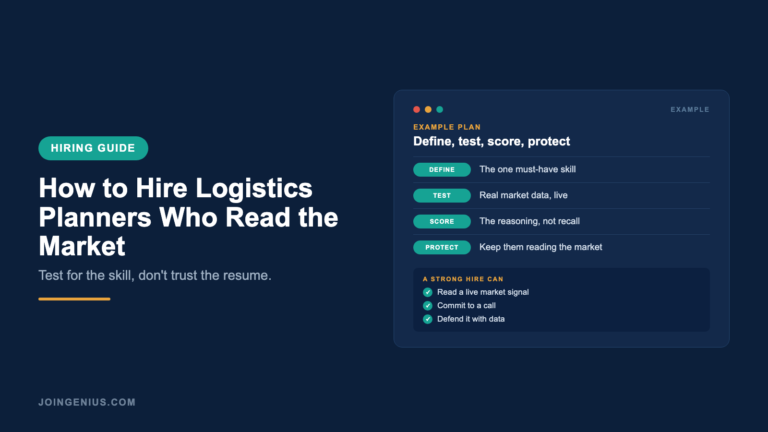
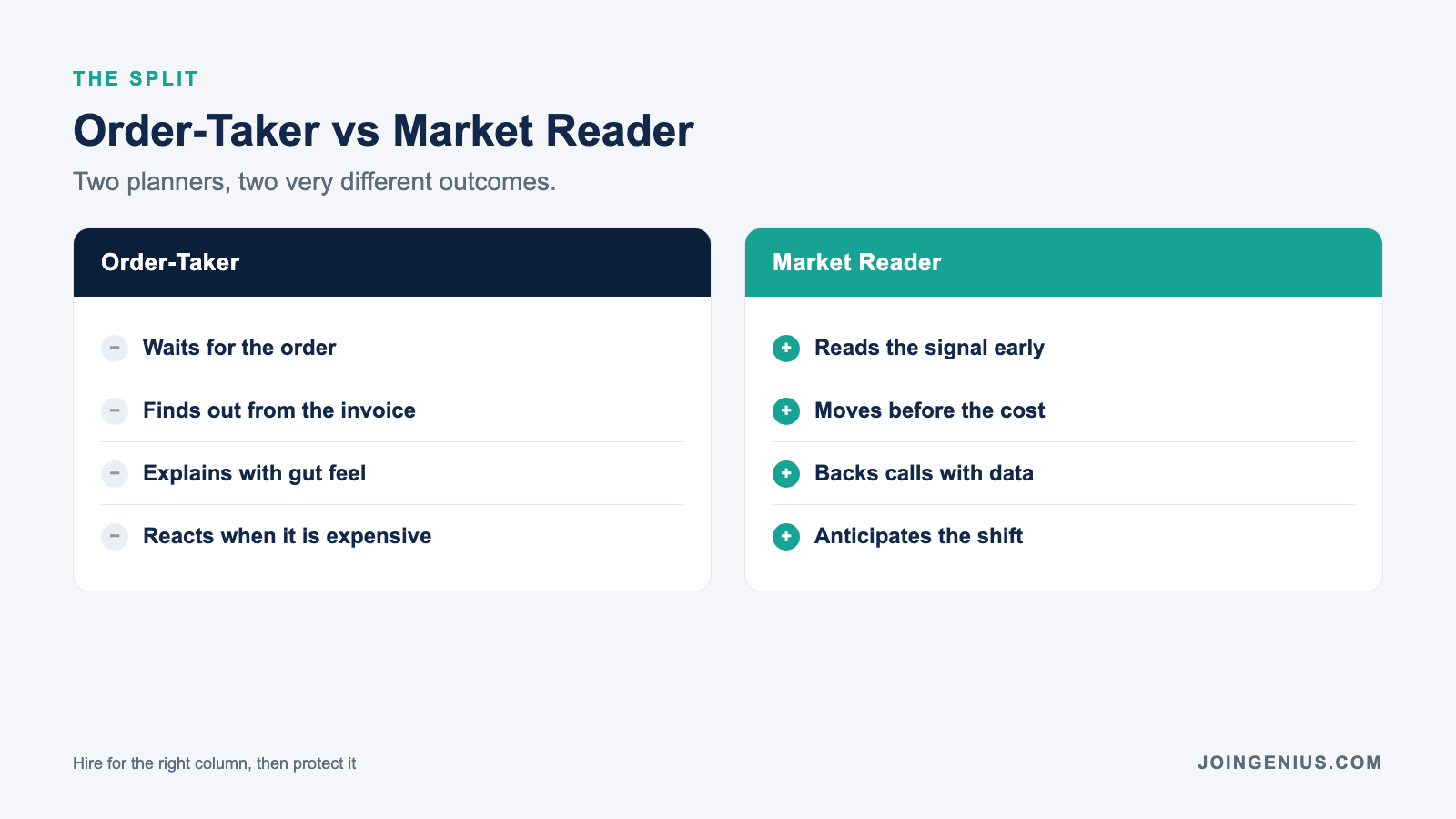
Most logistics planners are reactive by default. An order comes in and they book it; a rate moves and they find out when the invoice looks wrong. Hiring a planner who actually reads market data and acts on it before the market forces their hand is a different, much harder search. The title is common. The skill is not.
The gap is real. Plenty of planners can run the board, but far fewer read the market and change the plan ahead of time. AI is reshaping hiring, and in logistics it raises the bar on data literacy. Below, we cover why market-literate planners are rare and what to screen for, then how to test it.
Why Most Logistics Planners Don’t Read the Market
This is not a knock on planners; it is a gap in how the role is built and hired. The skills data makes it plain.
The Job Trains Reaction, Not Anticipation
Day to day, planning rewards clearing today’s board, not reading next week’s market. The pressure is operational and immediate, so the muscle that gets built is execution, not analysis. Over time that becomes the whole skill set, and reading the market quietly turns into someone else’s job.
Nobody is hired for anticipation, so nobody practices it.
Data-Literate Planners Are Genuinely Scarce
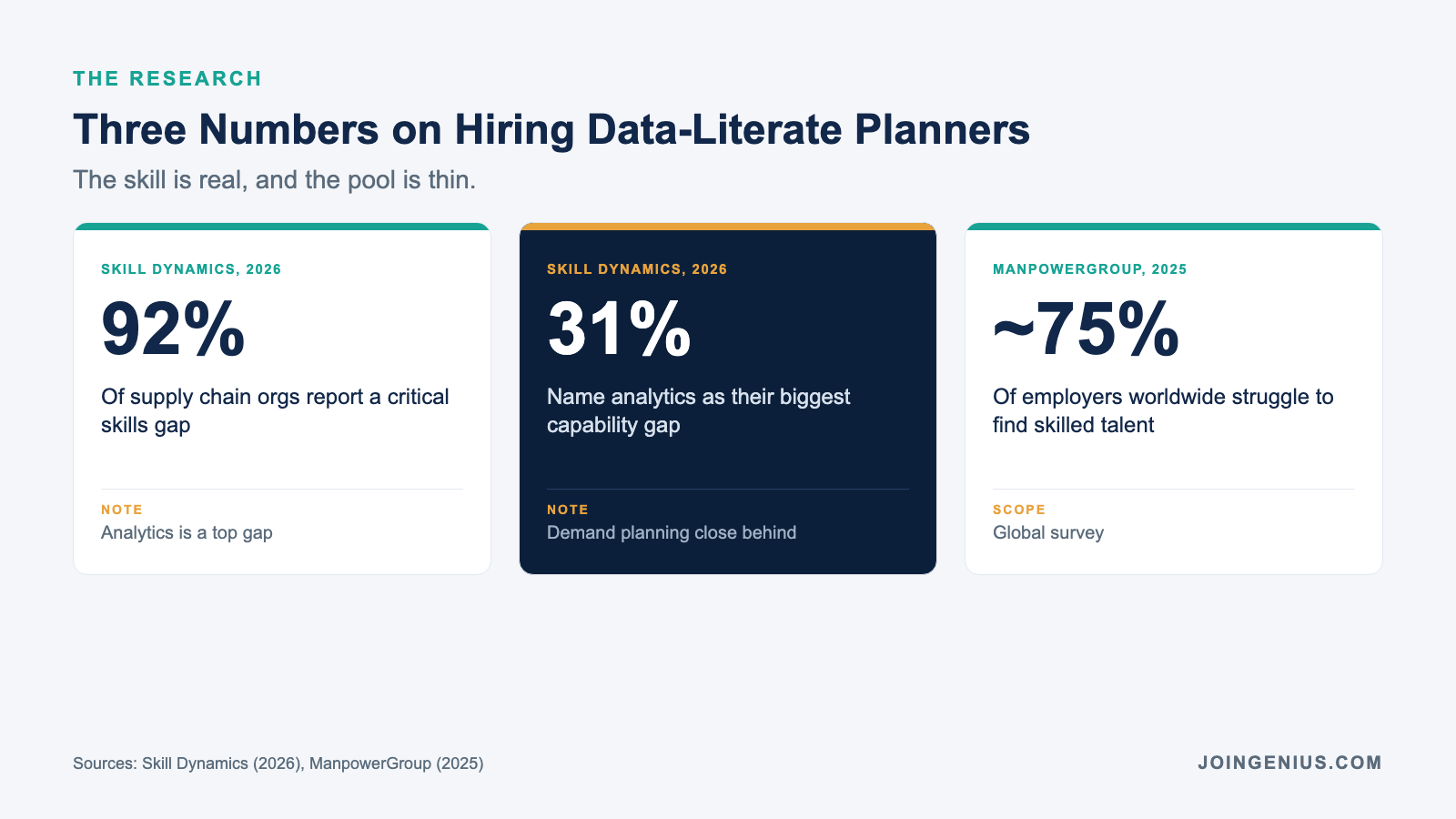
The shortage is measurable. In a 2026 Skill Dynamics survey, 92% of supply chain organizations reported a critical skills gap, and analytics ranked among the biggest, just ahead of demand planning. The people who can turn freight data into a decision are a minority of the applicant pool, which is why a more analytical hiring lens matters so much here.
Resumes Hide Whether They Can Actually Do It
Every logistics resume now lists the same tools and the same lines about data-driven planning. Listing a platform is not the same as reading it. A candidate can know every button in a dashboard and still have no instinct for what a rate trend means. The resume tells you almost nothing about the skill you actually need.
You have to test the skill, because the paper will not show it.
What a Market-Literate Planner Does Differently
The difference is not more dashboards; it is what someone does with the signal. A market-literate planner changes the plan before the market changes it for them.
They Read Signals, Not Just Orders
When spot rates climb in a lane, they notice before it hits the budget. Rising tender rejections tell them capacity is tightening, so they move early instead of scrambling. They treat market data as a live input to the plan, not a report they read after the fact.
The signal is usually there days before the cost is.
They Anticipate and Reposition
Reaction is expensive in freight; anticipation is where the margin is. The planner who sees a seasonal crunch coming locks capacity while it is still cheap. The one who waits pays the spot premium and explains it later. Same data, very different outcome, decided by who read it in time.
Anyone can explain a spike after it happens; the value is in calling it before.
They Can Defend a Call With Data
Ask a strong planner why they routed something a certain way and you get a reason grounded in the market, not a shrug. They can point to the signal that drove the decision. That ability to connect a number to a choice is exactly what separates a data reader from a button pusher.
If they cannot tell you why, they were guessing, and guessing does not scale.
What to Screen For When You Hire
If reading the market is the real skill, the screen has to target it directly. And you are hunting in a thin pool.
The Talent Is Scarce, So Define the Must-Have
Skilled hires are hard to find across the board. In ManpowerGroup’s 2025 survey, nearly three in four employers worldwide said they struggle to find the skilled talent they need.
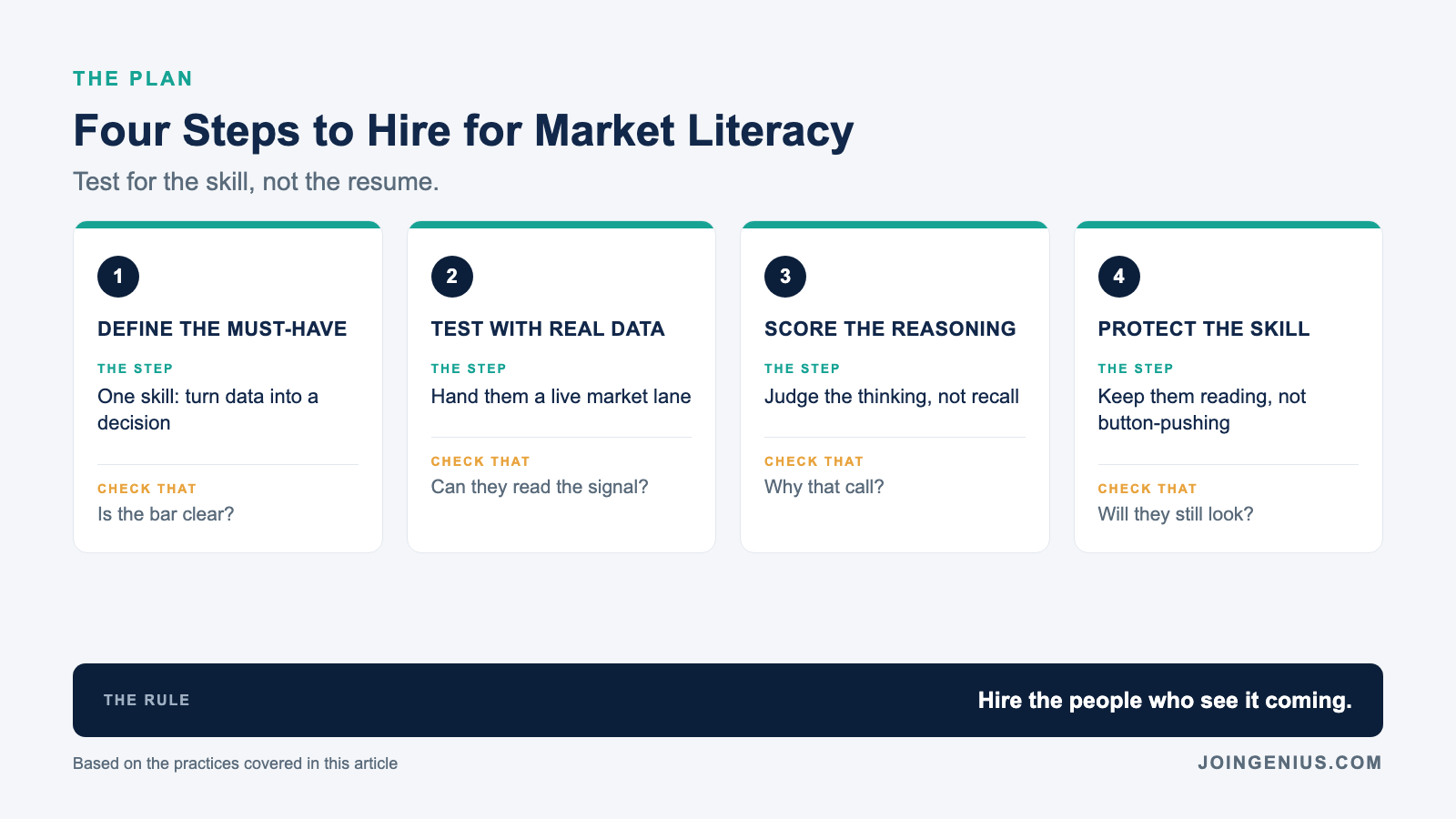
With a pool that tight, you cannot screen for everything, so pick the one thing that matters: can they turn market data into a decision. A structured hiring process keeps you honest about it.
Judgment Over Tool Familiarity
Tools change every two years; judgment does not. Screen for how someone thinks about a market, not which platform is on their resume. A sharp planner learns a new dashboard in a week. Teaching market instinct to someone who only ever cleared the board takes a lot longer, if it happens at all.
You are hiring a reader of markets, not an operator of software.
Comfort With Being Wrong on the Record
Reading the market means making calls that sometimes miss. You want a planner who will commit to a read and own it, not one who hedges everything to avoid blame. Ask about a time the market moved against them. The good ones tell you what they learned, while the weak ones tell you it was unpredictable.
Test It With Real Market Data, Not a Résumé
The only reliable way to know if someone reads the market is to hand them real data and watch. Skip the trivia and run a live test.
Put a Real Dashboard in Front of Them
Give candidates an actual slice of the market and ask what they would do. Pull a lane from freight market data showing rates and rejections moving, and ask how they would adjust the plan. You are not testing recall. You are watching whether they can read a live signal and commit to an action.
Watching them work a real lane tells you more than an hour of questions.
Score the Reasoning, Not the Answer
There is rarely one right move, so judge how they got there. A strong candidate explains the signal and the call they would make in plain terms. A weak one either freezes or recites generic best practice. What predicts on-the-job performance is the quality of the reasoning, not whether they guessed your answer.
Make the Test Mirror the Real Job
A clean case study is not the job. Build the test from a messy, real situation, like conflicting signals or incomplete data, because that is what planning actually looks like. How someone handles ambiguity on a live problem tells you far more than any polished interview answer.
The messier the test, the truer the signal about how they think.
A quick way to read their answers in a live test:
| Market signal | What a strong planner does |
|---|---|
| Spot rates spiking in a lane | Books capacity early, before it tightens |
| Tender rejections climbing | Adds carriers ahead of the failures |
| Demand softening in a region | Pulls back and renegotiates terms |
| A seasonal peak approaching | Locks capacity while it is still cheap |
You are listening for the move, not the memorized definition.
How to Build a Team That Acts on the Market
One market-literate planner is a good hire. A team that reads the market is a structural advantage, and that takes more than one person.
Give Planners the Data and the Authority
Reading the market only helps if a planner can act on it. Make sure they have live market data and the authority to change a plan without three approvals. A planner who sees the shift but cannot move on it learns to stop looking.
Authority without data is blind, and data without authority is useless.
Hire for the Skill, Then Protect It
Once you find someone who reads the market, keep them doing it. Do not bury them in order entry until the analytical part of the job disappears. Protecting that time is part of how you keep your best planners, who will leave if the role turns back into button-pushing.
Build the Bench Before Peak
The worst time to need a market-literate planner is in the middle of a capacity crunch. Hire and train ahead of the season, so the skill is in the room before the market tests it. Teams that wait end up reacting, which is the exact habit they were trying to hire out of.
The skill has to be in the room before you need it, not after.
Conclusion
Hiring logistics planners who read market data is less about finding a unicorn and more about testing for the one skill that matters. Most planners were trained to react, and the few who anticipate are worth the harder search.
Put real market data in front of candidates and score the reasoning, then protect the skill once it is in the building. The market keeps moving, so hire the people who see it coming.
If the real constraint is that market-literate planners are scarce and expensive where you are hiring, that is worth solving at the source. At Genius, we help companies hire the top 1% of logistics and analytics talent from the Philippines and Latin America, at around 80% less than comparable local hires.
You get people who can actually read the market, with no monthly agency fees and a 6-month replacement guarantee. If finding planners who act on data is the problem you keep hitting, see how we source and place talent.