You finally got the spike. A launch post took off on LinkedIn and sessions tripled for a week, but the demo calendar never moved. That is the usual story with B2B SaaS traffic spikes. The traffic is rarely the problem. The gap is a site and follow-up plan never built to fill your pipeline from a crowd of strangers.
Below, we look at why a spike rarely reaches the people who sign contracts and how the source of a spike limits what it can produce. Then we get practical about the landing page and the pipeline read, and we finish with who should own the next spike.
Why B2B SaaS Traffic Spikes Rarely Reach A Buying Group
A spike is a crowd of individual visitors. A B2B purchase is a group decision, and the two rarely line up in the same week.
One Visitor Is Not The Buying Group
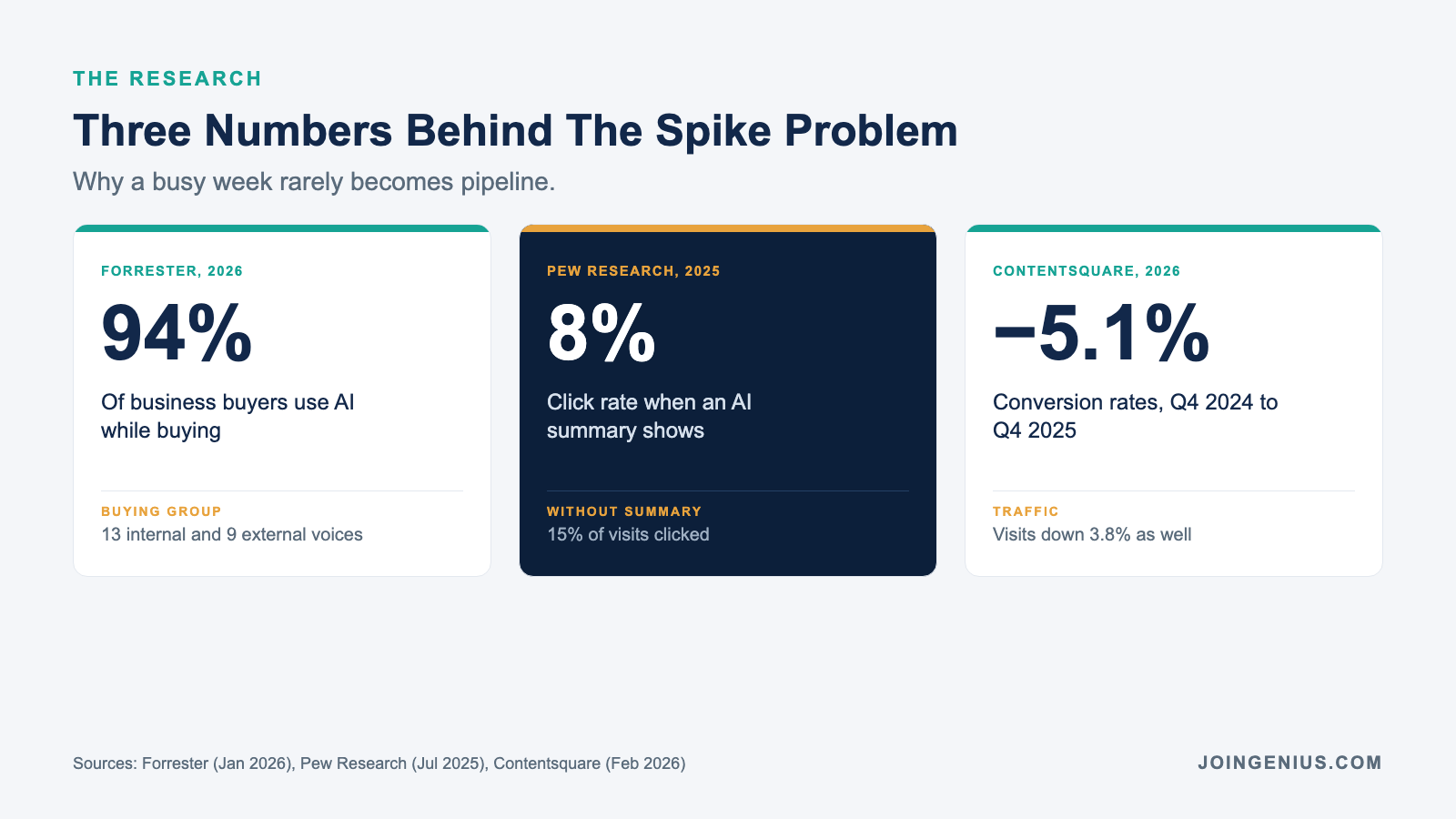
Forrester’s State of Business Buying 2026 draws on a survey of nearly 18,000 global business buyers. It found that 94% of them use AI during their buying process, and that 13 internal stakeholders and nine external participants influence the average buying decision.
So a visitor who arrived from your post is, at best, one of roughly 22 people with a say in the deal. Most of the others will never see the post that caused the spike. That is the logic behind account-based marketing: the account buys, not the visitor.
Spike Visitors Show Up Early In The Decision
The AI figure matters for timing. When buyers use AI tools for early research, much of the category comparison happens before anyone opens your site.
A viral post usually reaches people at the very start of that process. They are curious about the problem and months away from a budget conversation. The strategic question is not how to convert them this week. It is how to stay in front of them until their buying group is ready to move.
Where The Spike Came From Decides What It Can Do
Not all B2B SaaS traffic spikes carry the same kind of visitor. The source tells you what people already know and what a realistic next step looks like.
Search Spikes Now Start Inside AI Answers
A ranking jump used to mean a steady stream of clicks. A Pew Research Center study of 900 U.S. adults found that people who saw a Google AI summary clicked a traditional search result in 8% of visits. People who saw no summary clicked one in 15% of visits.
So a search spike on queries that trigger a summary brings fewer visitors than the rankings suggest, and those visitors have already read an answer. Many of these questions now get answered inside AI search engines before a click ever happens. The visitors who do arrive want depth or proof the summary could not give.
Launch And Social Spikes Bring Curious Visitors
A viral LinkedIn post or a launch-day feature draws people who like the idea. Many work outside your ideal customer profile, and few have a project that needs your product this quarter. That is still useful reach, as long as nobody forecasts pipeline from it.
What Each Spike Source Can Realistically Produce
Before you judge a spike, name the outcome its source can actually produce. This reference table maps common spike sources to the visitor you should expect and a fair goal for the week.
| Spike Source | Who Usually Arrives | A Fair Goal For The Week |
|---|---|---|
| Viral social post | Practitioners curious about the idea | Followers and newsletter signups |
| Launch-day feature | Early adopters and press | Completed product tours |
| Ranking jump on a definition query | Researchers learning the problem | Return visits from target accounts |
| Ranking jump on a comparison query | Buyers who already have a shortlist | Trials and demo requests |
| AI assistant referral | Readers who saw your brand named | Visits to pricing and proof pages |
Treat each goal as the minimum a working page should deliver. If a comparison-query spike produces no trials, the page is the problem.
Build The Page For A Buyer Who Is Not Ready To Talk
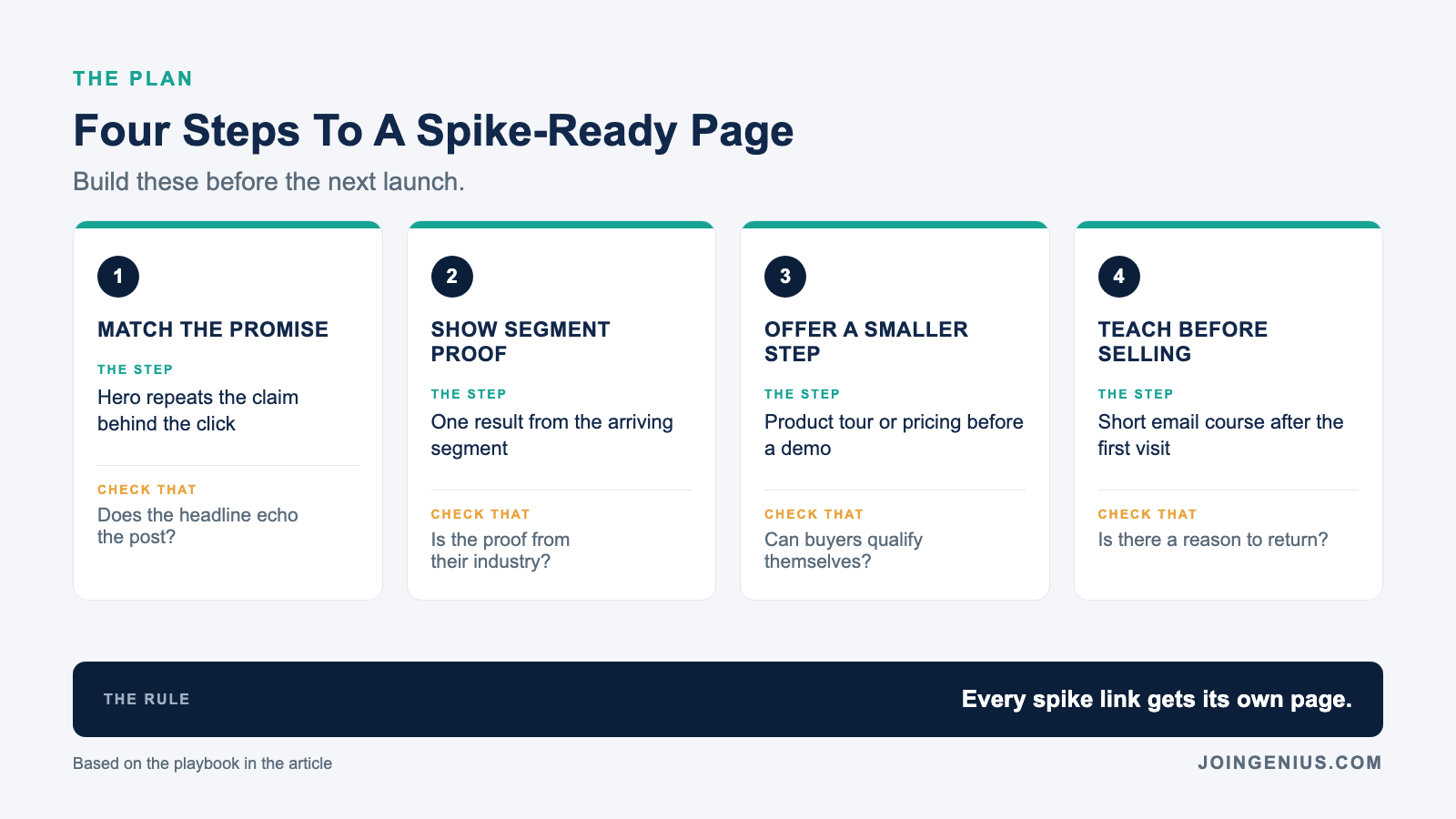
Most spike visitors will not book a demo on their first visit. The page has to give them a smaller step that still moves the account toward a deal.
Match The Page To The Promise That Sent The Click
A visitor who clicked a post about onboarding metrics arrives expecting more on onboarding metrics. Every extra step between that expectation and your page costs attention, and spike visitors have very little attention to spare.
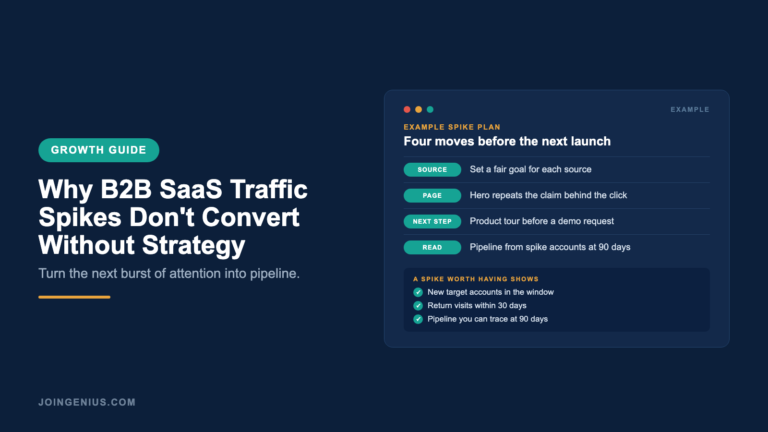
- Rewrite the hero line so it repeats the claim that drove the spike.
- Point every spike link at a dedicated page instead of the generic homepage.
- Show one customer result from the same segment as the people arriving.
- Cut navigation links that send visitors toward unrelated features or old posts.
Offer A Next Step Smaller Than A Demo
A demo request asks for a calendar slot and a sales conversation from someone who found you an hour ago. Flow Agency’s guide to converting blog traffic argues for matching each call to action to the specific asset a reader came in on, with one type of CTA per post. The same principle applies to every spike page.
- A self-guided product tour that shows the core workflow without a sales call.
- A pricing page with real numbers so buyers can qualify themselves early.
- A template or calculator tied to the exact problem the spike content raised.
- A short email course that teaches the problem before any sales outreach begins.
Read A Spike In Pipeline Terms, Not Sessions
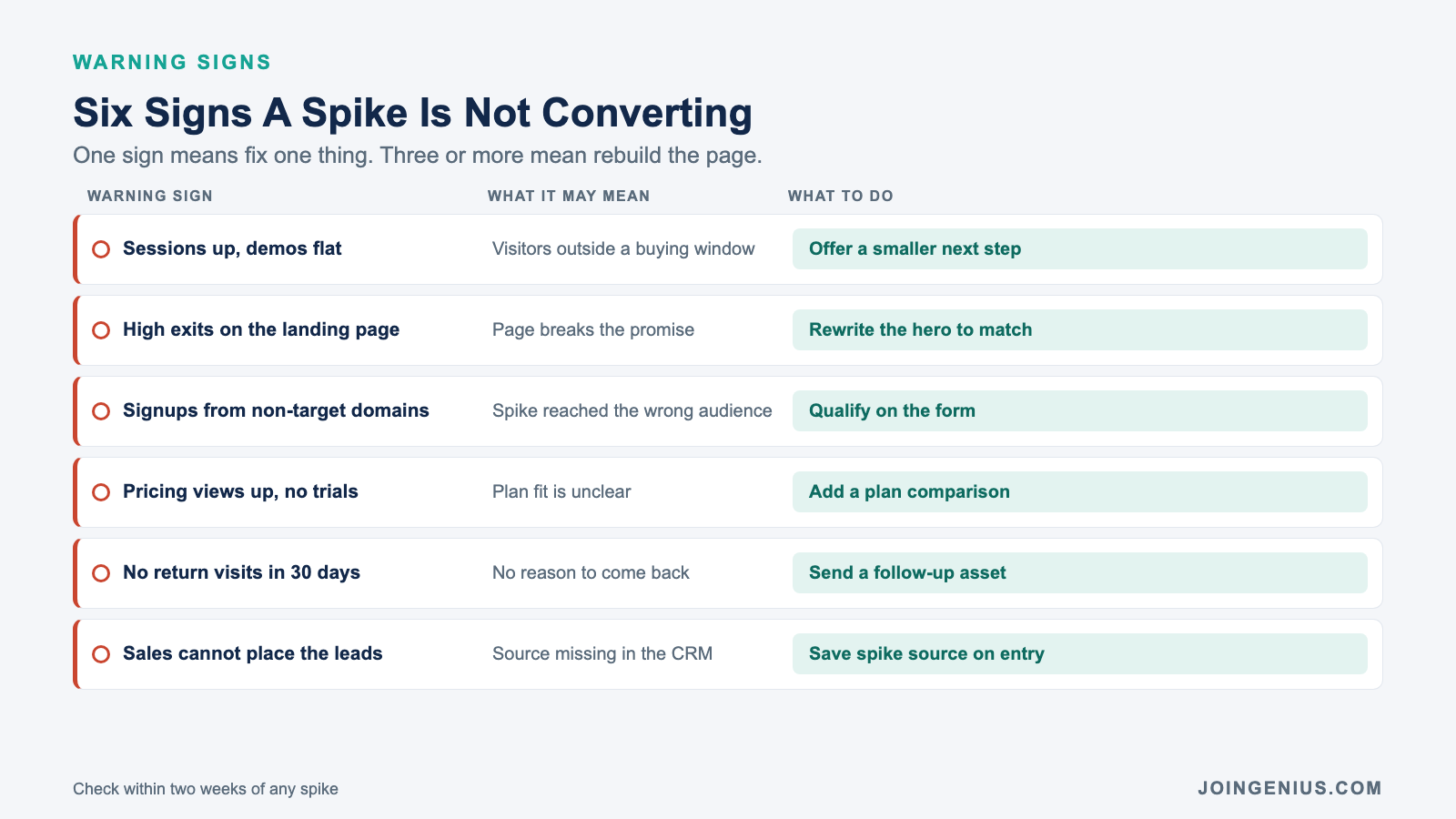
Most teams report B2B SaaS traffic spikes in sessions because sessions are easy to count. That number tells you a spike happened, but it says nothing about whether the spike was worth having.
Why The Baseline Matters More Than The Peak
Your normal week is shifting even without a spike. Contentsquare’s 2026 Digital Experience Benchmark analyzed 99 billion sessions across more than 6,500 websites in nine industries. It found that visits dropped 3.8% and conversion rates dropped 5.1% between Q4 2024 and Q4 2025.
That benchmark covers many industries, not only B2B SaaS, but the direction is clear. Compare each spike with your own trailing eight weeks instead of last year’s dashboard. Otherwise a healthy result can look like a failure.
Track Accounts And Pipeline Instead Of Visits
Visits measure attention, while accounts measure buying interest. Most of the campaign metrics that teams report stop at the session, which is why spikes get celebrated and then forgotten.
- New accounts from your target list that visited during the spike window.
- Return visits from those same accounts within 30 days of the first session.
- Pricing page and product tour views broken out by spike source, not channel.
- Pipeline created within 90 days from accounts first seen during the spike.
Why Analytics Undercounts A Spike
Analytics tools miss part of every spike. A buyer who read about you in an AI answer or a private Slack channel often returns later through a direct visit or a branded search, and the original source disappears from the report.
A required “How did you hear about us?” field on every form recovers part of that signal. Read the answers weekly during a spike, because buyers often name the exact post or AI tool that started their research.
Who Should Own The Next Spike
B2B SaaS traffic spikes tend to fall between teams. Content usually causes them, and demand gen inherits the follow-up without a plan.
The Skills A Spike Owner Needs
The owner does not need a big title. They need enough range to connect a traffic source to a page and then to a sales conversation, usually inside the same week.
- Reads source data and knows which channels send real buyers versus casual browsers.
- Writes landing page copy fast enough to match a spike within days.
- Owns the CRM fields that tie every spike to accounts and pipeline.
- Meets sales weekly so engaged accounts get a timely and relevant follow-up.
Senior Hire Or Fractional Lead
Experienced marketing leadership is expensive. The Bureau of Labor Statistics puts the median annual wage for marketing managers at $166,790 as of May 2025. It projects employment across the wider group, which includes advertising and promotions managers, to grow 6 percent from 2025 to 2035.
For a team that sees a few spikes a year, that salary is hard to justify for spike work alone. A fractional CMO can set the source goals and measurement rules, then hand the weekly work to a hands-on marketer who can rebuild a page in days.
Conclusion
Do not chase another spike until the last one has a 90-day pipeline number attached to it. B2B SaaS traffic spikes are worth chasing only once you can say which sources produced buyers and which produced browsers. Until then, every new spike is attention you cannot price.
At Genius, we find top 1% marketers in the Philippines and Latin America for 80% less than a comparable US hire. There are $0 monthly fees, and each hire comes with a 6-month talent guarantee. If you want someone owning that 90-day read before your next launch, hire through Genius.