
Handling finance in-house is a full-time job. Between chasing invoices, managing payroll, cleaning up messy books, and trying to make sense of forecasting tools you never asked for… something always slips. And it is usually important. That is when bringing in an offshore finance company starts to make sense.
This guide is here to walk you through what offshore finance company support looks like today, why modern companies are all in, and what to watch out for so you don’t get burned.
Offshore Finance Company: Here’s What You Need To Know
| Cost Benefits | Save 40-70% on finance team costs while accessing specialist expertise |
| Core Services | Bookkeeping, AP/AR, payroll, reporting, forecasting, audit prep, system migration |
| Strategic Fit | Define goals first, align with business stage, choose dedicated vs. managed services |
| Vendor Selection | Verify industry experience, tool compatibility, certifications, and client track record |
| Operational Must-Haves | Data security compliance, quality controls, team structure, scalability plans |
| Cost & Compliance | Transparent pricing, local tax expertise, flexible contracts, clear SLAs |
| Top Mistakes to Avoid | One-size-fits-all thinking, ignoring tech integration, single points of failure |
| Getting Started | Map pain points → benchmark providers → validate processes → run pilot → lock flexible contract |
Your Next Must-Read Blogs
🌟 14 Benefits Of Offshore Bookkeepers & How To Avoid Risks
🔥 Offshore Accounting Philippines: Top 10 Reasons To Outsource
💯 How To Build An Offshore Accounting Team That Delivers
What Is An Offshore Finance Company? Understanding The Basics

An offshore finance company is a third-party firm based outside your home country that handles key financial tasks for your business. You get access to experienced professionals who already know the tools, the processes, and the pace of modern business.
Why Hire An Offshore Finance Company? 6 Key Reasons
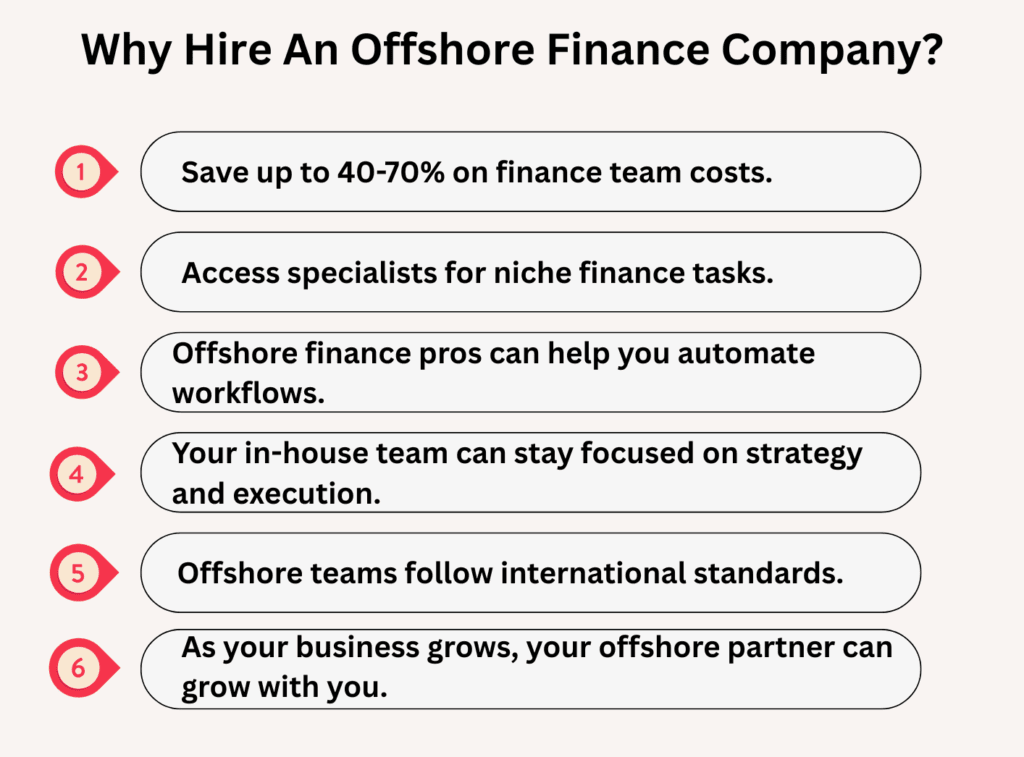
Here are the main reasons to hire an offshore finance company:
- Save up to 40-70% on finance team costs.
- Access specialists for niche finance tasks that are expensive or hard to find locally.
- Offshore finance professionals are already fluent in tools like NetSuite, Stripe, Deel, or Ramp, and can help you automate workflows.
- Let experts handle the day-to-day finance tasks so your in-house team can stay focused on strategy and execution.
- Offshore teams follow international standards and are trained to deliver clean, audit-ready financials.
- As your business grows, your offshore partner can grow with you. This means no hiring, training, or back-office headaches.
🤔 Did You Know?
Research suggests approximately 30 million US jobs could be candidates for offshoring.
10 Services You Can Delegate To An Offshore Finance Company

These are the core finance services you can offshore to a trusted finance team:
- Bookkeeping and bank reconciliation: Day-to-day transaction tracking, ledger updates, and account matching.
- Accounts payable and receivable management: Invoice processing, payment scheduling, and collections follow-up.
- Payroll processing and administration: Accurate salary payouts, tax filings, benefits tracking, and compliance with local laws.
- Financial reporting and analysis: Monthly P&Ls, balance sheets, cash flow statements, and custom reports to support decision-making.
- Budgeting and forecasting support: Helping you plan ahead with scenario-based models and spend tracking.
- Cash flow monitoring and treasury management: Keeping a close eye on inflows, outflows, and liquidity health.
- Audit preparation and compliance documentation: Organizing records, flagging risks, and supporting internal or external audits.
- Expense tracking and cost control: Categorizing and analyzing spend to identify savings and improve margins.
- System migration and finance tool setup: Support for moving to tools like QuickBooks, Xero, or NetSuite with clean data and workflows.
- Vendor and contract management: Overseeing financial terms, payment timelines, and vendor communications.
18 Must-Know Factors Before Hiring An Offshore Finance Company
Let’s break down the 18 key matters to consider before you hire an offshore finance company:
Strategic Fit & Readiness

1. Define Your Finance Outsourcing Goals
- Clarify what you want to outsource first. Are you looking to outsource bookkeeping, payroll, reporting, or all of the above? Start with your biggest pain points.
- Determine the outcome you want from the partnership, like cleaner books, faster reports, or reduced overhead. Your goals should guide who you hire and how they work with you.
- Set a timeframe for impact and performance. Know whether you need short-term relief or a long-term solution, and set milestones to measure early progress.
- Decide if you’re supplementing or replacing in-house staff. Knowing if this is a hybrid setup or full delegation helps shape your expectations, training needs, and workflows.
- Align finance outsourcing with your stage of growth. Startups may need basic support, while scaling companies may require advanced reporting, cash flow analysis, and system integration.
2. Identify Which Tasks To Delegate Vs. Keep In-House
- Start with tasks that are repetitive, time-consuming, or rules-based. Bookkeeping, AP/AR, payroll, and reconciliations are perfect for delegation since they follow clear processes and don’t require daily leadership involvement.
- Keep strategic decision-making and financial oversight in-house. Budget planning, forecasting, and financial modeling are best managed by internal leadership who understand the business deeply.
- Assess the risk level of each task. Delegate tasks where mistakes have low business impact, and retain high-risk functions like investor reporting or tax strategy in-house.
- Consider what requires frequent collaboration with other departments. If a finance task relies heavily on real-time input from marketing, ops, or HR, it may be more efficient to keep it internal.
- Evaluate your internal team’s strengths and bandwidth. If your in-house team has strong FP&A but struggles with closing the books on time, outsourcing the month-end process can fill the gap without replacing your entire finance function.
3. Align Provider Support With Business Stage & Complexity
- Match service depth to your company’s current size and transaction volume. Early-stage startups may only need basic bookkeeping, while multi-entity businesses require consolidated reporting, multi-currency support, and complex workflows.
- Make sure the provider has experience supporting similar growth stages. Ask if they’ve worked with pre-revenue startups, scaling SaaS companies, or high-volume eCommerce brands.
- Check if they support the tools and systems you already use. If your company runs on NetSuite, Xero, or Stripe, make sure the provider knows how to work inside those systems without slowing you down.
- Evaluate their ability to adapt as your business evolves. Choose a partner that can scale with you as your needs mature.
- Avoid overpaying for services you don’t yet need. You don’t need a CFO-level team if you’re just starting out. Look for a provider who can grow with you without locking you into enterprise pricing too early.
4. Understand Your Preferred Engagement Model
- Choose between a dedicated staffing model or a managed services model. Dedicated staffing gives you full-time offshore team members; managed services deliver specific finance outputs without you managing individuals.
- Use the dedicated model if you want hands-on control. This is ideal when you already have a CFO or controller and need consistent execution from an offshore team under your direction.
- Go with managed services if you want a plug-and-play solution. Perfect for companies that prefer to outsource results like bookkeeping, payroll, or reporting with minimal oversight.
- Consider how fast you need to scale support. Managed services ramp up faster, while dedicated staffing is better for building long-term internal capability offshore.
- Compare cost structures—people vs. performance. Dedicated staffing offers lower per-hour costs for stable roles, while managed services may cost more per task but reduce your management load.
“Offshoring your finance function is a strategic move that helps you scale with precision and control.”
Burkhard Berger, Founder & CEO
Vendor Evaluation
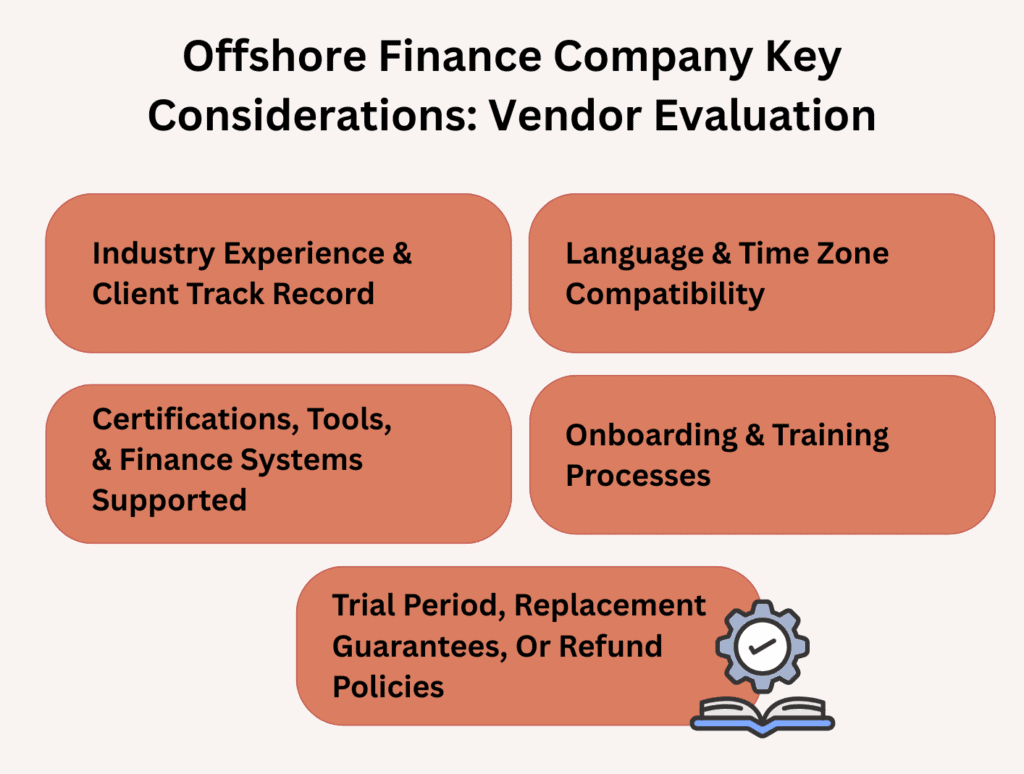
5. Industry Experience & Client Track Record
- Ask if the vendor has worked with businesses similar to yours. Experience with your business model means they’ll already understand your needs and challenges.
- Request client references or case studies. Hearing how they’ve helped other companies (especially in your industry or growth stage) can validate their ability to deliver.
- Look for familiarity with your finance tools and systems. Whether you use QuickBooks, Xero, NetSuite, or Stripe, their past work should show they’re already fluent in your tech stack.
- Check how long clients stay with them. Long-term client relationships are a strong sign of reliability, consistent performance, and real value.
- Review their success metrics and deliverables. Ask for examples of KPIs they’ve improved, like faster closing cycles, audit readiness, or cost savings from streamlined finance processes.
6. Certifications, Tools, & Finance Systems Supported
- Confirm the team holds relevant finance certifications. Look for credentials like CPA, CMA, ACCA, or QuickBooks/Xero certifications that match the services you’re outsourcing.
- Check if they support the tools you already use. Ask specifically if they’re experienced with your platforms like NetSuite, QuickBooks, Xero, Zoho Books, or even Stripe and Gusto.
- Ask how often their team gets trained on new tools and updates. Finance tech evolves fast—partners who stay current can keep your systems running efficiently and compliant.
- Look for process automation and integration capabilities. A strong offshore team should help connect tools (integrating billing systems with accounting platforms) to reduce manual work.
- Confirm data security and access controls in the tools they use. Make sure they use secure, encrypted platforms with permission-based access to protect sensitive financial data.
7. Language & Time Zone Compatibility
- Make sure the team has strong written and spoken English skills. Clear communication is critical for finance. Misunderstandings in numbers, reports, or deadlines can be costly.
- Ask about time zone overlap with your core working hours. Even 2–4 hours of overlap can make a huge difference for meetings, real-time updates, and faster issue resolution.
- Check if they offer flexible scheduling for key touchpoints. A good offshore partner will adapt to your time zone for key meetings like month-end close, weekly syncs, or urgent reviews.
- Look for experience working with global teams. Providers used to cross-border clients tend to have better systems, communication habits, and responsiveness.
- Clarify expected response times for emails, updates, and tasks. Set expectations early so both teams stay in sync and avoid bottlenecks caused by time differences.
8. Onboarding & Training Processes
- Ask how long their onboarding process takes and what it includes. A solid provider should have a step-by-step onboarding playbook with timelines, document requests, tool access, and clear deliverables.
- Check if they assign a dedicated onboarding specialist or team. Having a single point of contact ensures consistency, faster ramp-up, and fewer communication gaps during the first 30–60 days.
- Review how they train their team on your specific workflows. Find out if they provide internal SOPs, recorded walkthroughs, or custom training sessions for tools, approvals, and processes unique to your business.
- Confirm they’ll document your finance processes during onboarding. A great partner will help formalize or improve your processes while they learn them.
- Ask what they do in the first 30, 60, and 90 days. Request a sample ramp-up plan so you know what’s covered when like tool setup, first deliverables, early wins, and feedback cycles.
9. Trial Period, Replacement Guarantees, Or Refund Policies
- Ask if they offer a free or discounted trial period. A trial gives you time to assess performance, communication, and cultural fit before committing long-term.
- Check if there’s a talent replacement guarantee. If you’re hiring a dedicated team member, confirm they’ll replace underperforming hires quickly and at no extra cost.
- Clarify the refund policy if things don’t work out. Understand the terms for partial or full refunds, especially in the first 30–60 days, if expectations aren’t met.
- Request the full policy in writing before signing. Make sure their trial, refund, or replacement terms are spelled out in the service agreement.
- Look for flexible exit terms if you’re not satisfied. Avoid long lock-in periods and choose a provider that offers a smooth offboarding process if you need to pause or stop the service.
Operational Excellence
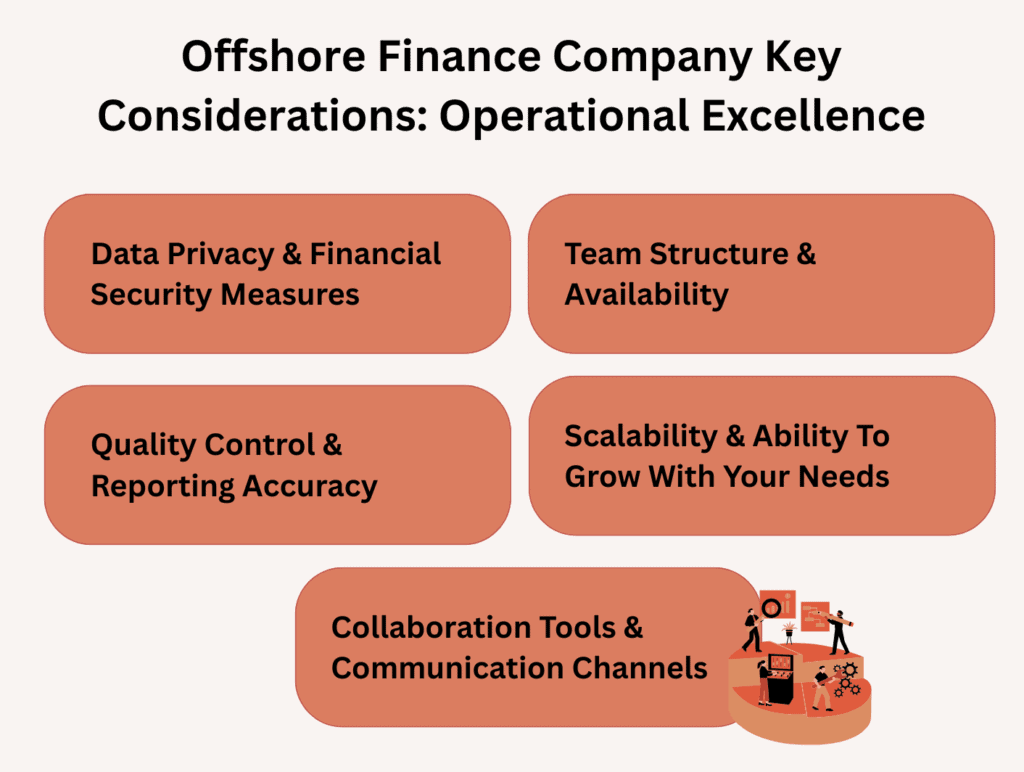
10. Data Privacy & Financial Security Measures
- Ensure the provider complies with international data standards. Look for compliance with GDPR, SOC 2, ISO 27001, or local data privacy laws to protect sensitive financial and personal information.
- Ask how financial data is stored, encrypted, and backed up. Secure cloud storage with 256-bit encryption and routine data backups is a must to prevent breaches or data loss.
- Review their access controls and internal user permissions. Ensure only authorized personnel can view or edit financial data, with audit trails tracking all activity.
- Check if they conduct regular security audits and vulnerability scans. Reputable providers test their systems regularly to catch risks before they become problems.
- Confirm how they handle breaches, incident response, and client notification. Ask for their data breach response plan. Speed and transparency matter if a security issue arises.
11. Quality Control & Reporting Accuracy
- Ask how financial work is reviewed before delivery. A strong offshore finance company should have multi-level review systems, including peer checks and manager sign-offs.
- Check if they use standardized templates for key reports. Using consistent, audit-ready templates ensures clarity, reduces errors, and makes reports easier to interpret.
- Understand their error-tracking and correction process. Find out how they log, resolve, and prevent mistakes. Transparent feedback loops are a sign of mature operations.
- Request sample reports or dummy financial packages. Reviewing their work style gives insight into their attention to detail, formatting, and compliance with accounting standards.
- Clarify how they handle variance analysis and exception reporting. A quality partner will explain what changed, why it happened, and what it means for your business.
12. Team Structure & Availability
- Ask who’s on your account and what each person does. Understand if you’ll work with a dedicated accountant, controller, CFO, or a shared services model.
- Clarify if you get full-time, part-time, or pooled support. Know whether your team is exclusive to you or shared across multiple clients because this affects speed and responsiveness.
- Confirm availability during your business hours. Make sure there’s overlap with your time zone for meetings, real-time requests, and emergency issues.
- Check escalation paths for urgent matters. Know who to contact when your primary contact is unavailable. Escalation protocols keep things moving.
- Ask about coverage during holidays, sick days, and turnover. Reliable partners have backup systems to ensure continuity and avoid delays if someone is out.
13. Scalability & Ability To Grow With Your Needs
- Ask how quickly they can add new team members or services. A good offshore finance company should scale within days or weeks when your needs expand.
- Check if they support more advanced functions as you grow. Make sure they can handle controller-level work, forecasting, fundraising support, or multi-entity consolidation when you need it.
- Understand if their pricing model allows for gradual scaling. Look for flexible terms where you can start small and scale up without renegotiating your contract each time.
- Verify infrastructure and bandwidth for additional workload. Ask if they’ve handled businesses that grew rapidly. This shows they won’t be a bottleneck when you scale.
- See if they offer insights and planning support as you grow. Partners that act as strategic finance advisors can support better decision-making over time.
14. Collaboration Tools & Communication Channels
- Ask what tools they use for project management and communication. Common platforms like Slack, Asana, ClickUp, or Microsoft Teams help streamline updates and task tracking.
- Confirm how often you’ll meet and how updates are shared. Weekly or bi-weekly syncs, shared dashboards, and real-time notifications help keep everyone aligned.
- Check if they offer centralized documentation access. Tools like Google Drive, Notion, or client portals should let you access financial docs, SOPs, and reports anytime.
- Clarify how they track task status and deadlines. Ask if they use workflow systems with visible progress tracking so you’re never guessing what’s done or overdue.
- Ensure communication protocols are clear and consistent. Know who to message for what, expected response times, and how urgent issues get escalated. This reduces friction and delays.
😱 This Might Surprise You
Investment banking has a time-to-hire range of 21 to over 60 days.
Cost & Compliance
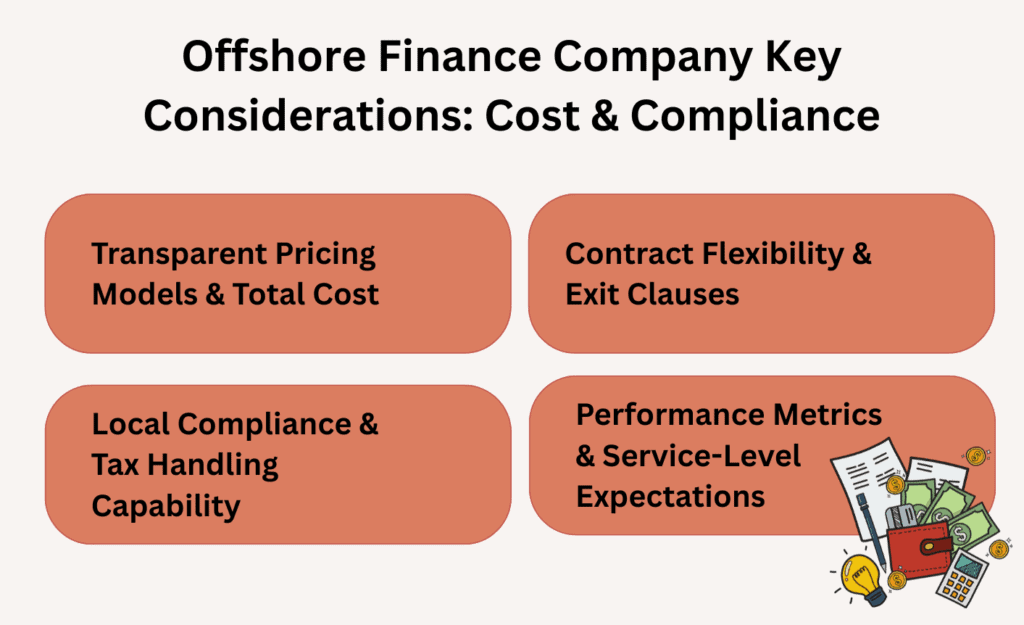
15. Transparent Pricing Models & Total Cost
- Ask for a clear breakdown of monthly costs and what’s included. Understand if you’re paying for full-time support, project-based work, or hourly billing, and what services come with it.
- Check for hidden fees like onboarding, currency conversion, or platform charges. Some providers advertise low rates but tack on costs for training, software access, or mid-contract changes.
- Confirm if pricing scales as your needs grow. Clarify whether adding more services or headcount increases costs proportionally, or if bundled plans offer savings.
- Compare pricing across engagement models (FTE vs. shared team). Some pricing differences depend on whether you’re getting a dedicated finance expert or shared support from a larger team.
- Request a sample invoice or pricing sheet. Reviewing a real or mock invoice helps reveal any extra line items, taxes, or charges not mentioned upfront.
16. Local Compliance & Tax Handling Capability
- Confirm they understand and comply with your country’s tax laws. The provider should be familiar with your jurisdiction’s regulations, from VAT/GST to payroll taxes and corporate filings.
- Ask if they handle tax filings or only support preparation. Some partners only prepare the numbers, while others file returns. Make sure you know what’s included.
- Check for experience with cross-border reporting requirements. Look for knowledge of FATCA, CRS, transfer pricing rules, or any local–international compliance overlaps.
- Verify if they have in-house tax experts or work with local CPAs. A good offshore partner either employs tax pros or collaborates with certified local firms for complex filings.
- Make sure they can track compliance deadlines and submit on time. Timely filings protect you from penalties.
17. Contract Flexibility & Exit Clauses
- Ask about the minimum commitment period. Find out if you’re locked into a 3, 6, or 12-month contract, and whether there’s an option to start with a shorter pilot.
- Review the notice period for cancellation. Check how much advance notice is required to terminate the agreement, and if there are any fees for early exit.
- Clarify what happens to your data and documentation after offboarding. Make sure they provide a complete handover of files, credentials, and SOPs without delay or extra charges.
- Look for prorated refunds or partial billing terms. If the service ends mid-cycle, confirm whether unused days or services are refunded or credited.
- See if contract terms allow you to scale down or pause services. Flexible providers let you reduce scope or pause engagement temporarily without penalties or renegotiations.
18. Performance Metrics & Service-Level Expectations
- Ask how success is measured and tracked. Understand what KPIs they use, like report turnaround time, error rates, or reconciliation accuracy, to evaluate performance.
- Check if they provide regular performance reports. Look for providers who offer monthly or quarterly dashboards so you can monitor progress and flag issues early.
- Set clear expectations for response time and deliverables. Define what “on time” means for tasks like payroll, invoicing, or financial statements to avoid misalignment.
- Confirm if SLAs are included in your agreement. Service-level agreements (SLAs) ensure accountability by outlining timelines, quality standards, and escalation processes.
- Discuss how performance reviews and feedback are handled. Make sure there’s a structured way to share feedback, conduct reviews, and course-correct when needed.
5 Offshore Finance Company Hiring Mistakes To Watch Out For

Watch out for these common pitfalls when hiring an offshore finance company:
1. Assuming One-Size-Fits-All Financial Support
Using a generic provider can cause mismatched support and costly inefficiencies.
Solution: Choose firms that specialize in your business stage. Startups need different support than multi-entity companies or PE-backed firms.
2. Not Vetting Their Finance Tech Stack Integration
Hiring a provider unfamiliar with your systems (e.g., NetSuite, QuickBooks, Xero, etc.) can cause delays, errors, and extra training costs.
Solution: Ask for platform certifications, integration experience, and examples of how they’ve streamlined workflows using your tools.
3. Ignoring Their Approach To Change Management
Overlooking how they’ll handle transitions from your current team or tools can disrupt operations and cause missed deadlines.
Solution: Choose a provider with a structured migration process (templates, SOPs, and timelines) to avoid downtime or errors.
4. Misalignment With Financial Reporting Standards
Not clarifying whether they follow local GAAP, IFRS, or custom internal reporting formats can confuse investors or create audit issues.
Solution: Review sample reports and confirm they can deliver outputs tailored to your stakeholders or investors.
5. Relying On A Single Point Of Contact
If that one person leaves or is unavailable, your finance operations can stall.
Solution: Work with companies that offer layered support (analyst + reviewer + account manager) to avoid disruptions when someone’s unavailable.
“Great offshore finance partners bring consistency, speed, and expertise to your operations from day one.”
Christian Cabaluna, Senior Recruiter
How To Get Started With The Offshore Finance Company In 7 Easy Steps

Use this step-by-step guide to set up your offshore finance company relationship the right way:
1. Assign One Internal Point Of Contact
- Designate a team member to manage the relationship and day-to-day communication.
- Make sure they understand your finance workflows, tools, and business context.
- Give them the authority to approve work, escalate issues, and coordinate with leadership.
- Provide clear expectations for availability, response times, and check-ins.
- Set up shared communication channels like Slack, Teams, or email threads.
2. Share Access To Tools & Documentation
- Provide secure access to accounting software, payroll platforms, and shared drives.
- Upload SOPs, reporting templates, and approval workflows that the team should follow.
- Grant permissions based on roles. Limit access to sensitive data when necessary.
- Set up user accounts with clear naming conventions to track activity.
- Verify that logins and tool integrations work before the team begins work.
3. Align On Weekly Workflows & Deliverables
- List recurring tasks with due dates (month-end close, payroll, AP/AR).
- Decide who is responsible for each step (offshore vs. internal team).
- Use a shared task tracker or project management tool to monitor progress.
- Agree on which reports are needed weekly, monthly, or quarterly.
- Build in review time for each deliverable before it’s finalized.
4. Hold A Kickoff Meeting To Set Expectations
- Introduce your internal team and the offshore team to build rapport.
- Walk through your finance processes and explain key business goals.
- Discuss communication preferences, meeting frequency, and escalation paths.
- Review what’s expected in the first 30, 60, and 90 days.
- Clarify performance metrics and what success looks like early on.
5. Monitor Early Deliverables Closely
- Double-check the accuracy and completeness of the first few tasks or reports.
- Give prompt feedback to correct misunderstandings or improve workflows.
- Track how long tasks are taking and whether they align with your timelines.
- Ensure financial data is being handled securely and consistently.
- Use this time to reinforce best practices and improve documentation.
6. Schedule Weekly Syncs & Monthly Reviews
- Set a recurring meeting (weekly for operations, monthly for strategy).
- Use meetings to review deliverables, discuss issues, and plan next steps.
- Ask about blockers or resource needs from the offshore team.
- Highlight what’s working well and where improvements are needed.
- Keep meeting notes and follow-up actions documented for accountability.
7. Assess Performance After 60 days
- Compare actual performance with agreed KPIs and timelines.
- Review how well the team integrates with your internal processes.
- Decide if it’s time to increase the scope, pause, or make changes.
- Document lessons learned to improve future collaborations.
- If successful, plan how to scale support or introduce more complex work.
🔎 This Is Interesting
Poland’s outsourcing sector has grown 20% annually over the last 20 years.
Conclusion
Partnering with an offshore finance company is a strategic move to get expert-level support without burning out your team or breaking the bank. But success doesn’t come from picking the first vendor with a nice website. So take your time, ask the hard questions, test their systems, and lock in a setup that flexes with your growth.
At Genius, we connect you with top-tier finance talent from the Philippines and Latin America at up to 80% less. We don’t rely on resumes alone. We rigorously screen over 250 candidates to find just one that meets our high standards. And when we find them, they’re incredible.
You won’t deal with monthly middleman fees, and we offer full on-the-ground sourcing support through our local recruiting network. With our 6-month talent guarantee and 100% refund policy if you don’t hire, you’ve got nothing to lose. Want to see what real A+ finance talent looks like? Tell us what you need.
FAQs
Is it legal to outsource finance to an offshore finance company?
Yes, outsourcing finance is legal as long as your offshore partner complies with your local laws. Choose a company that understands cross-border regulations, tax compliance, and data privacy to ensure a smooth and lawful working relationship.
Will I still have full control over my finances?
Absolutely. Offshore finance companies work within your systems and reporting structures. You maintain full oversight while they handle day-to-day tasks, giving you more visibility, not less.
Do I need to set up a foreign entity to hire an offshore finance company?
No. Offshore finance companies already operate in their own jurisdictions, so you’re simply contracting their services. There’s no need to create or register a separate entity overseas.
What’s the difference between freelance finance help and an offshore finance company?
Freelancers work independently and may lack structure or oversight. Offshore finance companies offer full teams, backup resources, and managed processes, which gives you scalability, security, and built-in quality control.